
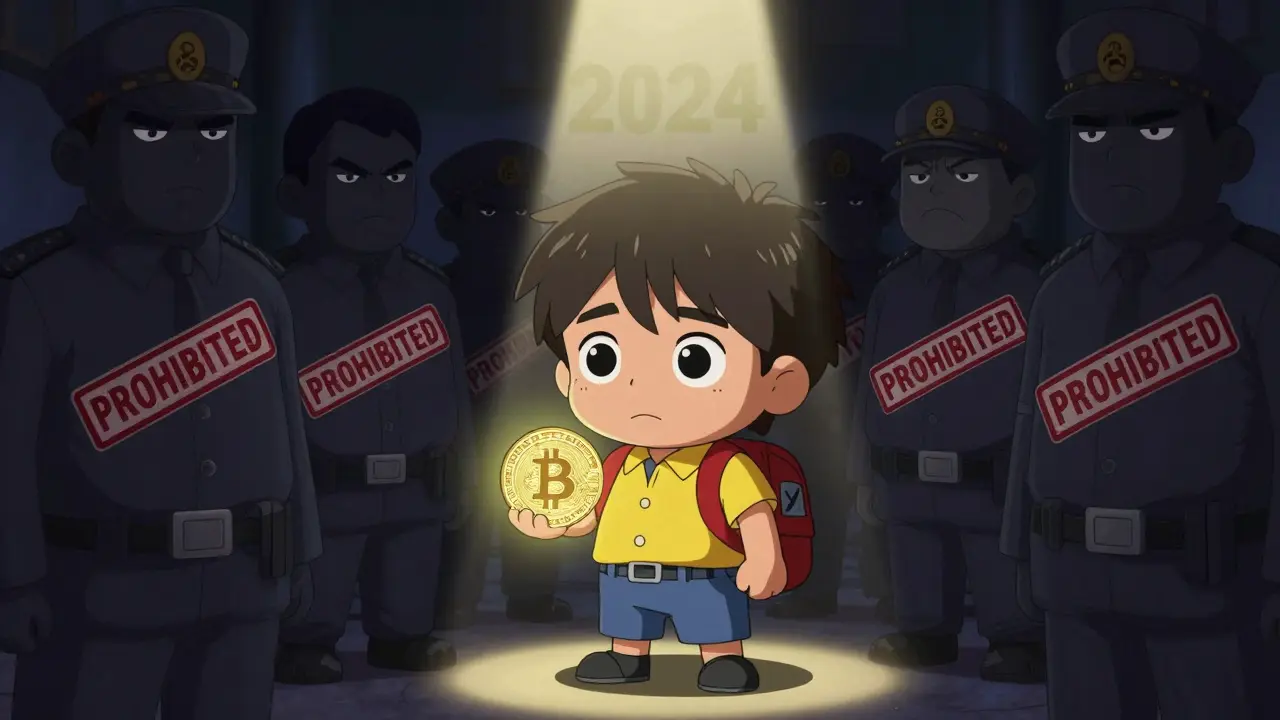
For nearly a decade, Bolivia was one of the strictest countries in the world when it came to cryptocurrency. If you tried to buy Bitcoin, use a crypto exchange, or even hold a digital wallet in Bolivia before 2024, you were breaking the law. The Central Bank of Bolivia didn’t just discourage crypto - it outlawed it. But in 2024, everything flipped. What was once a total ban became one of the most surprising policy reversals in Latin America. Today, Bolivia isn’t just allowing crypto - it’s building a whole new financial system around it.
How Bolivia Banned Cryptocurrency - And Why
On May 6, 2014, Bolivia’s Central Bank issued a clear message: no digital currencies. The official reason? Protecting citizens from fraud, money laundering, and the instability that comes with unregulated financial tools. At the time, Bitcoin was still a fringe experiment. Most people didn’t understand it. The government saw it as a threat to the boliviano, the national currency, and to the banking system’s control over money.
The ban wasn’t just a warning - it was enforced. Banks were ordered not to process crypto transactions. Exchanges couldn’t operate. Even peer-to-peer trading was considered illegal. People who used crypto risked fines or worse. For years, Bolivians who wanted to access digital assets had to use underground methods - foreign SIM cards, offshore wallets, or cash-based peer-to-peer deals with strangers. It was risky, messy, and limited.
By 2020, the government doubled down. Resolution No. 144/2020 reaffirmed the ban. Crypto was still seen as a dangerous outlier. But beneath the surface, things were changing. More Bolivians were sending remittances from abroad. Inflation was eating away at the boliviano. People needed alternatives. And they found them - even if it meant breaking the law.
The Turning Point: June 26, 2024
On June 26, 2024, everything changed. Resolution No. 82/2024 was signed. The complete cryptocurrency prohibition was officially lifted. This wasn’t a softening - it was a full reversal. The Central Bank admitted that the ban hadn’t stopped crypto. It had only driven it underground. Instead of fighting it, they decided to regulate it.
The move wasn’t sudden. Behind the scenes, officials had been studying how other countries handled digital assets. They watched El Salvador adopt Bitcoin as legal tender. They saw Argentina and Brazil struggle with inflation and crypto adoption. And they noticed something: countries that banned crypto lost control. Countries that regulated it gained transparency, security, and economic opportunity.
Bolivia didn’t want to copy anyone. It wanted to build its own path. The goal? Let people use crypto - but make sure it’s safe, traceable, and tied to real financial rules.
From Ban to Regulation: The New Rules
Lifting the ban was just step one. The real work started after. In March 2025, the Central Bank began using USD-pegged stablecoins for cross-border payments. Why? Because many Bolivians rely on remittances from family abroad. With the boliviano losing value, dollars held in stablecoins became a lifeline - faster, cheaper, and more reliable than traditional wire transfers.
Then came Resolution No. 019/2025 on April 16, 2025. This was the first legal recognition of virtual assets and the companies that serve them. Suddenly, crypto exchanges, wallet providers, and trading platforms could apply for licenses. No more hiding. No more black market. Just regulated, accountable businesses.
By May 2025, Supreme Decree No. 5384 gave the full legal framework. Crypto service providers now had to register with the government, verify users, report suspicious activity, and follow anti-money laundering rules. It wasn’t just about letting people trade - it was about making sure they could trust the system.

The Explosion in Usage
The numbers don’t lie. In the first half of 2025 alone, virtual asset transactions in Bolivia hit $294 million. That’s more than five times what was happening before the ban was lifted. Crypto usage jumped over 500% in just one year.
One platform, Meru, saw its Bolivian user base grow by 6,600%. That’s not a typo. Six thousand six hundred percent. Why? Because people had been waiting. For ten years, they couldn’t use crypto legally. Now, they could - and they flooded in. Wallets opened. Exchanges signed up. People started using Bitcoin for international payments, Ethereum for smart contracts, and stablecoins to protect their savings.
It wasn’t just tech-savvy users. Farmers in Cochabamba started receiving payments in USD stablecoins from buyers in the U.S. Students in La Paz used crypto to pay for online courses. Small businesses accepted Bitcoin as payment. The demand was real. The tools were finally legal. And the system was catching up fast.
How Bolivia’s Approach Is Different
Bolivia didn’t go full El Salvador. It didn’t make Bitcoin legal tender. It didn’t push one coin. Instead, it took a smarter, more flexible route.
El Salvador’s model was bold - but risky. It tied the country’s entire economy to one volatile asset. Bolivia chose utility. People use stablecoins because they’re stable. They use Bitcoin because it’s fast across borders. They use other coins because they’re cheaper or more private. The government didn’t pick winners. It just made sure the playing field was fair.
And it didn’t do it alone. Bolivia signed a Memorandum of Understanding with El Salvador’s National Commission for Digital Assets. That’s rare. Two countries sharing regulatory knowledge, training staff, and building joint tools to track crypto crime. It’s not just policy - it’s collaboration.
Compare that to Algeria, which just banned crypto harder than ever. Or Ecuador, which shut down its own digital currency project. Bolivia didn’t fear the future. It started building it.

What’s Next for Bolivia?
The government is now focused on education. Public campaigns teach people how to use crypto safely. How to spot scams. How to protect private keys. How to report fraud. Banks are training staff. Schools are adding digital finance modules.
Regulators are still working on the finer details. How do you tax crypto gains? How do you handle cross-border transfers? How do you protect consumers if a platform crashes? These questions are being answered - slowly, carefully, with input from industry and users.
International companies are taking notice. Crypto exchanges are opening offices in La Paz. Payment processors are designing local integrations. Even fintech startups are moving in, betting that Bolivia’s regulated environment will attract investment.
The big picture? Bolivia went from being one of the most restrictive countries in the world to one of the most thoughtful. It didn’t try to stop technology. It learned how to use it.
Why This Matters Beyond Bolivia
Bolivia’s story isn’t just about crypto. It’s about what happens when a government finally admits it lost control - and chooses to regain it through smart rules instead of force.
Other countries with strict crypto bans are watching. What if they see Bolivia’s success? What if they realize that prohibition doesn’t work - but regulation does? Bolivia didn’t become a crypto hub by accident. It happened because leaders listened to the people, studied the data, and acted.
This is the lesson: you can’t ban innovation. But you can guide it. And when you do, the economy doesn’t just survive - it grows.
Was cryptocurrency ever completely illegal in Bolivia?
Yes. From May 6, 2014, until June 26, 2024, Bolivia had a complete ban on all cryptocurrency activities. The Central Bank of Bolivia prohibited banks from processing crypto transactions, banned exchanges, and made it illegal for citizens to hold or trade digital assets. This ban was reinforced in 2020 with Resolution No. 144/2020. The prohibition ended with Resolution No. 82/2024, which lifted the ban and began the process of legal regulation.
Why did Bolivia lift its cryptocurrency ban?
Bolivia lifted the ban because the prohibition failed. Despite the ban, people continued using crypto through underground channels. Remittance flows, inflation, and economic pressure made digital assets essential for many households. The government realized that banning crypto didn’t stop its use - it just made it riskier and less transparent. By legalizing and regulating it, Bolivia gained control, improved financial security, and opened new economic opportunities.
What changed after the ban was lifted in 2024?
After the ban was lifted, Bolivia introduced a full regulatory framework. In March 2025, the Central Bank began using USD-pegged stablecoins for cross-border payments. In April 2025, Resolution No. 019/2025 formally recognized virtual assets and service providers. By May 2025, Supreme Decree No. 5384 required all crypto businesses to register, verify users, and comply with anti-money laundering rules. This turned crypto from a black-market activity into a licensed, monitored financial sector.
How has crypto adoption grown since legalization?
Crypto adoption has exploded. In the first half of 2025, virtual asset transactions reached $294 million - a more than 500% increase from pre-legalization levels. One major crypto wallet platform, Meru, reported a 6,600% surge in Bolivian users within months of legalization. People are using stablecoins for remittances, Bitcoin for international transfers, and other assets for savings and payments. The demand was there - the law just caught up.
How is Bolivia’s approach different from El Salvador’s?
El Salvador made Bitcoin legal tender - meaning it had to be accepted for all payments. Bolivia didn’t do that. Instead, it allowed multiple cryptocurrencies to operate under regulation, letting users choose based on need. Bolivia focuses on stablecoins for stability, Bitcoin for cross-border use, and other assets for flexibility. It also built institutional frameworks with licensing and oversight, rather than forcing adoption. Bolivia even partnered with El Salvador to share regulatory knowledge - a rare move between nations.





lori sims
February 27, 2026 AT 03:57Kaitlyn Clark
February 27, 2026 AT 10:34christopher luke
February 28, 2026 AT 02:46Mary Scott
March 1, 2026 AT 07:28Shannon Holliday
March 1, 2026 AT 10:01Jeremy buttoncollector
March 2, 2026 AT 18:05Michelle Xu
March 4, 2026 AT 11:07Ryan Burk
March 4, 2026 AT 18:44Sriharsha Majety
March 5, 2026 AT 02:41Tabitha Davis
March 6, 2026 AT 04:59Lilly Markou
March 7, 2026 AT 11:53McKenna Becker
March 8, 2026 AT 15:53precious Ncube
March 9, 2026 AT 13:56Amita Pandey
March 11, 2026 AT 10:50Jan Czuchaj
March 12, 2026 AT 01:22Tracy Peterson
March 13, 2026 AT 08:07George Suggs
March 14, 2026 AT 03:19aaron marp
March 14, 2026 AT 14:10Patrick Streeb
March 14, 2026 AT 18:45Phillip Marson
March 16, 2026 AT 01:59Tracy Whetsel
March 16, 2026 AT 04:09