

Japan doesn't just allow cryptocurrency-it controls it. With over 12 million exchange accounts and more than 5 trillion yen ($33.7 billion) in deposits, Japan has built one of the world’s strictest and most detailed systems to protect everyday people who buy, hold, or trade crypto. This isn’t about stopping innovation. It’s about making sure you don’t lose your money because a company failed, got hacked, or lied to you.
How Japan Keeps Your Crypto Safe
If you use a crypto exchange in Japan, it has to be registered with the Financial Services Agency (FSA). That’s not optional. Unregistered platforms? Illegal. Operating one can land you in jail-or at least cost you 3 million yen in fines. Since June 2025, the punishment changed from imprisonment to "confinement punishment," a lighter but still serious legal penalty under Japan’s updated Penal Code.
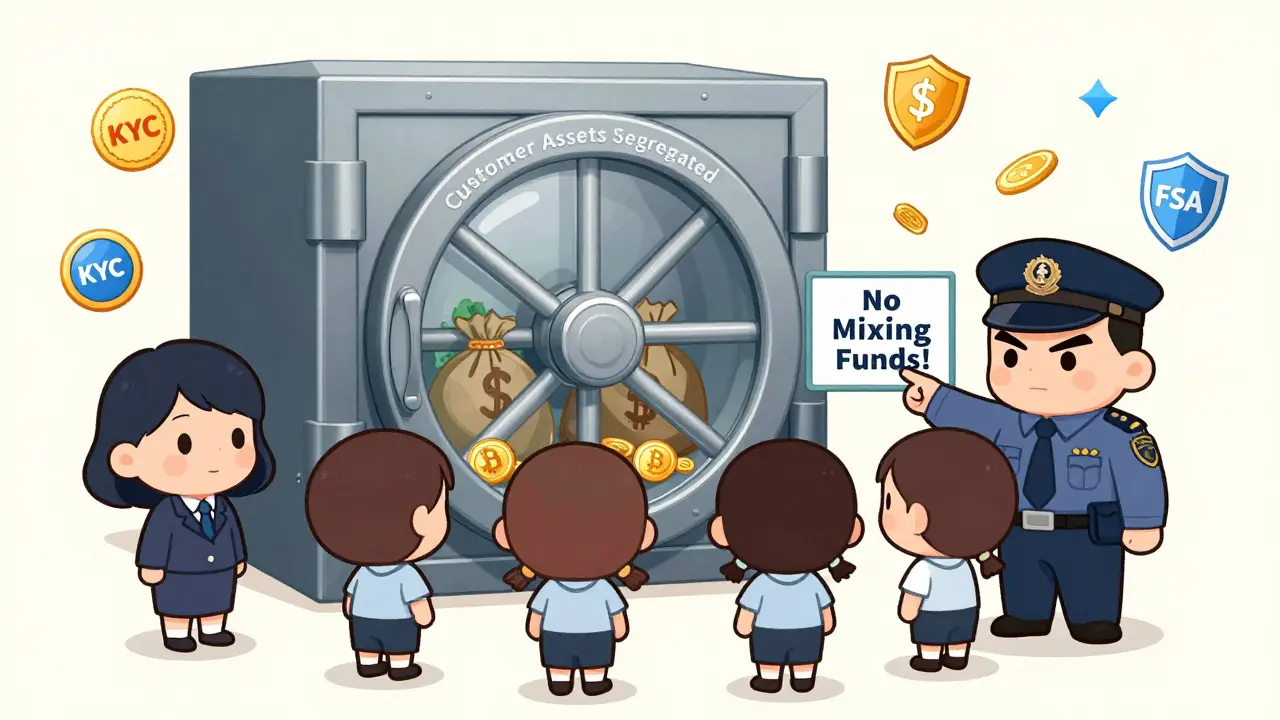
The real magic happens behind the scenes. Every registered exchange must keep your money completely separate from its own. That’s called asset segregation. If the exchange goes bankrupt, your coins and cash aren’t part of the liquidation. They’re yours-protected.
And here’s the kicker: at least 95% of all customer assets must be stored in cold wallets. That means offline, disconnected from the internet. No hackers can steal them remotely. Even if an exchange gets breached, your funds stay locked away safely. Only 5% can be kept online for daily trading, and even that is closely monitored.
Fast Refunds When Things Go Wrong
Before 2025, if an exchange collapsed, getting your money back took months-sometimes over 170 days. The government had to step in, sort through paperwork, and approve each refund. It was slow, confusing, and stressful.
The 2025 amendment to the Payment Services Act changed all that. Now, banks and trust companies can return your funds directly, without waiting for government approval. If your exchange fails, you don’t sit around. You get your money back faster. It’s a huge win for ordinary users who just want their assets back, not a bureaucratic nightmare.
What Counts as Crypto-and What Doesn’t
Japan draws a sharp line between crypto and other digital money. Prepaid cards, bank-issued digital coins, and e-money tied to yen? Those are treated as regular payment tools. They’re regulated under different laws, with lighter rules.
But true crypto-assets-Bitcoin, Ethereum, Solana, and others-are under heavy watch. The Payment Services Act defines them clearly: they’re not legal tender, they’re not backed by the government, and they’re traded on decentralized networks. That’s why they get the full protection package: segregation, cold storage, KYC, and capital requirements.
When Crypto Becomes a Security
Not all tokens are the same. Some are just digital collectibles. Others act like stocks-offering profits, voting rights, or profit-sharing. The FSA made a big move in June 2025: it started reclassifying these investment-grade tokens under the Financial Instruments and Exchange Act (FIEA).
That means they’re now treated like shares or bonds. Issuers must disclose everything: what the token does, who’s behind it, how it makes money, and the risks. Insider trading? Banned. Market manipulation? Heavily penalized. And soon, you’ll be able to buy regulated crypto ETFs-like a spot Bitcoin ETF-that are legally approved and monitored by the FSA.
This isn’t just paperwork. It’s a shield against scams. Many crypto projects vanish overnight. With FIEA rules, you’ll know who you’re investing in-and what you’re really buying.
Crypto Credit Cards? Now They’re Regulated Too
Some exchanges in Japan now offer crypto-backed credit cards. You can buy things with crypto and pay it off in installments. Sounds convenient? It’s also risky.
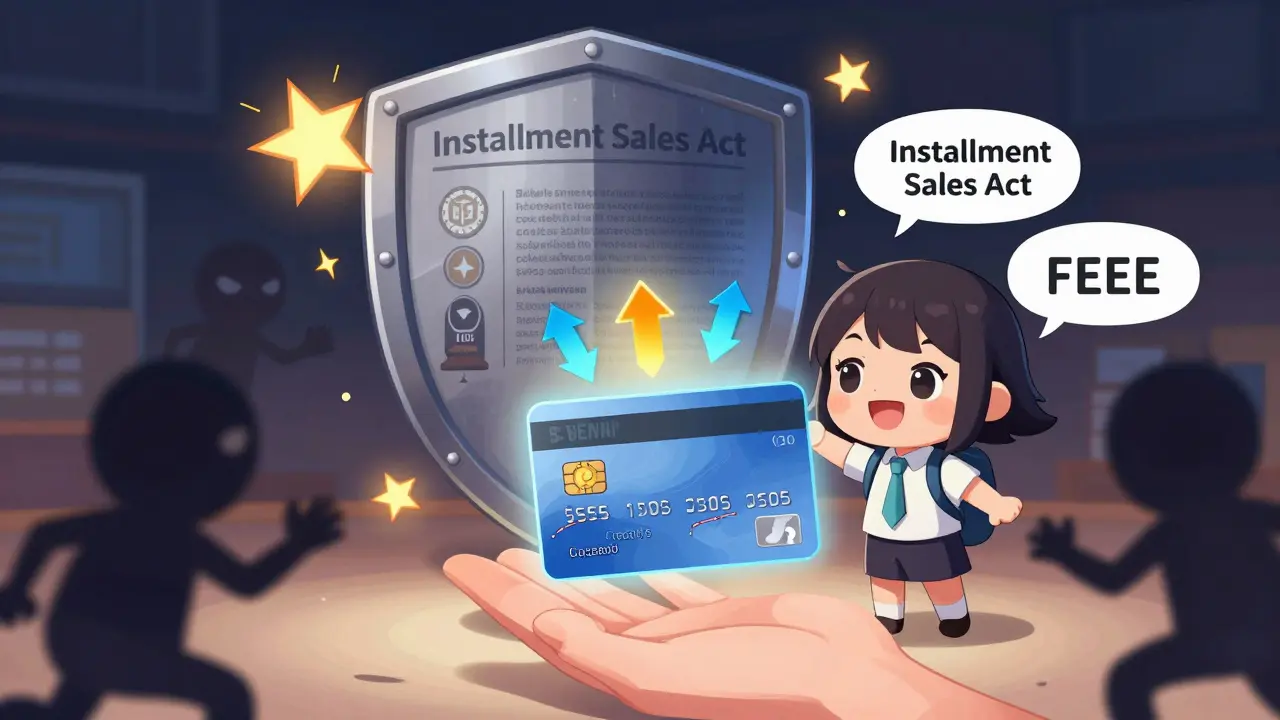
Under the Installment Sales Act, if a company lets you pay for crypto purchases in two-month cycles, revolving payments, or lump sums, they’re now classified as "credit purchase intermediaries." That means they have to register, tell you the full cost, and give you clear terms. No hidden fees. No fine print traps. You get the same protections you’d get with a regular credit card.
Who’s Using Crypto in Japan?
Most crypto users in Japan aren’t Wall Street traders. About 70% are middle-income earners-teachers, office workers, small business owners. They’re not trying to get rich overnight. They’re looking for long-term growth, a way to diversify savings, or a hedge against inflation.
Finance Minister Katsunobu Kato has openly said crypto can be part of a balanced portfolio. But he also knows volatility is real. That’s why the rules focus on safety, transparency, and fairness-not speculation.
What’s Coming Next?
The FSA isn’t done. A formal bill to fully integrate crypto assets under the FIEA is expected in early 2026. That will bring even stricter rules for token sales, brokerages, and trading platforms.
They’re also watching DeFi-decentralized finance-closely. The FSA runs a DeFi Study Group that meets every few months with experts, developers, and academics. They’re trying to figure out how to protect users without killing innovation. Smart contracts, lending pools, automated markets-these are the next frontier. Japan wants to lead, not lag.
Stablecoin issuers are getting lighter rules to encourage adoption. Cross-border crypto payments are being reviewed. New rules for crypto intermediaries are being drafted. The system is alive, evolving, and always focused on one thing: protecting the user.
Why Japan’s Model Works
Japan doesn’t ban crypto. It doesn’t ignore it. It builds walls around it-walls made of clear rules, strong enforcement, and real consequences.
Compare that to places where crypto exchanges vanish overnight with user funds. Japan’s system has kept most major exchanges solvent and secure. It’s why user trust is high. It’s why deposits keep growing.
The goal isn’t to make crypto boring. It’s to make it safe. So if you’re using crypto in Japan, you’re not gambling. You’re investing-with guardrails.
Are crypto exchanges in Japan safe?
Yes, if they’re FSA-registered. All registered exchanges must keep 95% of customer assets in cold wallets, separate your funds from their own, and follow strict KYC and AML rules. Unregistered exchanges are illegal and shut down quickly.
What happens if a crypto exchange goes bankrupt in Japan?
Your assets are protected. Since customer funds are segregated, they’re not part of the company’s bankruptcy estate. Thanks to the 2025 amendment, banks and trust companies can return your money directly-no waiting months for government approval.
Can I buy Bitcoin ETFs in Japan?
Not yet, but it’s coming. The FSA is preparing to allow regulated spot Bitcoin ETFs under the updated Financial Instruments and Exchange Act. The formal bill is expected in early 2026. Once approved, you’ll be able to buy them through licensed brokers just like stocks.
Are crypto credit cards regulated in Japan?
Yes. If a crypto exchange lets you pay in installments or revolving payments, it must register as a credit purchase intermediary under the Installment Sales Act. That means full disclosure of fees, terms, and risks-same as a regular credit card provider.
Is my crypto considered legal tender in Japan?
No. Japan’s laws clearly define crypto-assets as digital property, not currency. Yen is legal tender. Crypto is a tradable asset. This distinction keeps your crypto under strict financial regulations, not payment system rules.
What’s the difference between crypto-assets and tokens under FIEA?
Crypto-assets (like Bitcoin and Ethereum) are regulated under the Payment Services Act. Tokens that act like investments-offering dividends, profit-sharing, or governance rights-are now classified as securities under the Financial Instruments and Exchange Act. That means stricter disclosure, anti-fraud rules, and oversight.
Can I use offshore crypto exchanges in Japan?
You can, but you lose all protection. Only FSA-registered exchanges are required to safeguard your funds, separate assets, and comply with Japanese law. Offshore platforms have no legal obligation to protect you-and Japan won’t help you recover losses from them.
How does Japan handle DeFi and smart contracts?
The FSA is still studying DeFi through its DeFi Study Group. There are no formal rules yet, but regulators are aware of risks like smart contract bugs, liquidity loss, and anonymous operators. Future regulations will likely focus on transparency, user warnings, and platform accountability-not outright bans.




Freddy Wiryadi
January 29, 2026 AT 12:05Meenal Sharma
January 29, 2026 AT 15:48Brianne Hurley
January 31, 2026 AT 08:23christal Rodriguez
February 1, 2026 AT 12:02Calvin Tucker
February 2, 2026 AT 14:26Gustavo Gonzalez
February 4, 2026 AT 14:25Gavin Francis
February 5, 2026 AT 11:53Tom Sheppard
February 5, 2026 AT 12:07Aaron Poole
February 5, 2026 AT 15:38Andrea Demontis
February 6, 2026 AT 19:38Joseph Pietrasik
February 7, 2026 AT 16:48Raju Bhagat
February 8, 2026 AT 05:05laurence watson
February 8, 2026 AT 08:46Elizabeth Jones
February 9, 2026 AT 05:23Pamela Mainama
February 10, 2026 AT 07:28Rachel Stone
February 11, 2026 AT 17:29Nickole Fennell
February 13, 2026 AT 17:22Edward Drawde
February 15, 2026 AT 01:46Richard Kemp
February 15, 2026 AT 22:59Gurpreet Singh
February 16, 2026 AT 04:53Will Pimblett
February 16, 2026 AT 13:42Christopher Michael
February 18, 2026 AT 09:02Freddy Wiryadi
February 19, 2026 AT 22:16