

Charity Impact Calculator
How Your Donation Makes an Impact
See exactly what your donation accomplishes and how it's tracked on the blockchain for complete transparency.
Ever donated to a charity and wondered if your money actually reached the people who needed it? You’re not alone. Studies show nearly 40% of donors say they’ve held back giving because they couldn’t trust where their money went. Traditional charities often take weeks-or months-to release reports, and even then, the details are vague: "Funds went toward food and shelter." But what does that really mean? How many meals? How many beds? Was the money spent on overhead, or on the cause?
Blockchain changes that. It doesn’t just make donations visible-it makes them undeniable. Every dollar, every cent, every item donated leaves a permanent, unchangeable trail on a public ledger. No middlemen. No delays. No guesswork.
How Blockchain Tracks Every Dollar
At its core, blockchain is a digital ledger that records transactions in blocks, linked together in chronological order. Once a transaction is added, it can’t be erased or altered. That’s the key.
When you donate $50 to a charity using a blockchain platform, that transaction isn’t just logged internally. It’s broadcast to a network of computers worldwide. Each one verifies it. Then it’s permanently added to the chain. You can see it. Anyone can see it.
Platforms like Firefly Giving and LUXARITY use this to show donors exactly where their money goes. You don’t just see that $50 was received. You see:
- When it was sent from your wallet to the charity’s wallet
- When the charity used it to buy 100 meals from a local supplier
- When those meals were delivered to a shelter
- Who signed for them
- And a photo or timestamp proving it happened
This isn’t theory. It’s live. In one case, ConsenSys built a system for LUXARITY where people bought pre-owned luxury items. At checkout, they got a unique PIN. They used that PIN to choose which cause their purchase funded-homelessness, clean water, education. Then, they got a real-time report showing the exact percentage of their purchase that went to the cause, and what it bought.
Smart Contracts: The Automatic Receipt
Blockchain doesn’t just record transactions-it can act on them. That’s where smart contracts come in.
A smart contract is a piece of code that runs automatically when certain conditions are met. In charity, that means:
- If $10,000 is raised for a school project, the contract releases funds to the contractor only after the school confirms receipt
- If a shipment of medical supplies arrives at a clinic, a sensor or QR code scan triggers the next payment to the logistics company
- If a donor gives $200 for clean water wells, the contract sends updates every time a well is completed and verified
No one has to manually send an email. No one has to wait for a quarterly report. The system updates itself. Donors get automated notifications. No chasing. No begging for updates.
The BECP (Blockchain Enabled Charity Process Framework) takes this further. It requires every document-invoices, delivery receipts, signed agreements-to be uploaded and matched to a transaction. If the invoice doesn’t match the delivery receipt, the system flags it. And because everything is on the blockchain, no one can fake it.
Tracking Not Just Money, But Goods Too
Most people think of blockchain as tracking cash. But it’s just as powerful for tracking physical goods.
Imagine donating a pallet of blankets to a refugee camp. Traditional tracking? A spreadsheet. Maybe a photo taken at the warehouse. No way to know if they ever arrived.
With blockchain:
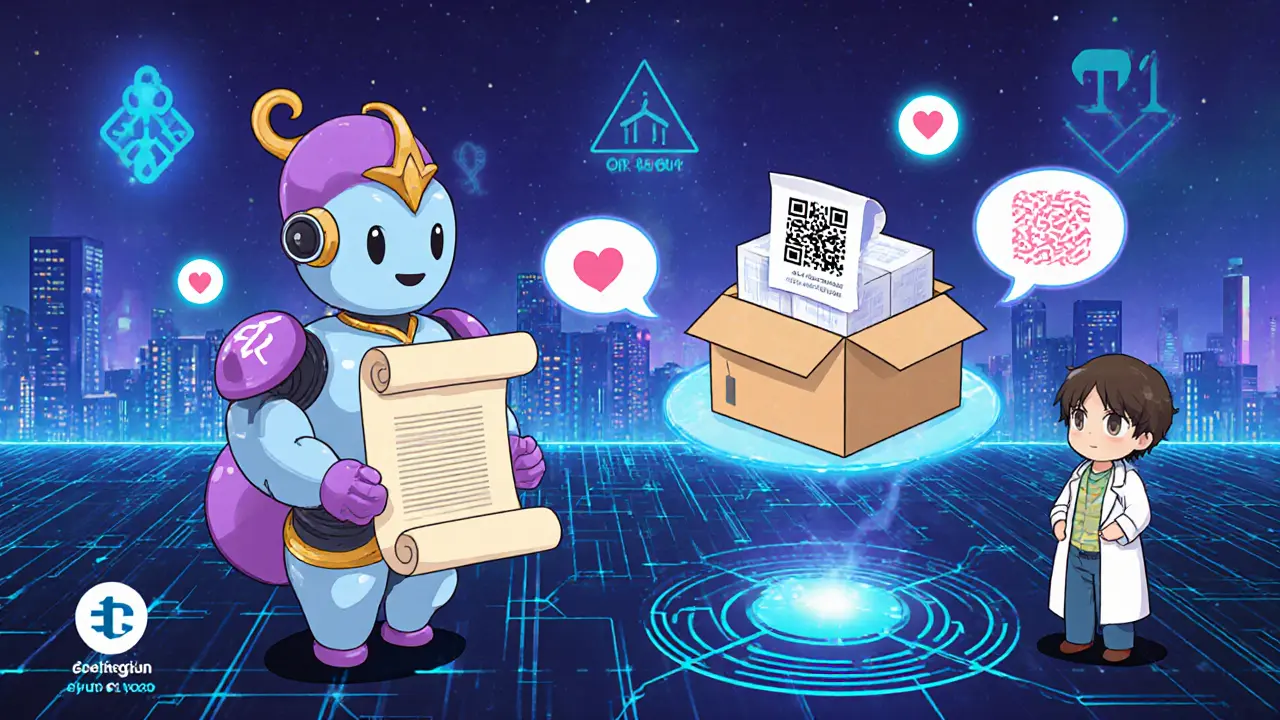
- Each blanket gets a QR code
- The donation is recorded on the chain when it leaves the warehouse
- When it arrives at the camp, a worker scans the code
- The system confirms receipt and updates the donor
- Later, when the blankets are distributed, another scan logs who received them
This creates a full supply chain trail-from donor’s garage to someone’s shoulders. No gaps. No lost shipments. No unaccounted donations.
Platforms like Charity Wall already do this. They track not just the money, but every document tied to it. If a nonprofit claims it spent $5,000 on food, the system checks: Did they buy food? From whom? Did the supplier deliver? Did the recipients sign for it? All of it on the chain.

Why This Beats Traditional Charity Reporting
Traditional charities rely on audits-often annual-and internal reports. Those reports are helpful, but they’re not real-time. They’re not public. And they’re not tamper-proof.
Here’s how blockchain stacks up:
| Feature | Blockchain | Traditional |
|---|---|---|
| Transparency | Public, real-time, anyone can verify | Private, delayed, only auditors see full details |
| Speed of Updates | Instant-within minutes of transaction | Weeks or months after spending |
| Proof of Use | Photos, GPS, signatures, receipts linked to each transaction | Written reports, sometimes with vague descriptions |
| Fraud Prevention | Impossible to alter records without network consensus | Relies on trust and internal controls |
| Donor Control | Donors choose where funds go, track progress | Donors give, then wait |
| Tax Documentation | Auto-generated, blockchain-verified receipts | Manual receipts, prone to errors or loss |
Financial advisors are starting to recommend blockchain platforms to clients because the automated, verifiable records meet IRS standards for charitable deductions-no more scrambling for receipts at tax time.
What’s Holding It Back?
It’s not perfect. And it’s not for everyone-yet.
First, you need a digital wallet. If you’ve never used MetaMask or another crypto wallet, the setup can feel confusing. You need to understand private keys, gas fees, and transaction confirmations. That’s a barrier for older donors or those less tech-savvy.
Second, not all charities are ready. Many still run on Excel sheets and paper files. Switching to blockchain means training staff, changing workflows, and sometimes paying for platform access. Smaller nonprofits can’t afford that.
Third, blockchain isn’t magic. It only tracks what’s put into it. If a charity doesn’t scan the delivery of food, the system won’t know it happened. The tech is only as good as the data it gets.
And while platforms like Firefly Giving charge zero fees, others still take a cut. Always check: Is the platform taking 5%? 10%? That eats into the impact.
Who’s Using This Today?
Real people are already using blockchain to give smarter.
In one pilot, a nonprofit in Kenya used blockchain to track water pump repairs. Donors could see:
- When a pump broke
- Who was sent to fix it
- How long it took
- That the pump was working again
- And a video of a child drinking clean water from it
Donations to that project jumped 67% in six months. Why? Because people could see their money made a difference-right away.
Another example: A fashion brand partnered with ConsenSys to donate 10% of every pre-loved item sale. Buyers chose the cause. They got a digital receipt showing the exact amount donated and where it went. One donor said: "I used to give to big charities because they were famous. Now I give to small ones because I can see what they do. That’s worth more than a logo."
How to Get Started
If you want to start tracking your donations with blockchain, here’s how:
- Choose a platform. Look for ones like Firefly Giving, LUXARITY, or GiveTrack that specialize in transparent giving.
- Set up a digital wallet. MetaMask is free and works on desktop and mobile.
- Connect your wallet to the charity platform. Most have a simple "Connect Wallet" button.
- Donate. You’ll see the transaction confirm in seconds.
- Track your impact. The platform will show you updates as funds are used.
Start small. Donate $10 to a project you care about. Watch the trail. See the receipts. Feel the difference.
What’s Next?
The future is blending blockchain with AI. Imagine a system that doesn’t just show you where your money went-but predicts where it’s needed most. Or one that auto-generates impact reports in plain language: "Your $25 fed 12 children this week."
Regulators are starting to take notice too. The EU and U.S. are exploring frameworks to recognize blockchain donation records as legally valid for tax purposes. That’s coming fast.
Blockchain won’t fix every problem in charity. But it fixes the biggest one: trust. And once people know their money isn’t disappearing into a black hole, they give more. They give better. They give with confidence.
Can I track my charity donation in real time with blockchain?
Yes. Platforms like Firefly Giving and LUXARITY let you see your donation move from your wallet to the charity’s wallet within minutes. You’ll also get automatic updates when funds are used-like when meals are bought or supplies delivered-with photos or receipts attached. No waiting for annual reports.
Do I need cryptocurrency to donate via blockchain?
Not always. Many platforms now let you donate with credit cards or bank transfers. Behind the scenes, they convert it to cryptocurrency to record it on the blockchain. You don’t need to buy Bitcoin or Ethereum yourself. The platform handles it.
Are blockchain donations tax-deductible?
Yes-if the charity is a registered nonprofit. Blockchain platforms automatically generate digital receipts with donor info, date, amount, and charity details. These meet IRS requirements. Some even let you download them as PDFs for your taxes.
Can blockchain stop fraud in charities?
It makes fraud extremely hard. Every transaction is recorded permanently and visible to anyone. If a charity claims it spent $50,000 on school supplies but no purchase records exist on the chain, it’s flagged. Smart contracts also prevent payments unless conditions are met-like proof of delivery. It doesn’t eliminate fraud, but it makes it nearly impossible to hide.
Is blockchain charity tracking only for big organizations?
No. Smaller nonprofits can use platforms like GiveTrack or Firefly Giving that offer low-cost or free access. Many are designed for small teams with no tech background. The real barrier isn’t size-it’s willingness to change how they report. Once they do, even small charities gain donor trust and more funding.
What happens if I lose my wallet password?
If you lose access to your wallet, you lose access to your donation history on that platform. That’s why it’s critical to back up your recovery phrase. Most platforms don’t store your private keys-they can’t. Only you do. If you forget your password and lose your backup, you can’t recover it. That’s the trade-off for full control and security.
Can I donate physical items like clothes or food using blockchain?
Yes. Platforms like Charity Wall and others track physical goods using QR codes or RFID tags. When you donate a box of clothes, each item gets tagged. The donation is recorded on the blockchain when it leaves your home, when it arrives at the warehouse, when it’s distributed, and even when it’s worn by someone in need. You’ll get updates at every step.




Vijay Kumar
November 29, 2025 AT 04:58Blockchain won’t fix human greed. You think a ledger stops a corrupt NGO director from inflating costs? Please. The tech just makes the lie look fancy.
Vance Ashby
December 1, 2025 AT 01:34bro i just used meta mask for the first time to donate $5 to a water well and i got a live map showing the exact well being dug. i cried. 🥲
Brian Bernfeld
December 2, 2025 AT 16:08Let me break this down for you like you’re five: blockchain isn’t magic, it’s accountability. Traditional charities operate like a black box with a ‘thank you’ sticker. Blockchain? It’s an open kitchen where you watch the chef chop the onions, measure the rice, and serve the plate. No more ‘trust us’-just proof. And if you’re still skeptical, go check Firefly Giving’s public ledger right now. I’ll wait.
And yes, you don’t need crypto. You just need a credit card and a brain. The platform converts it silently. Stop using ‘I don’t understand crypto’ as an excuse to stay ignorant.
Smaller nonprofits? They’re not ‘too small’-they’re just waiting for someone to hand them a tool. Platforms like GiveTrack cost less than a coffee per month. That’s not a barrier-it’s an opportunity.
And before someone says ‘but what if they don’t scan the QR code?’-then they’re not using it right. The system doesn’t lie. It just reflects the effort you put in. If you’re lazy, the data’s lazy. If you’re rigorous, the impact is undeniable.
This isn’t about tech. It’s about dignity. The people receiving aid deserve to be seen. Donors deserve to know their compassion didn’t vanish into a CEO’s yacht fund. Blockchain gives both that power.
And yes, tax receipts auto-generate. IRS loves it. Your accountant will thank you. No more losing receipts in a shoebox from 2018.
Don’t fear the blockchain. Fear staying blind.
Ian Esche
December 3, 2025 AT 13:43Why are we trusting some decentralized ledger run by tech bros instead of good ol’ American charities with 501(c)(3) status? This feels like crypto bros trying to replace the American way of giving. We’ve been donating for centuries without needing a blockchain.
Felicia Sue Lynn
December 4, 2025 AT 16:53While the technical framework is compelling, I find myself reflecting on the human element. Does the act of witnessing a transaction digitally diminish the emotional resonance of giving? There is a quiet dignity in trusting an organization to do good, even without granular proof. Perhaps we are trading spiritual surrender for algorithmic certainty.
Christina Oneviane
December 6, 2025 AT 08:43Oh wow, so now I have to trust a blockchain more than a nonprofit? What’s next? QR codes on my tears?
fanny adam
December 7, 2025 AT 10:32Blockchain is a Trojan horse. The same entities pushing this are the ones lobbying to eliminate paper trails for tax evasion. Every ‘transparent’ donation is a data point harvested by surveillance capitalists. You think your donation history isn’t being sold to advertisers? Wake up. The ledger isn’t free-it’s a product.
Eddy Lust
December 9, 2025 AT 07:18man i used to just throw cash in the collection plate and feel good. now i can watch my $20 turn into 40 meals and a video of a kid eating them. it’s like giving but with a dopamine hit. kinda wild, right? 🤯
Casey Meehan
December 10, 2025 AT 10:00🚀 $5 → 🌍 10 meals → 📸 kid smiling → 📲 auto-update → 💸 tax receipt → 🤝 trust restored. Blockchain isn’t the future. It’s the *only* way to give now. 🙌
Tom MacDermott
December 10, 2025 AT 17:33Oh, so now we’re supposed to believe a digital ledger more than the Red Cross? Please. This is just Silicon Valley’s attempt to monetize altruism. Next thing you know, charities will charge a ‘verification fee’ to prove they didn’t steal your $10.
Martin Doyle
December 12, 2025 AT 13:23You’re all missing the point. This isn’t about tech-it’s about power. The people who control the blockchain platforms control the narrative. Who audits them? Who makes sure the ‘transparent’ system isn’t just another gated walled garden? Stop worshipping the ledger. Question the gatekeepers.
Susan Dugan
December 12, 2025 AT 23:50My aunt in rural Ohio just donated her first $25 via Firefly. She didn’t know what a wallet was. The platform walked her through it on her tablet like it was a Netflix tutorial. She cried when she saw the photo of the well being built. She said, ‘I finally feel like I’m not just throwing money into the void.’ That’s the real win. Not the blockchain. The feeling.
SARE Homes
December 14, 2025 AT 21:20Let’s be brutally honest: 90% of these ‘blockchain charities’ are shell companies with offshore wallets. The QR codes? Fake. The photos? Stock images. The ‘verified’ signatures? AI-generated. You think this is transparency? It’s a sophisticated laundering scheme dressed up in Web3 glitter. The only thing being tracked is how fast your money disappears into a crypto exchange. Wake up. This isn’t charity. It’s a Ponzi with a blockchain label.