

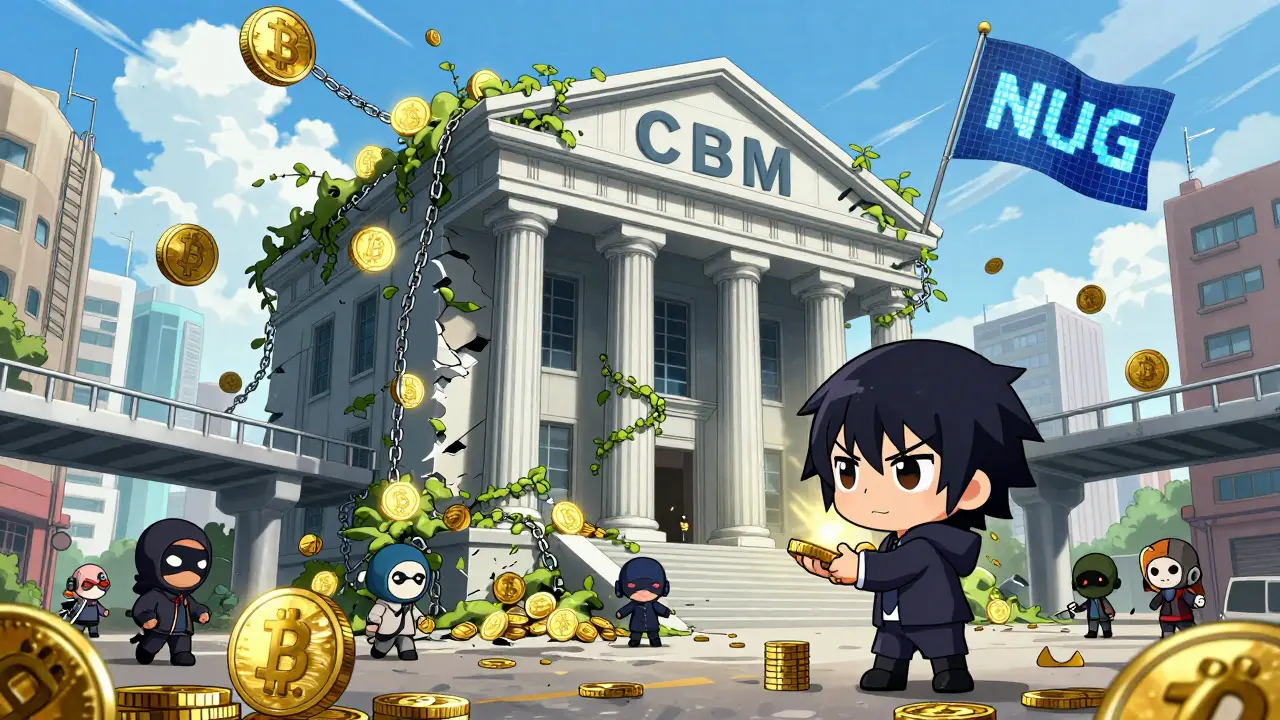
On May 15, 2020, Myanmar’s Central Bank dropped a bombshell: Central Bank Directive 9/2020 made it illegal for anyone in the country to buy, sell, or trade cryptocurrencies. Bitcoin, Ethereum, Litecoin, even Tether - all banned. The message was clear: digital money had no place in Myanmar’s economy. But here’s the twist - four years later, that ban is mostly a ghost story. People aren’t following it. They’re bypassing it. And the government is losing control.
The Central Bank of Myanmar (CBM) didn’t just make a rule. They used the full weight of the law. They pointed to Section 40(e) and Section 62 of the Central Bank of Myanmar Law, which say only the CBM can issue currency. That meant anything digital, decentralized, or outside their control was automatically illegal. They didn’t just warn people - they threatened jail time, fines, and frozen bank accounts. They even tied the ban to existing laws like the Anti-Money Laundering Law and the Financial Institutions Law, turning crypto use into a criminal offense.
At first, it looked like it might work. The CBM went after Facebook pages selling Bitcoin. They shut down accounts linked to hundi money transfers using USDT. In 2024, they doubled down, issuing another public notice reminding everyone that violations would lead to legal action. But enforcement was always patchy. The ban targeted banks and social media - places people still use. It didn’t touch the real underground.
Here’s what the CBM didn’t count on: the kyat collapsed.
After the February 2021 military coup, the national currency began to hemorrhage value. Inflation hit 100% in some regions. People couldn’t pay for food, medicine, or electricity. Banks froze accounts. International transfers vanished. That’s when ordinary citizens - teachers, farmers, shopkeepers - turned to cryptocurrency. Not because they loved tech. But because they had no other choice.
USDT, or Tether, became the new cash. It didn’t fluctuate like Bitcoin. It stayed pegged to the U.S. dollar. And it moved across borders with a phone number and an internet connection. People started using Telegram groups to trade USDT. They paid for imports. Sent money to relatives abroad. Bought medicine from Thailand. Paid for internet access when the military cut it off. It wasn’t a rebellion - it was survival.
Meanwhile, the opposition National Unity Government (NUG), controlling parts of the country, did something shocking: they declared USDT legal tender in their zones. They even started building a mobile wallet for it. They called it DMMK - Digital Myanmar Kyats. It was a direct challenge to the military’s ban. While the CBM was shutting down Facebook pages, the NUG was building a parallel financial system. And it was working.
The CBM’s strategy had a fatal flaw: they assumed people would obey because the law said so. But when the law stops protecting you, you don’t obey. You adapt.
Today, almost no one in Myanmar uses banks for crypto. The CBM can freeze an account, but they can’t freeze a Telegram chat. They can block a website, but they can’t block a Tron network transaction. The underground economy runs on peer-to-peer trades, offshore exchanges, and encrypted apps. Tron-based USDT dominates because it’s cheap, fast, and hard to trace. A single transaction can cost less than 10 cents. That’s why it’s everywhere - from Yangon’s street markets to refugee camps near the Thai border.
Internet shutdowns, once thought to be the CBM’s secret weapon, backfired. When the military cut internet access to stop crypto use, people waited. They saved messages. They traded in person. They used satellite phones. They found Wi-Fi in cafes, mosques, or even outside police stations. The more the government tried to control, the more creative people got.
Legal experts from Tilleke & Gibbins say overseas crypto operators are still untouched. The CBM’s power ends at Myanmar’s borders. The real targets are local converters - people who swap kyat for USDT in cash. And even then, enforcement is selective. If you’re just sending money to your sister in Malaysia? You’re probably fine. If you’re running a crypto exchange out of your home? You’re at risk.
And here’s the irony: the ban made Myanmar one of the most crypto-savvy countries in Southeast Asia. While Thailand and Singapore built regulations, Myanmar built resilience. People learned how to use wallets, seed phrases, and cold storage. They taught their parents. Their kids. Their neighbors. A 62-year-old grandmother in Mandalay now uses USDT to buy rice from a vendor in Bangkok. She doesn’t know what blockchain is. She just knows it works.
As of 2025, the CBM still claims the ban is active. Their website still lists Directive 9/2020. But on the ground, it’s irrelevant. The Kyat is still falling. Internet access is still unreliable. And USDT is still flowing. The government didn’t ban crypto. It just forced it underground - and now it’s everywhere.
There’s no sign the ban will be lifted. But there’s also no sign it’s working. The Central Bank didn’t just lose control of currency. They lost control of reality.
How Myanmar’s Ban Compares to Other Countries
Myanmar didn’t invent the crypto ban. But it took it further than most.
- El Salvador made Bitcoin legal tender in 2021. People use it to pay taxes, buy coffee, and even get paid in salary.
- Thailand licensed crypto exchanges. You can trade legally on Binance Thailand or Bitkub.
- Singapore treats crypto as property. Regulated firms operate openly.
- Myanmar - no licenses. No exceptions. No gray area. Just criminal penalties.
Most countries tried to regulate. Myanmar tried to erase. And that’s why it failed.
What Happens If You Get Caught?
If you’re caught trading crypto in Myanmar, you’re not just fined. You’re prosecuted.
- Your bank account gets frozen - no access, no appeal.
- You could face up to 3 years in prison under the Anti-Money Laundering Law.
- Fines can reach millions of kyat - more than most people earn in a year.
- The CBM works with police and cyber units to track Facebook and bank transfers.
But again - most people aren’t getting caught. The CBM doesn’t have the resources to monitor 54 million people. They focus on big operators, not individuals.

The Underground Economy: How Crypto Still Works in Myanmar
Here’s how it actually works today:
- You meet someone in person - a friend, a shopkeeper, a monk - and swap cash for USDT.
- You send the USDT to a Telegram bot or a wallet on the Tron network.
- You use that USDT to pay for goods, send money abroad, or store value.
- You repeat the process. No bank. No paperwork. No permission.
It’s informal. It’s risky. But it’s reliable. And it’s growing.
Why the Ban Will Never Succeed
Three reasons:
- Internet is too decentralized - you can’t shut it all down.
- The kyat is too unstable - people need something that holds value.
- People are too desperate - when survival is on the line, laws don’t matter.
The CBM thought they could control money. But money doesn’t care about borders - or dictators.



Ernestine La Baronne Orange
March 21, 2026 AT 13:43Manali Sovani
March 22, 2026 AT 05:54Konakuze Christopher
March 23, 2026 AT 13:00S F
March 23, 2026 AT 19:19Angelica Stovall
March 24, 2026 AT 01:33Taylor Holloman.
March 24, 2026 AT 08:45Bryan Roth
March 25, 2026 AT 02:49sai nikhil
March 26, 2026 AT 17:19Sahithi Reddy
March 27, 2026 AT 12:57George Hutchings
March 27, 2026 AT 19:25Henrique Lyma
March 29, 2026 AT 12:59Steph Andrews
March 30, 2026 AT 01:22Prakash Patel
March 30, 2026 AT 22:40Zachary N
March 31, 2026 AT 03:12Elizabeth Kurtz
April 1, 2026 AT 17:45john peter
April 3, 2026 AT 00:06Marc Morgan
April 3, 2026 AT 23:09Jerry Panson
April 5, 2026 AT 20:38Katrina Smith
April 6, 2026 AT 13:59Anastasia Danavath
April 7, 2026 AT 10:38anshika garg
April 8, 2026 AT 09:24Bruce Doucette
April 8, 2026 AT 21:40