

Bitcoin used to be something you heard about in news stories about wild price swings or shady online marketplaces. Now, it’s quietly showing up in places you’d never expect - a small café in Perth, a freelance designer in Manila, a family sending money home from Saudi Arabia. In 2025, Bitcoin payments aren’t just a curiosity. They’re a real, growing part of how people move money across the world.
It’s Not About Speculation Anymore
A lot of people still think Bitcoin is just a gamble. But that’s not why businesses are signing up. The real reason? It solves actual problems that banks and credit cards can’t. Think about sending money to a relative in Nigeria. Traditional services like Western Union charge over 6% in fees. With Bitcoin, it’s under 4%. The transaction settles in under an hour, not days. No middlemen. No frozen accounts. No paperwork. In 2025, businesses are holding over 1.3 million Bitcoin - that’s 6.2% of all Bitcoin ever created. Companies like MicroStrategy aren’t just buying it as an investment. They’re using it as treasury capital. Why? Because it’s portable, scarce, and immune to inflation. When a company holds dollars, it’s at the mercy of central banks. Bitcoin? It’s not printed by anyone.The Lightning Network Changed Everything
Back in 2020, Bitcoin was too slow for everyday use. One transaction took 10 to 60 minutes. Fees could hit $10 or more. That’s fine for a $1,000 purchase. Not for a $5 coffee. Then came the Lightning Network. It’s like a highway built on top of Bitcoin. Instead of recording every tiny payment on the main blockchain, Lightning handles thousands of transactions off-chain and only settles the net result. Today, it processes 1.2 million transactions every single day. Fees? As low as $0.0003. That’s less than a penny. And settlement? Almost instant. This is why small businesses are adopting it. A shop in Sydney, a restaurant in Mexico City, a freelance coder in Ukraine - they’re all using Lightning to accept payments without waiting hours or paying high fees. Mobile wallets now integrate Lightning in 87% of major apps. You don’t need to understand blockchain. Just scan a QR code, like PayPal.Why Businesses Are Choosing Bitcoin Over Credit Cards
Credit cards come with hidden costs. Chargebacks. Fraud. Processing fees. For small businesses, a single fraudulent charge can wipe out a week’s profit. Bitcoin doesn’t have that problem. Once a Bitcoin payment confirms, it’s final. No chargebacks. No disputes. No reversal. Visa’s own data shows chargeback fraud risk above $10,000 transactions is over 1.2%. Bitcoin? Zero. That’s why high-value industries - real estate, consulting, wholesale goods - are switching. A Melbourne-based contractor I spoke with last month stopped taking credit cards entirely. “I lost $8,000 last year to fake invoices and chargebacks,” he told me. “Now I only accept Bitcoin. No more headaches.” Even better, Bitcoin payments are borderless. A German freelancer can invoice a client in Brazil without worrying about currency conversion or SWIFT delays. The money arrives in hours. No bank holds it. No intermediary takes a cut.
It’s Not Just for Tech Nerds Anymore
You don’t need to be a coder to use Bitcoin as a payment method anymore. In 2020, setting up a Bitcoin payment system took days of technical work. Today, platforms like BitPay, Coinbase Commerce, and Strike let you accept Bitcoin with a few clicks. A Shopify store can be live with Bitcoin payments in under two hours. Physical stores use simple terminals that auto-convert Bitcoin to local currency the moment it arrives. The learning curve has collapsed. Merchants don’t need to understand private keys or blockchain hashes. They just need to know: “I get paid in dollars, but the customer pays in Bitcoin.” That’s it. And 92% of payment processors now handle the entire conversion and security process for you.Who’s Using It - And Why
The biggest users? People who’ve been left out of the traditional system. In India, 17 million people use Bitcoin to send remittances home. In the Philippines, workers abroad pay less in fees and get money faster. In Venezuela, where inflation hit 200% in 2024, Bitcoin became a lifeline. People aren’t using it to get rich. They’re using it to survive. The 25-34 age group leads adoption. Sixty percent of Bitcoin users fall in this range. Urban populations make up 80% of users. Why? Because they’ve seen how slow, expensive, and broken traditional finance can be. They’ve tried PayPal, Venmo, Wise - and still got hit with fees, delays, or blocked transactions. Even corporations are getting on board. In 2025, 50% of small and medium businesses now accept Bitcoin. That’s up 45% from last year. And 60 non-crypto companies now hold Bitcoin in their treasury - not as speculation, but as a hedge against currency devaluation.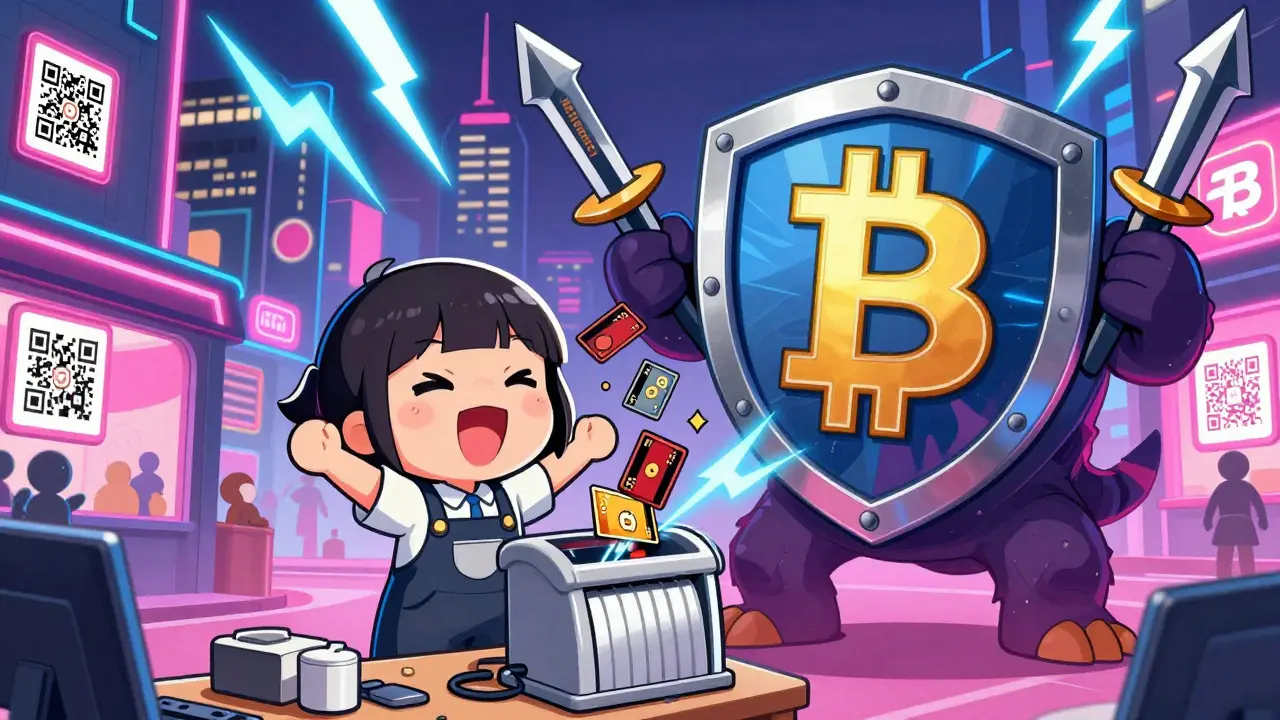




Nicole Stewart
February 18, 2026 AT 12:25Alan Enfield
February 20, 2026 AT 04:51Jennifer Riddalls
February 22, 2026 AT 00:24Kyle Tully
February 24, 2026 AT 00:10kieron reid
February 25, 2026 AT 00:20Avantika Mann
February 25, 2026 AT 07:21yogesh negi
February 26, 2026 AT 08:54Nikki Howard
February 27, 2026 AT 07:17Tarun Krishnakumar
February 28, 2026 AT 16:14Charrie VanVleet
March 2, 2026 AT 16:07Rajib Hossaim
March 3, 2026 AT 22:42Jenn Estes
March 5, 2026 AT 16:09Nova Meristiana
March 7, 2026 AT 07:11Aileen Rothstein
March 9, 2026 AT 01:21JJ White
March 11, 2026 AT 00:37Sasha Wynnters
March 12, 2026 AT 10:19Anandaraj Br
March 12, 2026 AT 10:54AJITH AERO
March 13, 2026 AT 18:56Angela Henderson
March 15, 2026 AT 00:47Chris Thomas
March 15, 2026 AT 13:16