
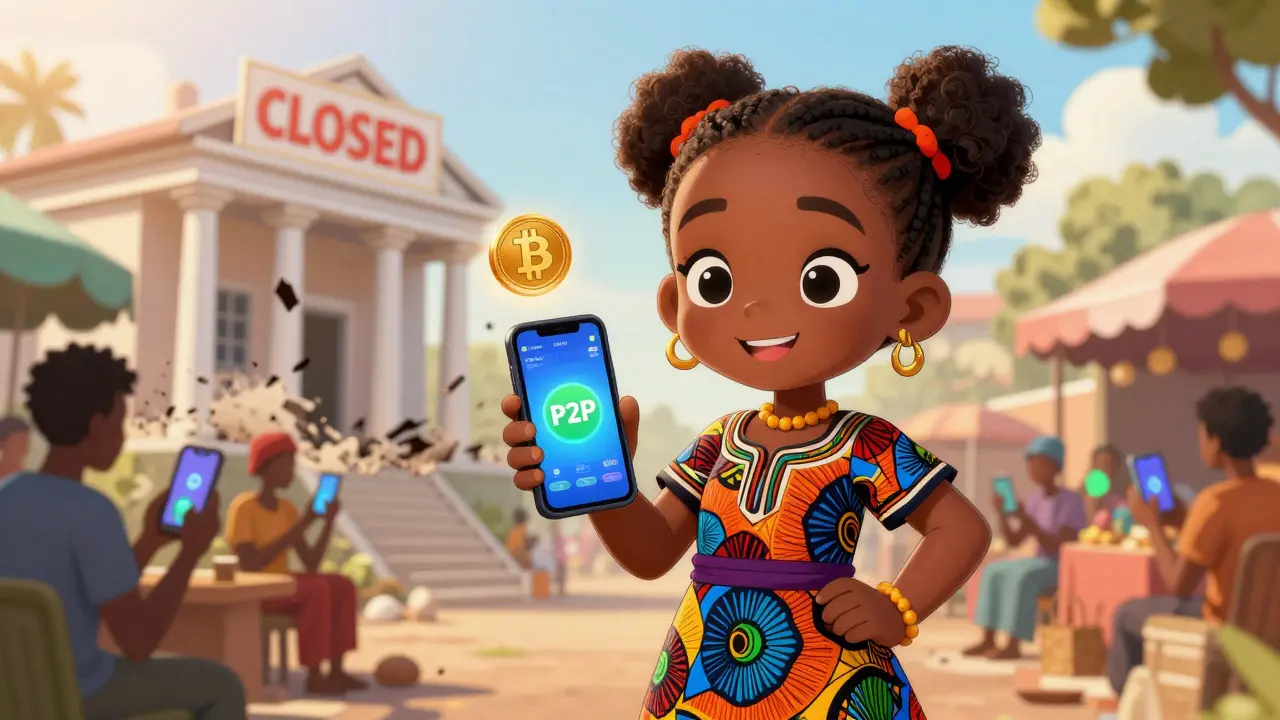
When your country’s currency loses 75% of its value in less than a decade, when banks freeze your account for sending money abroad, and when your paycheck buys less each week - you don’t wait for permission to survive. You find another way. That’s exactly what millions of Nigerians did with cryptocurrency, even after their own government tried to ban it.
Why People Turn to Crypto When Banks Fail
In Nigeria, inflation hit 24% in 2023. The naira, once worth 150 to the dollar, dropped below 1,500. People saw their savings vanish overnight. Traditional banks, controlled by the central bank, imposed strict limits on foreign currency access. Sending money home from the U.S. or the U.K. cost up to 8% in fees. For many, that meant losing hundreds of dollars just to help family back home. Cryptocurrency offered a way out. Bitcoin, USDT, and other stablecoins became digital lifelines. No bank approval needed. No middlemen taking cuts. Just a phone, an internet connection, and a peer-to-peer platform like Paxful or Binance P2P. People traded naira for crypto directly with others, then sent that crypto overseas where it was converted to dollars - often at rates far better than Western Union or MoneyGram. This wasn’t about speculation. It wasn’t about getting rich quick. It was about keeping food on the table, paying school fees, and staying connected to loved ones abroad. In a country where 36% of adults are unbanked, crypto didn’t replace the financial system - it became the system for those left out of it.How Nigeria Banned Crypto - And Failed
In January 2021, Nigeria’s central bank ordered banks and financial institutions to stop serving crypto exchanges. The move was clear: shut down access. Cut off the flow. Make it impossible. It didn’t work. Instead of disappearing, crypto adoption exploded. People switched to decentralized platforms. They used mobile wallets like Trust Wallet and MetaMask. They bought crypto through local traders who met in markets or cafes. Peer-to-peer trading volumes in Nigeria jumped 300% within two years. By 2024, Nigeria ranked second in the world for crypto adoption, behind only Vietnam - and ahead of the U.S., the U.K., and Germany. Why? Because bans can’t fix broken systems. When the official system fails, people don’t stop needing money. They just find new tools. Crypto wasn’t a trend in Nigeria. It was a necessity. The government eventually realized it couldn’t stop what it couldn’t control. In 2023, the Central Bank of Nigeria quietly reversed its stance. It started working with fintech firms to build a regulated crypto infrastructure - not to ban it, but to manage it. The ban didn’t fail because people were tech-savvy. It failed because the need was too real.It’s Not Just Nigeria
Nigeria isn’t alone. In Argentina, where inflation hit 200% in 2023, people use Bitcoin to preserve savings. In Lebanon, with banks locking accounts and the lira collapsing, crypto became the only way to access global markets. In Venezuela, where hyperinflation wiped out wages, crypto remittances from the U.S. now account for nearly 15% of all inbound foreign funds. These aren’t tech enthusiasts. They’re teachers, drivers, tailors, and nurses - people with smartphones and no trust in their national banks. They don’t care about blockchain whitepapers. They care about whether their money keeps its value. In developed countries, crypto is often seen as a gamble - something for investors, traders, or early adopters. But in these places, it’s insurance. It’s a safety net. It’s the only thing standing between a family and financial ruin.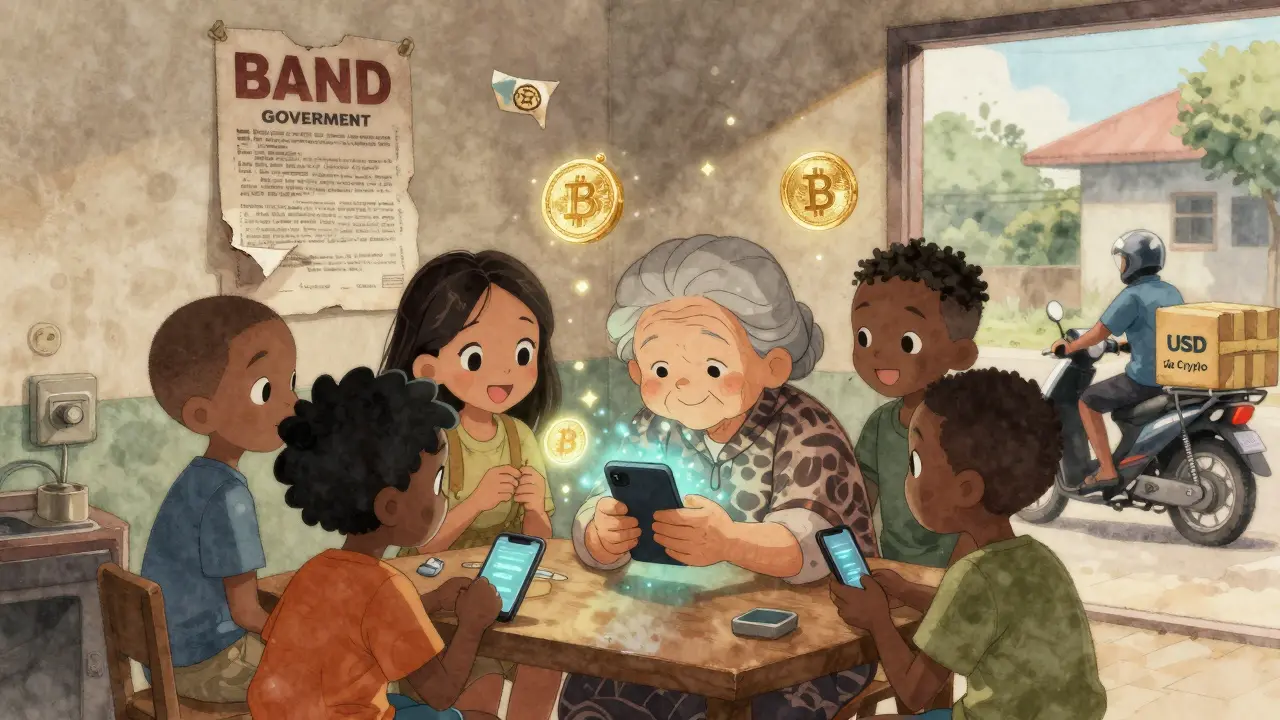
The Global Pattern: Bans Don’t Work, Regulation Does
Governments around the world have tried to ban or restrict crypto. India blocked bank transfers. China cracked down on mining. Russia tried to outlaw private use. None of it stopped adoption. What changed things? When adoption reached a scale no government could ignore, regulation followed. In the U.S., the SEC spent years suing crypto companies. But by 2025, pressure from voters, businesses, and state governments forced a shift. The GENIUS Act passed with bipartisan support - 68-30 in the Senate, 308-122 in the House. It created clear rules for stablecoins: they must be backed 1:1 by U.S. dollars or short-term Treasury bonds. No more shady reserves. No more collapses like TerraUSD. At the same time, Congress removed IRS reporting requirements for small crypto transactions under $200. Why? Because enforcing that rule would have meant tracking every coffee bought with Bitcoin - a nightmare for regulators and a burden on everyday users. The lesson is simple: you can’t outlaw what people need. You can only regulate it.Who’s Driving This Movement?
Grassroots crypto adoption isn’t led by venture capitalists or Wall Street firms. It’s led by teenagers in Lagos teaching their parents how to use P2P apps. It’s led by Nigerian students using crypto to pay for online courses from Coursera and Udemy. It’s led by mothers in Buenos Aires sending dollars to their kids studying abroad. Social media plays a huge role. TikTok and WhatsApp groups in Nigeria are full of tutorials: “How to buy USDT with naira,” “Best P2P sellers in Abuja,” “How to avoid scams.” No corporate ads. No financial advisors. Just real people helping real people. This is peer-to-peer finance, built from the ground up - not handed down from regulators or banks.
The Real Risk Isn’t Crypto - It’s Ignoring the Need
Critics warn about scams, volatility, and lack of consumer protection. Those concerns are valid. But they miss the bigger picture: the real risk is doing nothing. When governments refuse to acknowledge that people are turning to crypto because traditional finance has failed them, they push adoption into the shadows. That’s when scams thrive. That’s when people lose money. That’s when the most vulnerable get hurt. The answer isn’t to ban crypto. It’s to build better systems - regulated, transparent, and accessible. Stablecoin rules, clear tax guidelines, and licensed P2P platforms can protect users without crushing innovation. In Nigeria, the government didn’t win by banning crypto. It won by learning from it.What’s Next?
The trend is global. As inflation rises in emerging economies, as banking systems remain slow or exclusionary, and as smartphone access grows, crypto adoption will keep spreading - even if governments try to stop it. The next countries likely to see massive grassroots crypto use? Egypt, Turkey, Indonesia, and Kenya. All have high inflation, weak currencies, and large unbanked populations. All are already seeing P2P crypto trading grow. The future of money isn’t just about technology. It’s about trust. When people lose faith in their government’s money, they’ll find another one - digital, decentralized, and outside their control. The question isn’t whether crypto will survive government bans. It’s whether governments will adapt before it’s too late.Why do people use crypto if their government bans it?
People use crypto when traditional systems fail - when inflation destroys savings, banks freeze accounts, or remittance fees are too high. Crypto offers a way to store value, send money across borders, and access global markets without needing permission from banks or governments. In countries like Nigeria, it’s not a choice - it’s survival.
Can governments actually stop crypto adoption?
No, not permanently. Banning crypto only drives it underground. People find ways to trade using P2P platforms, decentralized wallets, and local traders. When adoption reaches a critical mass - like in Nigeria - governments shift from banning to regulating. The technology is too widespread to erase.
Is crypto safe to use in countries with bans?
It carries risks - scams, price swings, and lack of legal recourse. But for many, the risks of not using it are worse. Using trusted P2P platforms, avoiding unknown wallets, and sticking to stablecoins like USDT reduce danger. Many users treat crypto like cash: only hold what you need, don’t store large amounts long-term.
What’s the difference between crypto adoption in the U.S. and Nigeria?
In the U.S., people buy crypto as an investment or for tech interest. In Nigeria and similar countries, people use it to survive - to protect savings from inflation, send money home, or pay for services when banks won’t let them. It’s not speculation; it’s substitution.
Will governments ever fully accept crypto?
They already are. The U.S. passed the GENIUS Act in 2025 to regulate stablecoins. Nigeria now licenses crypto exchanges. India created a tax framework. Governments aren’t embracing crypto because they love it - they’re doing it because they have no choice. When millions of people use it daily, regulation becomes inevitable.




Abdulahi Oluwasegun Fagbayi
January 20, 2026 AT 13:57When your naira can't buy bread, you don't ask for permission to eat. You just find a way. Crypto didn't come to Nigeria because it was cool-it came because the system was broken. And people aren't stupid. They see the math.
No bank told them how to do it. No regulator approved it. Just neighbors teaching neighbors on WhatsApp. That's real innovation-not from Silicon Valley, but from Lagos marketplaces.
The government tried to shut it down. They failed. Not because tech is magic. Because survival doesn't need permission.
Anna Topping
January 22, 2026 AT 05:13Okay but like… why is everyone acting like this is some revolutionary act? People have been using crypto as a workaround for broken systems since 2013. It’s not new. It’s just… obvious. The real story is how slow the West is to catch up.
Meanwhile, my cousin in Abuja sends money home with USDT and pays less in fees than I do using Venmo to split pizza.
Jeffrey Dufoe
January 22, 2026 AT 22:14I get it. People need to send money home. But isn’t there a better way than crypto? Like… why not fix the banks instead of bypassing them?
I’m not against it. I just think we should be helping countries build better systems, not just letting people use crypto as a band-aid.
katie gibson
January 24, 2026 AT 03:06OMG this is literally the most profound thing I’ve read all year. Like… imagine being so desperate that you turn to blockchain just to buy rice??
I’m crying. I’m so emotional. This is why I love humanity. The resilience. The grit. The *aesthetic* of survival.
Also, I just bought my first SOL. For vibes. And also for my ancestors.
Margaret Roberts
January 25, 2026 AT 01:42Let me guess-this is one of those ‘crypto is freedom’ propaganda pieces. Where’s the data on all the scams? The stolen wallets? The people who lost life savings because they trusted some guy on Telegram?
And don’t even get me started on the environmental cost. You think these miners aren’t burning coal? You think the grid in Lagos doesn’t already struggle?
This isn’t empowerment. It’s exploitation dressed up as innovation.
Tselane Sebatane
January 27, 2026 AT 00:55Listen. I’m from South Africa. We’ve been through this. ZAR dropped 40% in two years. People turned to Bitcoin. Not because they loved tech. Because their pensions vanished. Their savings evaporated. Their banks said ‘sorry’ and closed their doors.
What’s happening in Nigeria? It’s not unique. It’s universal. When the system betrays you, you build your own. And guess what? You don’t wait for permission. You don’t ask nicely. You just do it.
They banned it? Good. Let them ban the truth. The people will keep trading. The phones won’t stop working. The internet won’t vanish. And neither will the will to survive.
So if you’re still waiting for a ‘regulatory framework’ to start helping your family? You’re already too late.
Linda Prehn
January 28, 2026 AT 05:47So crypto is now the new religion? People are just going to start worshiping Bitcoin instead of God? No regulation? No oversight? Just trust some guy on TikTok who says ‘buy USDT here’?
I mean… I get it. The system’s broken. But replacing it with a wild west of anonymous traders? That’s not freedom. That’s chaos with Wi-Fi.
Adam Lewkovitz
January 29, 2026 AT 23:32Let’s be real. This isn’t about survival. It’s about Americans pretending they care about Africans while ignoring the fact that crypto is just another tool for the rich to get richer.
Who’s making money off this? Not the teacher in Lagos. It’s the VCs in San Francisco who sold their tokens before the crash. The same people who told you to ‘HODL’ while they cashed out.
Stop romanticizing poverty. This isn’t empowerment. It’s extraction with a blockchain logo.
Clark Dilworth
January 30, 2026 AT 11:55What we’re witnessing here is a paradigmatic shift in monetary sovereignty-decentralized peer-to-peer value transfer circumventing centralized fiat control architectures. The state’s monopoly on money is being challenged by emergent cryptographic consensus mechanisms enabled by ubiquitous mobile infrastructure.
The Nigerian case exemplifies a bottom-up monetary rebellion, where liquidity sovereignty is reclaimed via non-custodial wallets and atomic swaps-bypassing correspondent banking rails entirely.
This isn’t adoption. It’s ontological reclamation.
Mark Estareja
January 31, 2026 AT 10:13Can we talk about how sad this is? People are literally using crypto to buy rice while the rest of us are arguing about NFTs and dog coins.
It’s not inspiring. It’s tragic. We live in a world where a mother has to gamble her last savings on a volatile asset just to feed her kids. And we call it ‘innovation’?
This isn’t the future of finance. It’s the collapse of dignity.
Athena Mantle
February 2, 2026 AT 00:55Okay but like… I just bought a Bored Ape and now I feel like I understand the Nigerian struggle 😭
It’s the same energy. The same energy of saying ‘I don’t trust the system’ and then building my own world. I cry every time I see someone on TikTok explain how to use Trust Wallet. It’s like… digital ancestral healing?
Also, I sent my friend 0.01 ETH to help her pay for her daughter’s school fees. It’s not much. But it’s love. 💫
carol johnson
February 2, 2026 AT 11:55So now crypto is the new Black Friday? People are lining up to buy USDT like it’s a limited-edition sneaker?
I’m just saying… if you’re using crypto to survive, you’re not a pioneer. You’re a victim. And the people selling you the ‘solution’? They’re the ones making the real money.
It’s capitalism. Just with more memes.
Chidimma Catherine
February 3, 2026 AT 04:00I am a teacher in Enugu. I use USDT to pay for my daughter’s online classes. I buy it from a man who sells it behind the market. He is a good man. He does not cheat. We trust each other. No bank. No app. Just phone and handshake.
They say crypto is dangerous. But what is more dangerous? To have no money or to have money that disappears overnight?
They banned it. We kept going. Not because we love technology. Because we love our children.
Nathan Drake
February 4, 2026 AT 00:17There’s a deeper truth here. The state’s failure isn’t just economic-it’s moral. When you make it impossible for people to feed their families, you’re not enforcing policy. You’re abandoning your social contract.
Crypto isn’t the answer. It’s the symptom. The real question is: why did we let things get this bad? And why do we still act surprised when people find a way out?
Taylor Mills
February 5, 2026 AT 22:38So let me get this straight-Nigeria banned crypto, people kept using it, and now we’re supposed to clap? This is why America’s falling apart. You let people bypass the system, then call it ‘resilience.’
What’s next? People using cash to avoid taxes? Using barter to dodge minimum wage laws? This isn’t freedom. It’s anarchy with a smartphone.