

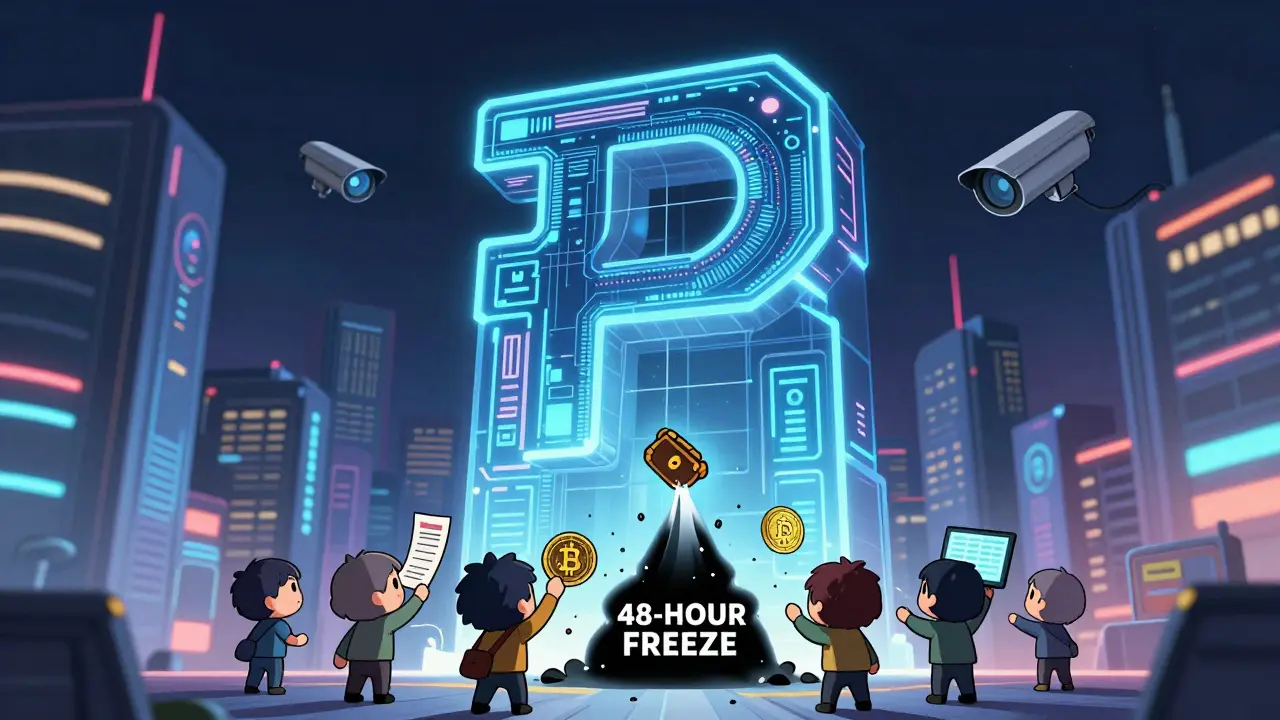
When you try to withdraw cryptocurrency to cash in Russia today, your bank doesn’t just check your balance - it checks your behavior. Since September 2025, Russian banks have been monitoring every move you make after converting crypto to rubles. If your transaction looks even slightly off, your daily cash withdrawal limit drops to just 50,000 rubles (about $600 USD) for 48 hours. No warning. No appeal. Just a freeze.
What Triggers the Freeze?
It’s not about how much money you’re withdrawing. It’s about how you’re doing it. Russian banks use 12 specific red flags to decide if a transaction is risky. These aren’t guesses - they’re coded into their systems. If you withdraw cash at 2 a.m., or use an ATM more than 50 kilometers from your registered address, you’re flagged. If you pay with a QR code instead of a physical card, or if your phone suddenly gets three unknown messages in six hours before the withdrawal, your account gets locked.Even the amount matters. Transactions that aren’t divisible by 1,000 rubles - like withdrawing 65,000 instead of 64,000 or 66,000 - trigger alerts. That’s intentional. It forces users to make round-number withdrawals, making patterns easier to track. Banks also watch for sudden cash withdrawals within 24 hours of receiving a large transfer through Russia’s Faster Payments System. If you just got 200,000 rubles from a crypto exchange and pulled it out the next day? You’re in the system’s crosshairs.
And then there’s the device. If your phone or computer shows signs of malware - unusual login patterns, unknown apps, or modified system files - your withdrawal gets blocked. Banks aren’t just tracking money. They’re tracking your digital footprint.
How Banks Respond When You’re Flagged
Once a transaction triggers one or more of these flags, the bank doesn’t wait. Within 15 minutes, you get an SMS and a push notification in your mobile banking app. It says something like: “Your withdrawal has been temporarily limited. Contact your branch for verification.”That’s not a suggestion. It’s a demand. You have 48 hours to prove the money came from a legitimate source. That means going to your branch in person - Sberbank, Tinkoff, VTB - with screenshots of your crypto wallet, exchange receipts, and sometimes even notarized transaction histories from platforms like Paxful or LocalBitcoins. If you use a decentralized exchange that doesn’t keep records? Tough luck. The bank won’t accept it.
During those 48 hours, you can’t withdraw more than 50,000 rubles per day. Not 51,000. Not 55,000. Exactly 50,000. Even if you have 5 million rubles in your account. The limit resets after two days - unless you trigger another flag. Then it starts over.
Who Gets Hit the Hardest?
It’s not just random users. The system targets a very specific group: people who convert crypto to cash in person. These are the P2P traders - the ones who meet in cafés, parking lots, or small exchange offices to swap Bitcoin for rubles. Before September 2025, these transactions made up about $2.1 billion in monthly volume. Now, 63% of these small exchange operators report losing 40-60% of their revenue. Many have shut down.For regular users, it’s worse. Tinkoff Bank’s Trustpilot rating dropped from 4.3 stars in August 2025 to 2.1 in September. Over 78% of negative reviews mention withdrawal blocks after crypto conversions. Reddit’s r/RussianCrypto community collected 147 firsthand reports of freezes. The average time to get unblocked? 3.2 business days. Some users waited over a week.
And it’s not just about inconvenience. People are being asked to prove income sources for crypto earnings - something most don’t have. No pay stubs. No invoices. Just a wallet address and a blockchain explorer. Banks don’t care. They want paperwork. And if you can’t provide it? Your account stays frozen. Or worse - flagged for further investigation.

The Bigger Picture: Russia’s Two-Faced Crypto Policy
Here’s the twist: Russia isn’t trying to kill crypto. It’s trying to control it.While regular people struggle to withdraw cash, banks are being allowed to trade crypto - under strict rules. In September 2025, the Central Bank of Russia announced that institutions could hold up to 1% of their regulatory capital in digital assets, as long as they keep reserves of 150%. That means if a bank has $1 billion in capital, it can hold $10 million in Bitcoin - but must keep $15 million in cash on hand.
At the same time, the government is preparing to let Russian companies use crypto for international trade. Finance Minister Anton Siluanov confirmed this in October 2025. The goal? Use crypto to bypass Western sanctions - but only in controlled, monitored channels.
So here’s the reality: if you’re a citizen trying to cash out your crypto? You’re a risk. If you’re a bank or a corporation using crypto to buy oil or metals from Asia? You’re part of the plan.
How People Are Adapting
Some users have found ways to work around the system - but they’re risky.One common tactic? Using multiple bank accounts. Active traders now average 3.7 different accounts, spreading withdrawals across them to avoid triggering patterns. But here’s the catch: banks now monitor cross-institutional activity. If you withdraw from Sberbank, then VTB, then Tinkoff within a week? That’s a red flag too.
Another strategy? Build a “natural” transaction history. Experts recommend keeping at least three months of regular spending - grocery runs, utility bills, subscriptions - before attempting a crypto withdrawal. Users who do this report a 73% lower chance of being flagged, according to internal bank data reviewed by legal analysts.
But even these tricks are getting harder. Sberbank alone hired 217 new analysts in 2025 just to monitor crypto-related activity. Transaction processing times for flagged withdrawals jumped from 2.3 hours to 18.7 hours. You’re not just fighting a rule. You’re fighting a machine.
What’s Coming Next?
The restrictions aren’t done. By December 1, 2025, banks will be required to verify the source of any crypto-to-fiat transaction over 100,000 rubles - double the current threshold. And legislation is moving through the Duma that could make repeated violations a criminal offense.Under the proposed law, organizing repeated crypto withdrawals could lead to up to five years in prison. If it’s done “in an organized group”? Up to ten years. That’s not a fine. That’s jail time.
Meanwhile, the Central Bank is testing blockchain-based settlement systems for commodity exports - with five major banks. This isn’t about banning crypto. It’s about replacing decentralized money with state-controlled digital assets. The digital ruble, launching in phases starting September 2026, will be the endgame.
Bottom Line: You Can’t Outrun the System
Russia’s approach isn’t about stopping crypto. It’s about making it inconvenient enough that people give up - or move their activity underground, where it’s harder to track. The banks aren’t your allies. They’re enforcers.If you’re holding crypto in Russia and need cash? Your best move is to avoid large, sudden withdrawals. Use small, consistent transfers. Stick to known platforms. Keep records. And don’t expect help from your bank. They’re not there to serve you. They’re there to monitor you.
And if you’re thinking of trying to bypass these rules? The cost isn’t just your money. It could be your freedom.
Can Russian banks legally block my crypto withdrawal?
Yes. Under Federal Law No. 3-1092818-2025, Russian banks have full legal authority to freeze cash withdrawals for up to 48 hours if a transaction matches any of 12 predefined suspicious activity indicators. This law was enacted in September 2025 and is enforced across all 347 licensed banks in Russia. There is no right to appeal during the 48-hour freeze period.
What happens if I withdraw more than 50,000 rubles after a crypto conversion?
Your withdrawal will be automatically blocked at the ATM or bank counter. The system will display a message that the transaction exceeds your temporary limit. You won’t be able to complete the withdrawal until the 48-hour restriction period ends - unless you visit your branch and provide documentation proving the source of your funds. Even then, approval isn’t guaranteed.
Do I need to pay taxes on crypto-to-fiat withdrawals in Russia?
Legally, yes - Russia taxes crypto profits at 13% for residents. But in practice, most users don’t report it because the government hasn’t set up a clear reporting system. However, banks now track all crypto-related transactions and report them to Rosfinmonitoring. If you’re audited, you’ll need to prove your income and tax payments - or face penalties.
Can I use a foreign bank to withdraw crypto from Russia?
It’s extremely difficult. Russian banks are required to block transfers to foreign accounts if they detect crypto-related activity. Even if you have a foreign bank account, your Russian bank will likely freeze your funds before the transfer can happen. Additionally, international transfers from Russia are subject to strict currency controls, and crypto-linked transfers are automatically flagged.
Is there a way to avoid these restrictions entirely?
No - not if you’re using Russian banks. The restrictions apply to all licensed banks in Russia. The only way to avoid them is to not convert crypto to rubles at all - or to use non-bank channels like underground P2P networks, which carry high risks of fraud, scams, and legal exposure. The government’s goal is to make these alternatives unsafe and unprofitable.





Avantika Mann
February 17, 2026 AT 01:18Wow, this is wild. I never realized how much banks are watching every little move. I’ve been using crypto for years, and this feels like living under a microscope. But honestly? It makes sense if they’re trying to stop money laundering. I just hope they don’t crush regular folks trying to get by.
My friend in Mumbai just got locked out for 48 hours after cashing out a small amount. She had to drive 30km to her branch with screenshots and a notarized letter. No one helped her. No email reply. Just silence. It’s exhausting.
andy donnachie
February 18, 2026 AT 01:06Interesting breakdown. The 12 red flags are chillingly precise. I’ve worked in compliance in Dublin, and this level of behavioral tracking is next-level. They’re not just flagging transactions-they’re profiling users. The QR code trigger? That’s brilliant from a surveillance standpoint. You’re basically forcing people into legacy banking habits.
Also, the ‘round number’ rule? That’s pure behavioral economics. They want predictability. And predictability = control.
kieron reid
February 18, 2026 AT 07:33lol. so banks are now AI-powered babysitters? congrats, russia. you’ve turned your citizens into financial hostages. next they’ll lock your account if you sneeze too hard near an atm.
also, 50k rubles a day? that’s like 600 bucks. i could buy 3 burritos and a pack of smokes. this isn’t anti-crypto. it’s anti-human.
jennifer jean
February 18, 2026 AT 18:35Okay but can we talk about how insane it is that they track your phone messages before a withdrawal? 🤯 Like… who even does that? I’ve been using crypto since 2020 and I’ve never felt this watched. It’s like they’re afraid of normal people having freedom.
Also, the fact that they’re letting banks trade crypto while locking regular users out? That’s just… yikes. Double standards much? 😔
Sasha Wynnters
February 18, 2026 AT 22:28It’s not about crypto. It’s about sovereignty. Russia isn’t trying to kill digital money-it’s trying to birth a new kind of state-controlled liquidity. The digital ruble is the real endgame. Everything else? Just theater. The 48-hour freeze? A psychological nudge. A slow drip of fear to condition people into compliance.
You think you’re fighting a bank? Nah. You’re fighting a state that’s rewriting the social contract one transaction at a time. The blockchain isn’t the threat. The centralized ledger is.
And the irony? The very tools meant to decentralize finance are now being weaponized to enforce conformity. Welcome to the future. It’s beige, bureaucratic, and deeply, deeply lonely.
Rajib Hossaim
February 20, 2026 AT 21:58This is a deeply concerning development. While the intention may be to combat illicit financial flows, the collateral damage to legitimate users is significant. The absence of due process during the 48-hour freeze period raises serious legal and ethical questions under international human rights frameworks.
Furthermore, the requirement to provide documentation from decentralized exchanges-where no such records exist-is inherently unreasonable. This effectively criminalizes privacy-preserving financial behavior.
Jenn Estes
February 22, 2026 AT 06:36Wow. Just wow. You’re telling me people are getting locked out for withdrawing 65k instead of 64k? That’s not a policy. That’s a joke. And now they’re calling it ‘behavioral monitoring’? Sounds like a dystopian AI experiment.
Also, why is no one talking about how this targets P2P traders? These are small-time people trying to survive. Not criminals. Just folks who don’t have a bank account that trusts them.
And don’t even get me started on the ‘no appeal’ part. That’s not banking. That’s dictatorship with a spreadsheet.
Anandaraj Br
February 23, 2026 AT 20:19theyre not even trying to hide it anymore
its like they want everyone to give up and just use the digital ruble
and the worst part? the people who get punished the most are the ones who need cash the most
no job no savings no safety net
and now they cant even get their own money
and the banks? theyre just robots with logos
no heart no mercy
just code and control
and i swear if i lived there i would burn my card and move to canada
or at least hide my crypto in a shoebox
and pray
AJITH AERO
February 25, 2026 AT 19:14so russia’s new crypto policy is: if you’re poor, you’re guilty. if you’re rich, you’re a national hero.
congrats, you’ve invented financial apartheid.
next up: mandatory crypto confessionals every thursday at 3pm. bring your wallet and your shame.
Angela Henderson
February 26, 2026 AT 02:34Honestly, I don’t even know what to say anymore. I’ve been reading this whole thing and I just… I feel sad. Like, I get why they’re doing it. I do. I think they’re scared of losing control. But the way they’re doing it? It’s so cold. It’s like they’re treating every person like a potential criminal. I used to think crypto was about freedom, but now I think it’s just about who gets to be trusted.
And the fact that you have to have three months of grocery receipts just to get your own money out? That’s not security. That’s humiliation. And it’s not just happening to rich people. It’s happening to teachers, nurses, delivery drivers. People who just want to live. And that’s the part that breaks my heart.
Geet Kulkarni
February 27, 2026 AT 08:31While the operational mechanics are indeed sophisticated, the underlying policy framework exhibits a profound disregard for financial autonomy and due process. The 12 red flags, while technically precise, function as a de facto presumption of guilt. The requirement to substantiate decentralized transactions via institutional documentation is not merely impractical-it is epistemologically impossible.
Moreover, the asymmetry in policy application-permitting institutional crypto holdings while criminalizing individual liquidity access-reveals a strategic objective: the monopolization of monetary sovereignty. The digital ruble is not an innovation. It is a surveillance infrastructure disguised as currency.
Paul David Rillorta
February 28, 2026 AT 23:57okay but what if this is all a psyop? what if the banks aren’t even real? what if it’s all just a simulation run by the feds and the cia and some russian oligarch who’s also a robot?
what if the ‘48 hour freeze’ is just a glitch in the matrix and if you hold your breath for 3 minutes while tapping your left foot 7 times, your account unlocks?
i’m not saying it’s true… but i’m also not saying it’s not.
also-did anyone else notice that the ‘faster payments system’ is literally just a backdoor for the government to track every ruble? yeah. i’m not buying it.
Lauren Brookes
March 1, 2026 AT 19:49This is fascinating, honestly. It reminds me of how governments in the 1980s tried to control information by making it hard to access-censorship through bureaucracy. Now they’re doing it with money. The system isn’t broken. It’s working exactly as designed.
But here’s the thing: humans adapt. They always do. People are already using multiple accounts, building transaction histories, avoiding ATMs at night. They’re becoming financial ghostwriters-crafting normalcy to survive.
What’s terrifying isn’t the surveillance. It’s how quietly people are learning to perform compliance. The real victory for the state isn’t locking accounts. It’s making people believe they deserve to be locked.
Chris Thomas
March 2, 2026 AT 10:08Let’s cut through the noise. This isn’t about crypto. It’s about AML/KYC compliance on steroids. The 12 red flags? Standard behavioral anomaly detection-only now with state-backed enforcement. The round-number rule? Classic money laundering countermeasure. You don’t want to see 65,000 rubles because it’s not a round number? That’s because structured transactions are a red flag in any jurisdiction.
The real issue? The lack of appeal. That’s a due process failure. Not a crypto failure. And yes, the asymmetry between institutional and retail access is hypocrisy-but that’s par for the course in centralized finance. Banks are not your friends. They’re intermediaries with regulatory mandates. The digital ruble? That’s just CBDC 101. Welcome to the future. It’s not pretty. But it’s not new.
James Breithaupt
March 3, 2026 AT 04:02As someone who’s lived in both the US and Russia, I can say this: Russia isn’t unique here. The U.S. does similar things with cash deposits over $10k. The difference? In America, you’re asked politely. In Russia, you’re interrogated like a suspect.
The digital ruble? It’s inevitable. Every major economy is moving toward programmable money. The question isn’t if-it’s whether you’ll be allowed to opt out.
And honestly? If you’re using crypto to avoid state control… you’re already playing a game you can’t win. The system always wins. But you can still choose how you play it.
Sarah Shergold
March 4, 2026 AT 15:0150k a day??
thats like 2 cups of coffee a day
imagine having 5 million in your account and being told you can only touch 600
thats not banking
thats emotional abuse
and the worst part? theyre proud of it
Nova Meristiana
March 5, 2026 AT 22:08Oh please. They’re not blocking crypto. They’re blocking freedom. And if you think this is about ‘money laundering,’ you’re not paying attention.
This is about control. About making people dependent. About turning every transaction into a loyalty check.
And the digital ruble? That’s not money. That’s a leash. And they’re not even hiding it anymore.
So go ahead. Keep your crypto. Keep your dreams. They’ll just freeze your account anyway. And then they’ll tell you it’s for your own good.
Alan Enfield
March 6, 2026 AT 07:13Interesting read. I’ve been in banking compliance for over a decade, and this is one of the most extreme implementations I’ve seen-but not the first. The behavioral triggers (QR codes, timing, device fingerprinting) are all things we’ve tested in pilot programs in the UK. The difference? Russia’s doing it without transparency or recourse.
It’s not about crypto. It’s about creating a friction economy. Make it so hard to use crypto that people stop. Then they’ll switch to the digital ruble. And then? No one can escape the ledger.
Jennifer Riddalls
March 8, 2026 AT 04:38I just want to say… I’m so sorry if you’ve been through this. I know what it’s like to feel like your own money doesn’t belong to you. It’s not just about the 50k limit. It’s about the shame. The fear. The feeling that you’re doing something wrong just because you’re trying to survive.
You’re not alone. I’ve seen people cry over this. And I just want you to know: you’re not a criminal. You’re just trying to live.
And if you need help, I’m here. No judgment. No questions. Just a listening ear.
Kyle Tully
March 9, 2026 AT 16:43you think this is bad? wait until they start using your shopping habits to decide if you can withdraw
next thing you know, you buy a yoga mat and your account gets frozen because ‘non-conforming lifestyle patterns detected’
and don’t even get me started on the fact that they’re using phone messages as evidence
who gave them the right to spy on your texts?
and why are we still acting like this is normal?
we’re not living in a society
we’re living in a database
Ian Plunkett
March 10, 2026 AT 22:48Let’s be real. This isn’t about crypto. It’s about power. The state doesn’t want you to have access to outside financial systems. It wants you to be dependent on its infrastructure. The digital ruble isn’t innovation-it’s a trap.
And the fact that they’re using ‘suspicious behavior’ as a blanket excuse? That’s how authoritarian regimes work. They don’t need laws. They just need fear.
So go ahead. Withdraw 64,000. Use a QR code. Call your mom. They’ll find a way to lock you out. And then they’ll call it ‘compliance.’
george chehwane
March 12, 2026 AT 21:14Let’s call this what it is: financial fascism. They’ve weaponized compliance to turn citizens into data points. The round-number rule? That’s not anti-money laundering. That’s anti-individuality. You’re not allowed to be spontaneous with your money. You’re not allowed to be human.
The digital ruble isn’t the future. It’s the endgame. And the people who built this system? They don’t care if you live or die. They care if you obey.
Charrie VanVleet
March 14, 2026 AT 11:10Hey, if you’re reading this and you’ve been frozen out-breathe. You’re not alone. I’ve been there. I’ve had my account locked for a week because I withdrew 57k. Took me 3 days, 2 emails, and a notarized letter from a guy I met in a parking lot to get it back.
But here’s the thing: we’re still here. We’re still trading. We’re still finding ways. And that’s the real win. They can freeze accounts. They can track devices. But they can’t stop people from trying.
Keep going. Keep small. Keep quiet. And if you need someone to talk to? I’m here. No judgment. Just solidarity.
Beth Erickson
March 14, 2026 AT 14:00why are people even surprised? russia has been building this for years. they don’t want crypto. they want control. and if you think this is bad, wait until they start linking your crypto use to your social credit score.
next thing you know, you can’t get a train ticket because you withdrew 60k last week.
good thing i live in america. at least here we still have freedom.
…wait. do we?
Ruby Ababio-Fernandez
March 15, 2026 AT 15:57they’re not stopping crypto. they’re stopping you.
Sasha Wynnters
March 16, 2026 AT 05:30What’s being ignored here is the deeper truth: this isn’t about Russia. It’s a blueprint. The U.S., the EU, China-they’re all watching. The digital ruble is the first fully implemented state-controlled crypto-to-fiat chokepoint. What happens here? It’ll happen everywhere.
The banks aren’t the enemy. The system is. And the system is winning because we’re too busy arguing about QR codes to see the cage being built around us.
jennifer jean
March 17, 2026 AT 00:18Yeah, and what’s even scarier? They’re training AI on our behavior. Every time we adjust-use a different ATM, wait 72 hours, use a different device-they feed that into the model. Next year, it’ll predict our next move before we make it.
We’re not just being watched. We’re being modeled. And soon, we won’t even know why we got locked out. The system just… decided.
Angela Henderson
March 17, 2026 AT 12:25I think about this every time I go to the grocery store now. I used to think of money as freedom. Now I see it as a permission slip. You need to prove you’re worthy of your own cash. And the weirdest part? I’m starting to feel guilty for wanting it.
I don’t know if I’ll ever feel like I deserve to withdraw 64,000 again.