
Imagine you deposit money into a savings account, but the bank tells you that if you want the highest interest rate, you can't touch your cash for three years. In the world of Liquidity Mining is a mechanism in decentralized finance where users provide assets to liquidity pools in exchange for rewards., this scenario is not just possible-it's standard practice. As we navigate through August 2026, the landscape of decentralized finance (DeFi) has matured significantly from the wild west days of 2020. Today, understanding the duration and lock-up mechanics of these protocols is no longer optional; it is essential for protecting your capital and maximizing returns.
You might be wondering why protocols would force you to keep your tokens locked up. The short answer is stability. Protocols need reliable liquidity to function efficiently. By locking your assets, you guarantee that the pool won't dry up during market volatility. In return, they pay you premium rewards. But there is a catch: while your money is locked, you lose control over it. If the market crashes or a better opportunity arises, you are stuck watching from the sidelines.
How Liquidity Mining Works with Time Constraints
To understand duration, we first need to look at the engine driving these rewards: the Automated Market Maker is a smart contract system that facilitates trading without a traditional order book by using liquidity pools. (AMM). When you provide liquidity, you are essentially lending your tokens to this AMM so others can trade against them. You earn fees from every trade, plus additional protocol tokens as incentives.
In the early days, platforms like Uniswap is a leading decentralized exchange protocol on Ethereum known for its flexible liquidity provision model. allowed you to enter and exit pools instantly. This flexibility was great for users who wanted quick profits, but it created chaos for the protocol. Liquidity would vanish overnight when markets got shaky, causing massive price slippage for traders. To fix this, newer generations of protocols introduced time-based constraints.
Today, most serious yield opportunities come with strings attached. These strings take the form of duration requirements. You commit your assets for a set period-say, 30 days, 90 days, or even four years-and in exchange, you get a higher Annual Percentage Yield (APY). The logic is simple: the longer you promise to stay, the more valuable you are to the protocol, and the more they are willing to pay you.
Types of Lock-Up Mechanisms
Not all lock-ups are created equal. Depending on the protocol and your risk tolerance, you will encounter different structures. Knowing the difference can save you from costly mistakes.
- Flexible Liquidity: No lock-up period. You can withdraw anytime. The APY is usually lower because the protocol assumes you might leave quickly. This is common in stablecoin pairs on major DEXs.
- Time-Weighted Rewards: You can withdraw anytime, but your reward multiplier increases the longer you stay. For example, staying for 1 day gives you 1x rewards, but staying for 90 days might give you 2x rewards retroactively. This offers a middle ground between flexibility and yield.
- Fixed-Term Lock-Ups: You commit for a specific duration (e.g., 6 months). During this time, your assets are frozen. You cannot withdraw until the timer hits zero. These often offer the highest static APYs.
- Voting Escrow (veTokenomics): Popularized by Curve Finance is a decentralized exchange specializing in low-slippage swaps for similar-value assets, pioneering the veTokenomics model., this model locks tokens for up to four years. The longer you lock, the more governance power you gain, which directly boosts your fee share and rewards. This is the gold standard for long-term DeFi participants.
Each type serves a different purpose. If you are a casual user looking for extra income on idle funds, flexible or time-weighted options might suit you. If you are building a portfolio for the next decade, veTokenomics models offer superior compounding effects.
The Risk Factor: Impermanent Loss and Time
Here is the part most guides skip: locking up your assets doesn't eliminate risk; it changes it. The biggest threat to liquidity providers is Impermanent Loss is a temporary reduction in value experienced by liquidity providers when the price ratio of their deposited assets changes compared to holding them.. This happens when the price of one token in your pair diverges significantly from the other.
Let’s say you lock ETH and USDC in a pool for six months. If ETH doubles in price, the AMM automatically sells some of your ETH to buy more USDC to maintain balance. When you unlock after six months, you have more USDC but less ETH than if you had just held both in your wallet. Because ETH went up, holding would have been more profitable. That difference is impermanent loss.
Lock-ups exacerbate this risk because you cannot react to the market. In a flexible pool, you could pull out before a massive divergence. In a fixed-term lock-up, you are forced to ride the wave. However, some protocols now offer Impermanent Loss Protection is an insurance-like feature in DeFi protocols that compensates liquidity providers for losses caused by price divergence.. These schemes typically activate only after a certain duration threshold, such as 30 or 100 days. So, if you lock for too short a period, you might not qualify for protection, leaving you exposed to full IL risk.

Smart Contract Risks and Governance Changes
Beyond market risks, there are structural risks tied to duration. When you lock your assets, you are trusting the code and the people behind it for an extended period. Smart contracts are generally secure, but bugs happen. A vulnerability discovered today might not be patched for weeks. If your assets are locked for a year, you are sitting in that unpatched contract for the entire duration.
Governance changes pose another threat. Many DeFi protocols are governed by token holders. If the majority of voters decide to change the reward structure, increase fees, or alter the tokenomics during your lock-up period, you have little recourse. You cannot vote if your tokens are locked, and you cannot exit if the terms become unfavorable. This is why researching the governance history of a protocol is just as important as checking its APY.
Comparing Major Protocol Approaches
| Protocol | Primary Model | Max Lock-Up | Key Benefit | Risk Level |
|---|---|---|---|---|
| Uniswap V3 | Flexible / Concentrated | None | High capital efficiency | High (IL exposure) |
| Curve Finance | veTokenomics | 4 Years | Boosted yields & governance | Medium (Long-term lock) |
| PancakeSwap | Syrup Pools / Locks | Variable | Low gas fees, frequent payouts | Medium (Smart contract risk) |
| SushiSwap | Time-Weighted | Variable | Community-driven rewards | Medium-High |
As shown in the table, each protocol balances risk and reward differently. Uniswap V3 offers high efficiency but requires active management to mitigate impermanent loss. Curve Finance rewards patience with significant boosts, making it ideal for long-term holders. PancakeSwap leverages lower transaction fees on Binance Smart Chain to allow more frequent position adjustments, reducing the impact of gas costs on shorter durations.
Strategic Tips for Managing Lock-Ups
If you decide to dive into duration-based liquidity mining, here are some practical steps to protect yourself:
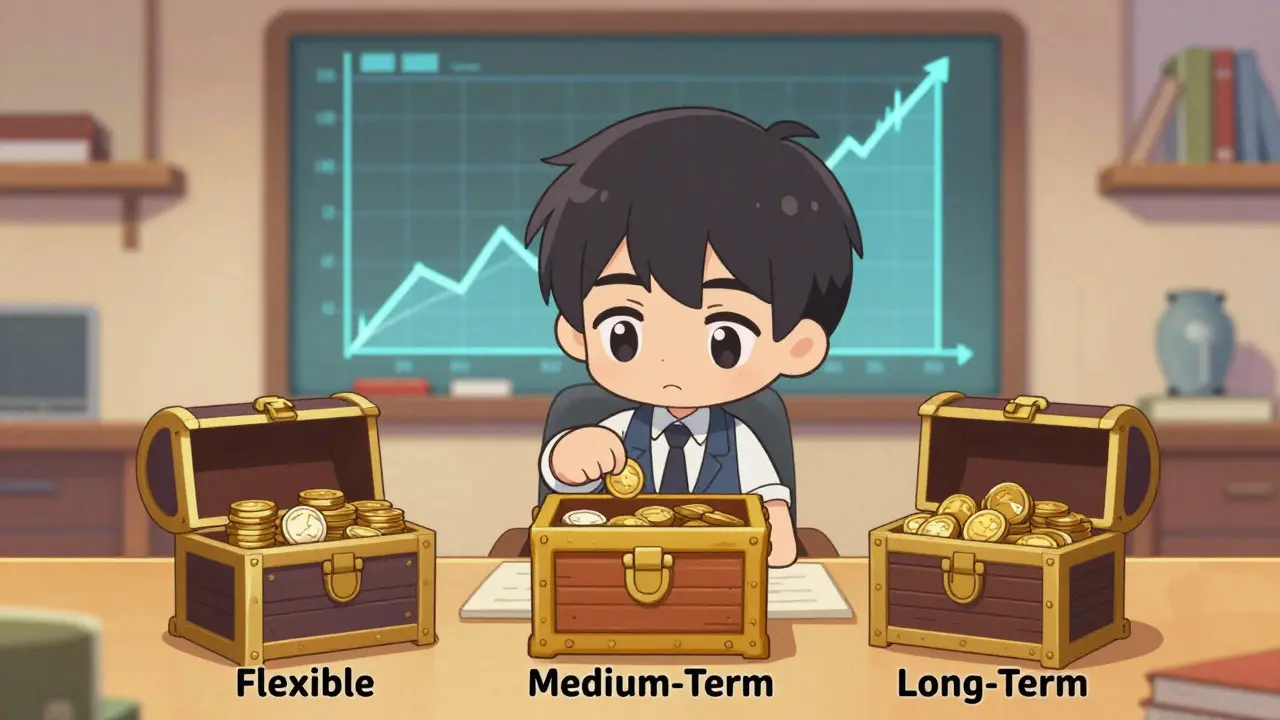
- Diversify Your Durations: Don’t lock all your assets for four years. Split your capital into buckets: 30% flexible, 30% medium-term (3-6 months), and 40% long-term. This ensures you always have some liquid capital to seize new opportunities or cover emergencies.
- Calculate Net APY: Always subtract potential impermanent loss and gas fees from the advertised APY. A 50% APY sounds great until you realize you lost 20% to IL and paid $50 in gas fees. Use online calculators to estimate net returns based on historical volatility.
- Check Exit Clauses: Some protocols allow emergency exits with a penalty. Know what that penalty is. Is it worth paying 5% to get out of a bad position? Usually, yes.
- Monitor Governance: Follow the protocol’s Discord and Twitter. If there are proposals to change reward rates or audit findings, you need to know immediately, especially if your assets are locked.
- Use Stablecoins for Lower Risk: If you are new to lock-ups, start with stablecoin pairs (e.g., USDC/USDT). Impermanent loss is minimal in these pools, making them safer for testing duration mechanics.
The Future of Duration Mechanics
By 2026, we are seeing a shift towards more sophisticated dynamic adjustment mechanisms. Protocols are no longer offering static lock-up terms. Instead, they use algorithms to adjust reward rates based on real-time Total Value Locked (TVL) and market conditions. If TVL drops, rewards spike to attract liquidity. If TVL is high, rewards stabilize. This creates a more efficient market but requires users to be more attentive.
We are also seeing the rise of cross-chain lock-ups. Assets locked on Ethereum can now sometimes be used as collateral on other chains, unlocking utility even while the primary asset is frozen. This innovation addresses the main complaint about lock-ups: illiquidity. By enabling secondary use cases, protocols make long-term commitments much more attractive.
Ultimately, liquidity mining duration and lock-ups are tools. Like any tool, they can build wealth or cause damage depending on how you use them. Understand the time commitment, respect the risks, and never lock more than you can afford to ignore for the specified period.
What happens if I try to withdraw before my lock-up period ends?
In most fixed-term lock-up systems, you simply cannot withdraw until the timer expires. The smart contract enforces this rule strictly. However, some advanced protocols offer "emergency exit" functions that allow early withdrawal at a cost, such as a percentage fee or forfeiture of accrued rewards. Always check the specific terms of the pool before committing.
How do lock-ups help reduce impermanent loss?
Lock-ups don't technically prevent impermanent loss, but they can mitigate its psychological impact. By preventing panic withdrawals during short-term volatility, they encourage users to hold through temporary dips. Additionally, many protocols tie impermanent loss protection insurance to minimum duration thresholds, meaning you only get compensated for IL if you stay locked for a certain period.
Is veTokenomics better than flexible liquidity?
It depends on your goals. veTokenomics (like Curve's veCRV) offers significantly higher yields and governance power but requires locking tokens for up to four years. Flexible liquidity offers lower yields but allows instant access to your funds. For long-term investors, veTokenomics is often superior due to compounding effects. For traders needing liquidity, flexible pools are better.
Can governance changes affect my locked assets?
Yes. Since many DeFi protocols are governed by token holders, votes can change reward rates, fee structures, or even pause the protocol. If your assets are locked, you may not be able to react to these changes. It is crucial to research the governance history and community sentiment of any protocol before locking assets for long periods.
What is the safest duration for beginners?
For beginners, starting with flexible liquidity or very short time-weighted rewards (less than 30 days) is recommended. This allows you to learn how the interface works and understand the impact of impermanent loss without risking long-term capital immobilization. Once comfortable, you can gradually experiment with longer lock-ups in stablecoin pairs.