

People still talk about a "crypto ban" in Cambodia like it’s a total shutdown. But if you’re using crypto there in 2025, you’re not breaking the law-you’re just using the wrong platform. The National Bank of Cambodia didn’t outlaw cryptocurrency. It restructured it. And the difference matters more than you think.
It’s Not a Ban. It’s a Switch.
In November 2024, Cambodia blocked access to Binance, Coinbase, and over 100 other offshore crypto sites. News headlines screamed "Cambodia Bans Crypto." But that’s misleading. The National Bank of Cambodia didn’t ban Bitcoin or Ethereum. It banned unlicensed access. Think of it like closing down illegal street vendors-not because people shouldn’t sell food, but because they’re not paying taxes, following health rules, or answering to authorities. At the time, Binance had around 200,000 Cambodian users. Most were trading crypto to send money home, gamble, or speculate. But those platforms operated outside Cambodian law. No KYC. No AML checks. No accountability. When scams exploded-especially forced labor rings running crypto fraud schemes-the government had to act. The ban wasn’t about stopping crypto. It was about stopping chaos.The Real Rule: Group 1 vs. Group 2
On December 26, 2024, the NBC dropped Prakas B7-024-735 Prokor. This wasn’t a ban. It was a rulebook. And it split crypto into two buckets:- Group 1: Tokenized securities and approved stablecoins. These are digital assets backed by real value-like a digital dollar or a share of a real estate fund. Banks can hold these, with NBC approval.
- Group 2: Bitcoin, Ethereum, Solana, and other unbacked coins. These are high-risk, speculative. Banks are banned from holding them on their books.
What Banks Can and Can’t Do
Here’s where it gets clever. Banks can’t own Bitcoin. But they can help you buy it-if they get permission. The regulation says banks are banned from holding "their own crypto-assets." That’s the key phrase. It doesn’t say they can’t help you hold yours. Legal experts agree: banks can now offer:- On-ramps: Convert your riel to crypto (or vice versa)
- Custody: Store your crypto safely
- Trading: Facilitate trades between users
Only Two Legal Exchanges
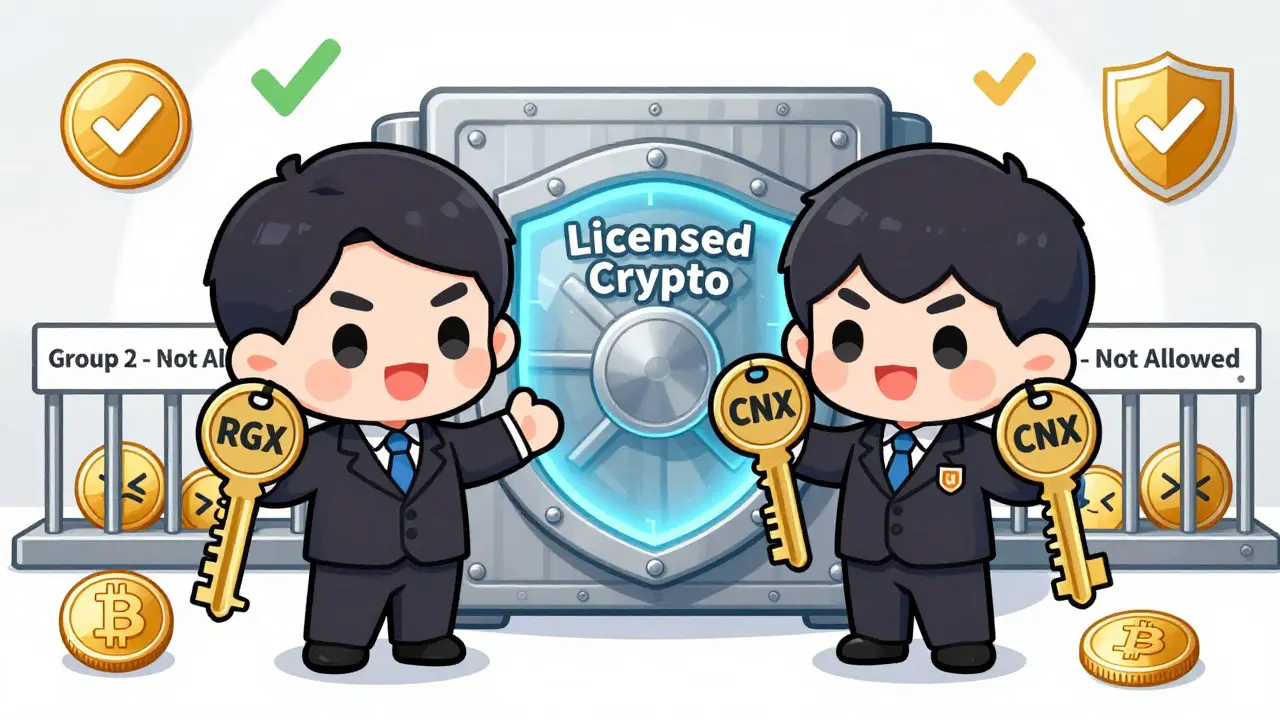
If you want to trade crypto legally in Cambodia today, you have two choices: RGX or CNX. That’s it. These platforms are under direct NBC supervision. Every transaction is monitored. Every user is verified. Every withdrawal is logged. Compare that to Binance, where you could sign up with a fake ID, trade anonymously, and send money overseas without a paper trail. That’s why the NBC shut it down. They didn’t want to ban crypto. They wanted to bring it inside the system. The catch? RGX and CNX are slower, pricier, and less flashy than offshore platforms. They don’t have 24/7 chat support or meme coins. But they’re legal. And if you’re sending money to family in rural Cambodia, or paying for local services, that matters.Bakong Is the Real Winner
You can’t understand Cambodia’s crypto rules without talking about Bakong. Launched in 2020 with help from Japan, Bakong is a blockchain-based payment system that links your bank account to a digital wallet. You can send money to anyone in Cambodia in seconds-for free. No fees. No middlemen. By 2024, over 65% of Cambodians used Bakong. That’s more than 10 million people. And it’s growing. The NBC didn’t build Bakong to compete with crypto. It built it to replace cash and reduce dollarization. Cambodia’s economy runs on U.S. dollars. The riel is weak. Bakong gives the government a way to make the riel useful again. Crypto, especially unbacked coins, threatens that. If people use Bitcoin to pay for rice instead of riel, Bakong loses relevance. That’s why the NBC is so strict. It’s not anti-innovation. It’s pro-stability.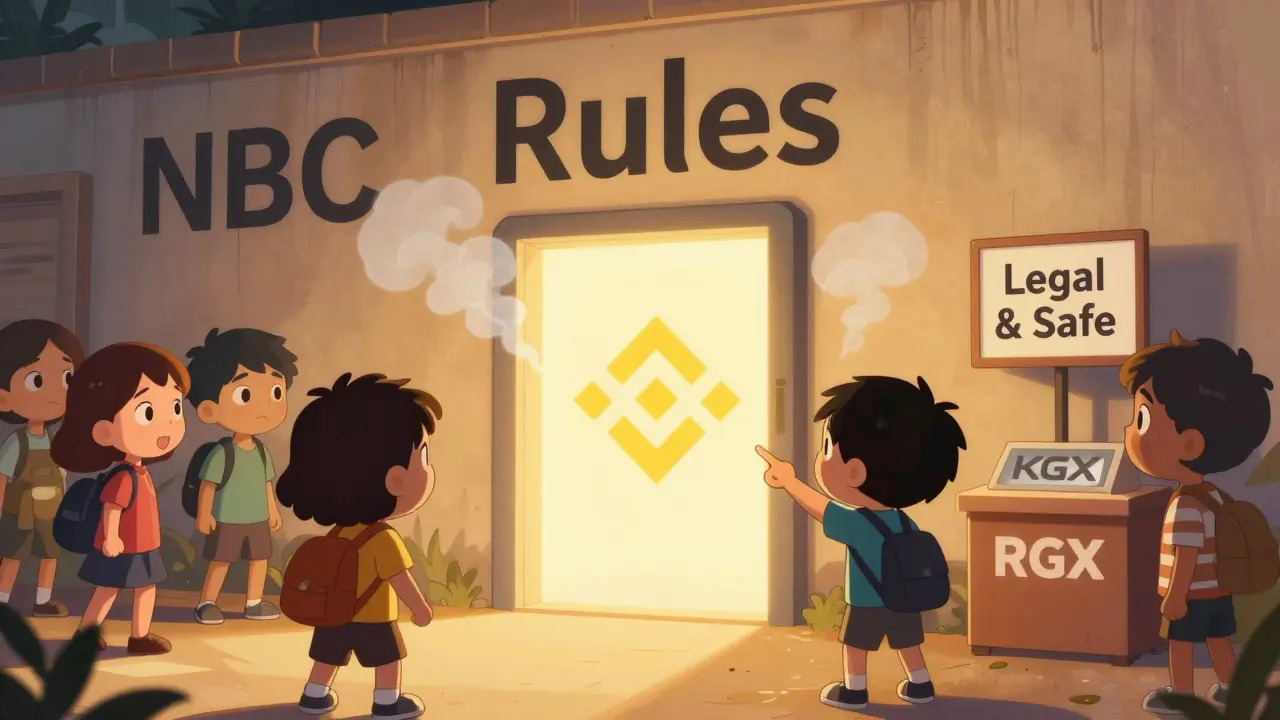
Why the Ban Isn’t Working-Yet
Here’s the problem: people are still using Binance. How? VPNs. They’re cheap, easy, and everywhere. A teenager in Phnom Penh can bypass the ban in 30 seconds. So the ban is more symbolic than effective. Analysts say the real test isn’t whether the ban works. It’s whether RGX and CNX can offer something better. Can they match Binance’s liquidity? Can they offer lower fees? Can they support the tokens people actually want to trade? Right now, they can’t. RGX and CNX are clunky. Their apps crash. Their customer service is slow. They don’t list new coins. And they charge more. So most users still go offshore. The NBC knows this. That’s why they’re still writing more rules. Licensing procedures for Crypto Asset Service Providers (CASPs) aren’t final. Banks are still waiting for clear guidelines. The system isn’t done.What This Means for You
If you’re in Cambodia and you want to use crypto:- Don’t assume it’s banned. It’s regulated.
- Don’t use Binance or Coinbase. You’re risking your account and your money.
- Use RGX or CNX if you want to stay legal.
- If you’re a business, talk to your bank about getting licensed to offer crypto services.
- If you’re just sending remittances, use Bakong. It’s faster, cheaper, and safer.
What’s Next?
Look for these changes in 2025:- More banks applying for CASP licenses
- Stablecoin integrations with Bakong
- Lower fees on RGX and CNX
- More enforcement against VPN users (unlikely, but possible)
- Regional partnerships with Thailand or Vietnam for cross-border crypto rules
It’s not a ban. It’s a transition. And it’s still early days.
Is cryptocurrency illegal in Cambodia?
No, cryptocurrency is not illegal in Cambodia. The National Bank of Cambodia banned unlicensed offshore exchanges like Binance and Coinbase, but it legalized crypto services through licensed platforms. Individuals can still hold and trade crypto using approved domestic exchanges like RGX and CNX. Banks can also offer crypto-related services to clients with NBC approval.
Can I use Binance in Cambodia in 2025?
Technically, no. The Telecommunications Regulator of Cambodia blocked access to Binance’s website and apps in November 2024. While you can still access it using a VPN, doing so violates Cambodian law. Using unlicensed platforms puts your funds at risk and may lead to account freezes or legal issues. It’s safer and legal to use RGX or CNX.
Can Cambodian banks hold Bitcoin?
No. Cambodian banks are explicitly prohibited from holding Bitcoin or other unbacked cryptocurrencies (Group 2 assets) on their balance sheets. However, they can provide services like custody, trading, and on-ramping for clients using approved platforms, as long as they don’t own the assets themselves.
What is Bakong and how does it relate to crypto?
Bakong is Cambodia’s central bank digital currency (CBDC) and blockchain-based payment system, launched in 2020. It allows users to send and receive riel digitally through linked bank accounts. The National Bank of Cambodia promotes Bakong to reduce dollarization and strengthen the riel. Crypto, especially speculative coins, competes with Bakong by offering alternative payment methods. The crypto regulations aim to channel activity toward regulated platforms that support, not undermine, Bakong’s goals.
Are there any legal crypto exchanges in Cambodia?
Yes. As of 2025, only two domestic platforms are licensed by the National Bank of Cambodia: Royal Group Exchange (RGX) and Cambodian Network Exchange (CNX). These are the only legal venues for trading crypto in Cambodia. All other platforms, including international ones, are blocked unless they obtain official licensing-which none have done yet.
Why did Cambodia ban offshore crypto exchanges?
Cambodia banned offshore exchanges to regain control over financial flows, combat crypto-related crime, and protect its national currency. Unregulated platforms were linked to massive fraud rings, including forced labor operations run by criminal syndicates. The ban also aimed to push users toward Bakong and licensed domestic platforms, strengthening oversight and reducing dollarization of the economy.





Bridget Suhr
December 13, 2025 AT 15:55So it’s not a ban, it’s a… rebrand? Cool. I get it. They’re not trying to kill crypto, just make it boring and bank-approved. Like turning a punk concert into a library reading hour.
Still, if RGX and CNX are this clunky, why not just let people use Binance with a VPN? At least then the tech works.
Also, who’s gonna pay $15 to send $50 to their cousin in Siem Reap? Bakong’s free. Why not just use that?
Feels like regulation for regulation’s sake.
But hey, at least they’re not banning Bitcoin outright. That’s something.
Ike McMahon
December 14, 2025 AT 19:25Correct. The key is understanding it’s about control, not prohibition. The NBC isn’t anti-innovation - it’s anti-chaos.
Group 1 assets = safe, traceable, compliant.
Group 2 = gambling with internet money.
They’re building a financial highway, not a dirt road full of scammers.
Steven Ellis
December 15, 2025 AT 07:57This is one of the most nuanced crypto regulatory approaches I’ve seen in Southeast Asia. Most countries either go full prohibition or full laissez-faire - Cambodia chose the hard path: controlled integration.
The distinction between holding crypto on your books versus facilitating client custody is legally brilliant. It creates a firewall between systemic risk and individual freedom.
And Bakong? That’s the real masterstroke. A CBDC that’s already adopted by 65% of the population? That’s not policy - that’s cultural engineering.
The problem isn’t the regulation. It’s execution. If RGX and CNX don’t fix their UX by Q3, this whole model collapses under the weight of its own bureaucracy. But the vision? Solid. Elegant. Worth watching.
Lynne Kuper
December 15, 2025 AT 08:46Ohhh so now it’s "not a ban"? Cute.
You mean like how the DMV says "we’re not banning you from getting a license," they’re just making you wait 18 months and pay $300 to get a sticker?
People aren’t using Binance because they love chaos - they’re using it because it works. RGX? Their app crashes when I try to log in. Twice.
So yeah, "taming crypto" - sure. Sounds like taming a tiger by tying its paws together and calling it a pet.
Eunice Chook
December 17, 2025 AT 04:26They’re not banning crypto. They’re banning the idea that people should have financial sovereignty.
"Group 2" is just crypto. Full stop. Calling it "lottery tickets" is just propaganda.
And Bakong? More state control disguised as progress.
This isn’t innovation. It’s surveillance with a blockchain sticker.
Lois Glavin
December 18, 2025 AT 22:24I live in the US but my mom’s in Phnom Penh. I’ve been using Bakong to send her money for two years now. It’s fast, free, and she doesn’t need a bank account.
So I get why the NBC wants to keep things simple. Crypto’s cool, but if it makes sending rice money harder, it’s not helping.
And honestly? I’d rather use RGX than some sketchy site where I don’t know if my cash is gone or just stuck in a server in the Philippines.
Patience, people. This isn’t a ban. It’s a slow upgrade.
Abhishek Bansal
December 20, 2025 AT 11:59Why are you all acting like this is genius? They banned crypto because they’re scared.
They can’t control what people do on a VPN. So they make fake rules and call it "regulation."
Also, RGX? That’s just Royal Group’s side hustle. They’re a real estate company with a logo.
And Bakong? It’s just a digital riel. Why not just print more cash? Same thing.
Everyone’s pretending this is smart. It’s not. It’s just authoritarianism with a tech buzzword.
Jessica Petry
December 22, 2025 AT 10:42Let’s be honest: if you’re using crypto to gamble or send money abroad, you’re already participating in a system that exploits the vulnerable.
The NBC is doing the right thing. People don’t need decentralized finance. They need stable institutions.
And if you think Binance is "freedom," you’ve never had your account frozen after a $20k withdrawal because the platform was flagged for money laundering.
This isn’t censorship. It’s responsibility.
JoAnne Geigner
December 23, 2025 AT 21:24I love how this is framed as a "transition," not a crackdown. It’s rare to see a government acknowledge that change takes time, and that forcing people into compliance requires building something better - not just shutting things down.
Bakong is the quiet hero here. It’s not flashy, it doesn’t have meme coins, but it’s working for millions.
And yes, RGX and CNX are clunky - but they’re the first step. Imagine if, in a year, they integrate Bakong with stablecoin settlements? That could be revolutionary.
We’re not just watching a ban. We’re watching a financial evolution - and it’s happening quietly, in a country most people think of as just beaches and temples.
Respect.
Anselmo Buffet
December 25, 2025 AT 17:54They didn’t ban crypto. They just made the legal path slow and expensive.
People will still use VPNs.
But at least now you know who’s trying to do it right.
Hope RGX gets better.
Otherwise this is just a tax on tech.
Patricia Whitaker
December 27, 2025 AT 11:34Wow. So you’re telling me the government banned crypto… but only if you’re not using their approved version?
That’s not regulation. That’s extortion with a blockchain logo.
Taylor Fallon
December 27, 2025 AT 17:19It’s not about banning crypto-it’s about protecting the people from predatory systems that promise freedom but deliver exploitation.
The NBC isn’t stopping innovation; it’s redirecting it toward infrastructure that serves the public, not offshore billionaires.
Bakong isn’t just a payment system-it’s a reclamation of economic dignity.
And yes, RGX is clunky… but so was the first ATM.
Give it time. Let it grow. Don’t romanticize chaos because it’s faster.
True progress isn’t loud.
It’s quiet.
And it’s patient.
:)
PRECIOUS EGWABOR
December 29, 2025 AT 00:04Oh wow. So the government banned crypto… but only if you’re not using their fancy new government-approved crypto.
How original.
Next they’ll let you buy Bitcoin… but only if you fill out Form 7B in triplicate and attend a 3-hour seminar on riel patriotism.
Real innovation. Real freedom.
Just kidding. It’s still a ban. They just added a logo and called it "regulation."