By March 2026, Splash has been around for just over two years - long enough to be noticed, but not long enough to be trusted. It’s not a household name like Binance or Coinbase. You won’t find it on most top exchange lists. But if you’re digging into obscure decentralized platforms, Splash might pop up. So, is it worth your time? Let’s cut through the noise.
What Is Splash?
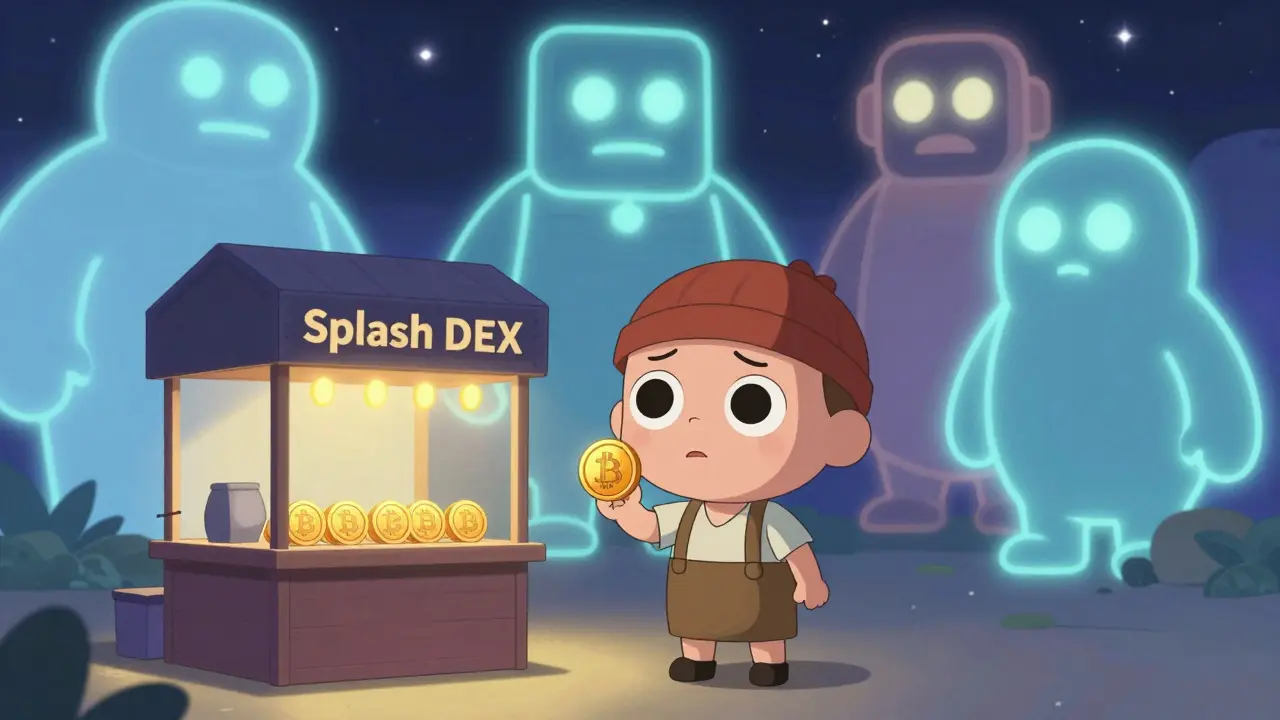
Splash is a decentralized cryptocurrency exchange (a platform where users trade crypto directly from their wallets without giving up control of their funds). It launched in 2024, making it one of the newer players in the DEX space. Unlike centralized exchanges that hold your coins for you, Splash doesn’t touch your assets. You sign trades with your wallet - same as Uniswap or PancakeSwap.
That means no KYC. No email verification. No account to lock or lose. If you value privacy, this is a big plus. But there’s a trade-off: you’re 100% responsible for your own security. Lose your private key? Your coins are gone. No customer support can recover them.
What Coins Can You Trade on Splash?
Here’s the hard truth: Splash supports only 9 coins and offers 12 trading pairs. That’s it. For comparison, Kraken supports over 500, and even smaller DEXs like SushiSwap list 100+ tokens.
Most of Splash’s supported assets are major ones like Bitcoin (BTC), Ethereum (ETH), Solana (SOL), and USDT. A few smaller DeFi tokens like $SPL (its native token), $LDO, and $MKR are also listed. But if you’re looking to trade anything niche - say, a new Layer 2 token or a memecoin from the Solana ecosystem - you won’t find it here.
That severely limits your options. You can’t dollar-cost average into new projects. You can’t hedge positions. You’re stuck with a tiny pool of liquidity. That’s not a feature - it’s a bottleneck.
How Does Splash Compare to Other Exchanges?
Let’s put Splash in context. Here’s how it stacks up against a few key players:
| Feature | Splash | Uniswap v3 | Kraken | Binance |
|---|---|---|---|---|
| Exchange Type | Decentralized | Decentralized | Centralized | Centralized |
| Supported Coins | 9 | 1,000+ | 500+ | 600+ |
| Trading Pairs | 12 | 1,500+ | 500+ | 800+ |
| Liquidity | Low | High | Very High | Extremely High |
| Margin/Futures | No | No | Yes (up to 100x) | Yes (up to 125x) |
| Staking Rewards | No | Yes | Yes (up to 8% APY) | Yes (up to 15% APY) |
| Regulation | None | None | Regulated in 10+ countries | Regulated in 15+ countries |
| Security Audits | Traders Union (Feb 2026) | Multiple (OpenZeppelin, CertiK) | AAA CER Rating | Multiple audits |
Uniswap is the gold standard for DEXes. It’s been around since 2018, has massive liquidity, and supports thousands of tokens. Splash doesn’t come close. Kraken and Binance? They’re in a different league entirely - regulated, insured, and packed with tools. Splash is more like a startup version of Uniswap with fewer features and way less traction.
Security: What Do We Know?
Splash claims to be secure because it’s decentralized. That’s technically true - no central server means no single point of hack. But security isn’t just about infrastructure. It’s about trust, transparency, and accountability.
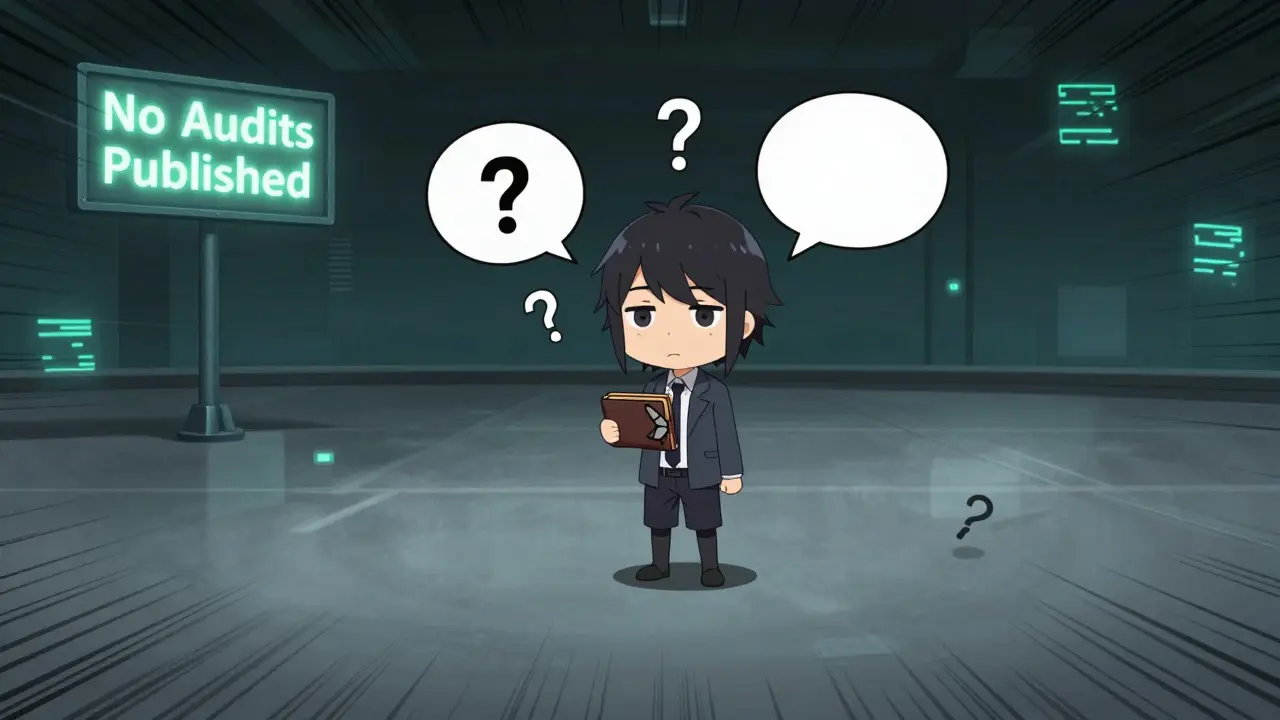
The only public security review Splash has had is from Traders Union (a blockchain-focused security and user advocacy group) in February 2026. No report was published. No findings shared. No score given. Just a vague mention. That’s not transparency. That’s silence.
Compare that to Kraken, which has gone over 12 years without a major breach. Or Coinbase, which insures custodial holdings up to $250,000. Splash offers none of that. If your funds disappear due to a smart contract bug, a rug pull, or a failed transaction - you’re on your own.
Fees and Trading Costs
Here’s another problem: we don’t know how much Splash charges.
No official fee schedule exists on their website. No public documentation. No transparency. That’s a red flag.
On Uniswap, you pay gas fees (Ethereum network costs) plus a 0.3% swap fee. On centralized exchanges like Kraken, fees range from 0.25% to 0.40%, dropping with volume. But Splash? Zero data. You have to trade to find out - and if the fees are high, you’re stuck with them.
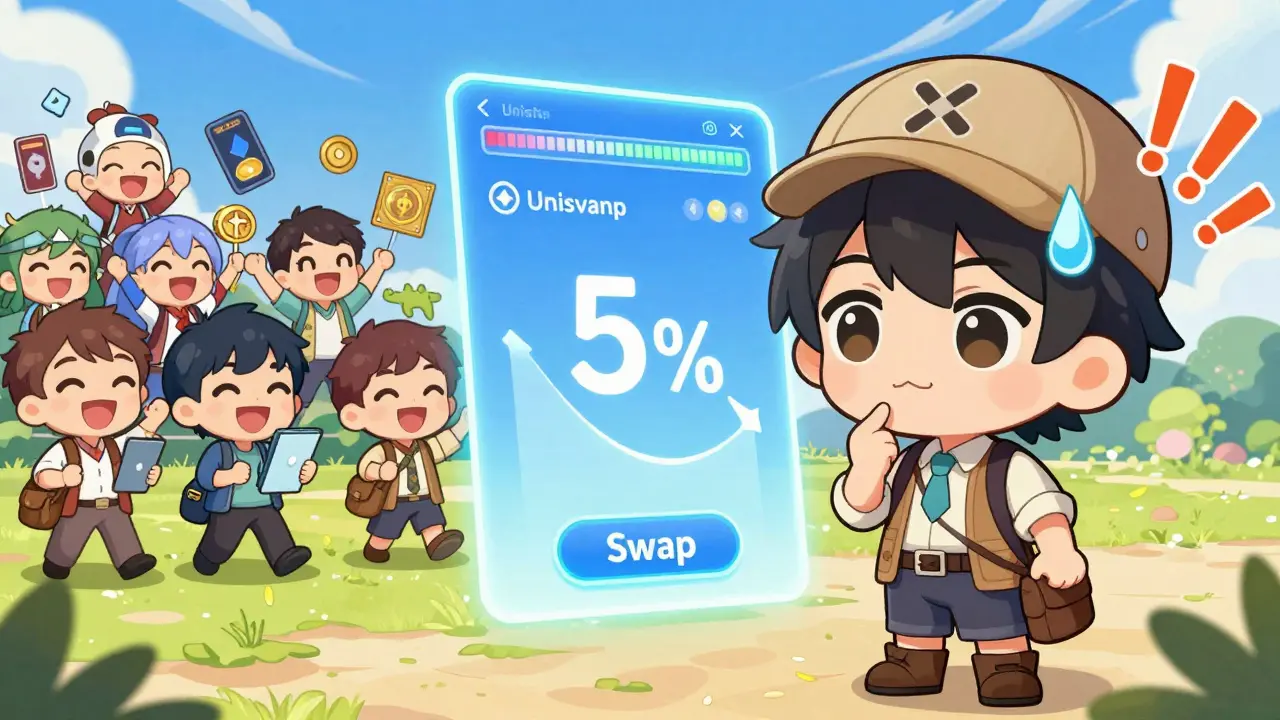
And don’t forget slippage. With low liquidity, even small trades can move the market. A $500 trade might execute at a 5% worse price than expected. That’s not a fee - that’s a hidden tax.
Features You Won’t Find
Let’s be clear: Splash doesn’t offer much beyond basic swapping.
- No margin trading
- No futures contracts
- No staking or yield farming
- No fiat on-ramps (you can’t deposit USD or AUD)
- No mobile app
- No API for advanced traders
That’s not a minimalist design - it’s a lack of ambition. If you’re serious about crypto, you need tools. If you’re just dipping your toes in, Splash doesn’t make it easy.
Who Is Splash For?
Real talk: Splash is only worth considering if:
- You’re already holding one of the 9 coins it supports
- You want to swap them without registering anywhere
- You’re okay with low liquidity and high slippage
- You’re not planning to trade anything else for months
If you’re looking to build a portfolio, hedge risk, earn interest, or trade frequently - Splash won’t help you. It’s too small, too slow, and too opaque.
There’s also no community backing. No Reddit threads. No Trustpilot reviews. No YouTube tutorials. Nothing. That’s not normal. Even the most obscure DEXes have at least some chatter. Splash? Crickets.
Final Verdict: Skip It - For Now
As of March 2026, Splash is not a viable alternative to established exchanges. It’s not even a strong contender among DEXes. It’s a prototype with no traction, no transparency, and no clear roadmap.
There’s nothing illegal about it. Nothing shady. Just… empty. No users. No volume. No trust. No updates.
If you’re experimenting with decentralized trading, use Uniswap, SushiSwap, or PancakeSwap. They’re proven, audited, and alive. Splash? It’s a ghost town.
Wait until it publishes its security audit. Wait until it adds 50+ coins. Wait until it has real user reviews. Until then, keep your funds somewhere safer.
Is Splash a scam?
No, Splash isn’t a scam. It’s a real platform with a live smart contract and trading interface. But that doesn’t mean it’s safe or reliable. Many scams are technically functional - they just lack transparency, security, and user trust. Splash is in that gray zone: not fraudulent, but not trustworthy either.
Can I use Splash to trade fiat for crypto?
No. Splash is a decentralized exchange that only supports crypto-to-crypto trades. You cannot deposit Australian dollars, US dollars, or any fiat currency. You need to already own crypto - like ETH or SOL - in a wallet like MetaMask to use Splash.
Does Splash have a mobile app?
No, Splash does not have a mobile app. It’s a web-based platform only. You must use a browser on desktop or mobile, connected to a wallet like MetaMask or Phantom. There’s no official app on the App Store or Google Play.
Is Splash regulated or licensed?
No, Splash is not regulated by any financial authority. It operates as a decentralized exchange, which means it avoids legal oversight by design. This is common for DEXes, but it also means there’s no recourse if something goes wrong. Compare that to Kraken or Binance, which are licensed in Australia, the EU, and the US.
What’s the difference between Splash and Uniswap?
Uniswap is a mature, widely-used DEX with thousands of tokens, high liquidity, and multiple audits. Splash is a tiny, new platform with only 9 coins and minimal trading volume. Uniswap has been around since 2018. Splash started in 2024. Uniswap has a community. Splash has silence. Uniswap works. Splash… might.
Should I stake my crypto on Splash?
No. Splash does not offer staking, yield farming, or any interest-bearing features. If someone claims they’re earning rewards on Splash, they’re either mistaken or promoting a scam. Always double-check official sources before depositing funds.
Next Steps
If you’re still curious about Splash, here’s what to do:
- Visit the official Splash website - check for updates, audits, or team info.
- Connect your wallet and try a tiny trade - $5 worth, max.
- Watch how long it takes to confirm. Check the slippage.
- Search Reddit, Twitter, and Telegram for user experiences.
- Wait for a public security report from Traders Union or another auditor.
If you don’t see clear answers after that - walk away. There are better places to trade crypto in 2026. Don’t gamble on a platform that doesn’t want to be seen.