
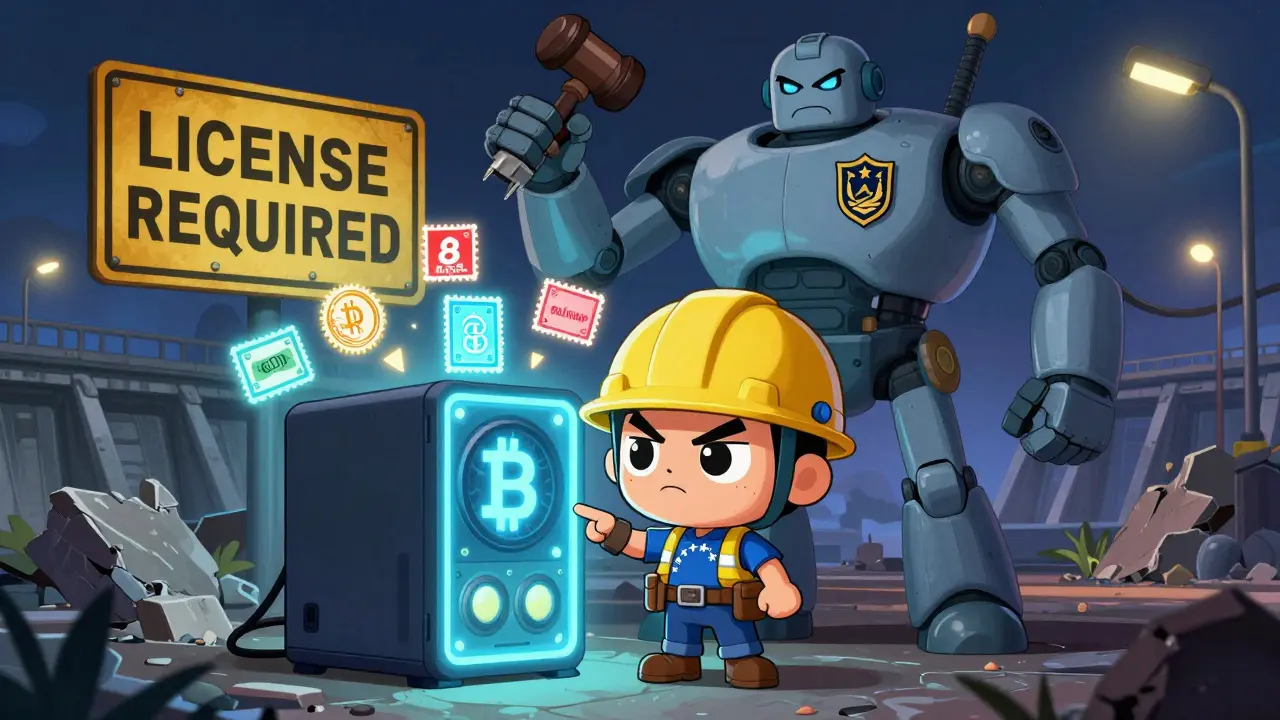
Venezuela’s government doesn’t just allow crypto mining-it runs it.
In Venezuela, you can’t just plug in a rig and start mining Bitcoin like you would in Texas or Kazakhstan. The state has built a whole system to control every part of it. Since 2019, the SUNACRIP is the National Superintendence of Cryptocurrencies, the government agency created to regulate all crypto mining and digital asset activities in Venezuela. If you’re mining without their permission, you’re breaking the law-even if the electricity is cheap and the hardware is sitting in your garage.
It all started with the Petro is a state-backed cryptocurrency launched by the Venezuelan government in 2018, tied to the country’s oil reserves, and intended to bypass U.S. sanctions.. But the real control mechanism came with the National Mining Pool (NMP) is a government-operated centralized mining network that all licensed miners in Venezuela must join to receive rewards.. Every miner who wants to stay legal has to connect to it. No exceptions. The NMP decides when you get paid, how much, and even which coins you can mine. It’s not just oversight-it’s ownership.
How the system actually works (on paper)
To mine legally in Venezuela today, you need three things: a license, a registered rig, and access to a stable power supply. The process starts with registering in either the RISEC is a Comprehensive Registry of Cryptoactive Services, which includes exchanges, wallet providers, and mining operators. or the RIM is a Comprehensive Registry of Miners, a database for all individuals and businesses running mining equipment.. Both are managed by SUNACRIP. You’ll need to prove you have at least 500 kilowatts of electrical capacity, show ID for everyone involved, and list every piece of mining hardware you own. Approval can take three to four months.
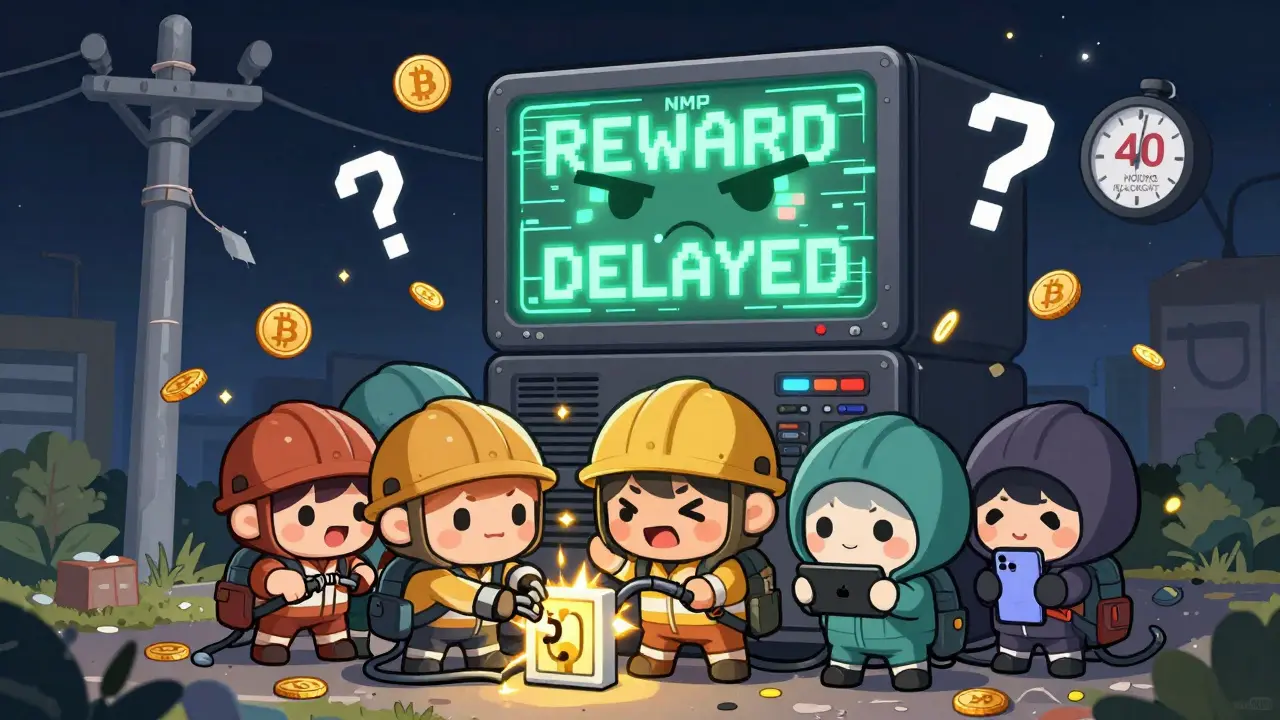
Once you’re in, you’re locked into the NMP. The pool handles your hash rate, assigns mining tasks, and distributes rewards in Venezuelan bolívars, U.S. dollars, or stablecoins like USDT. But here’s the catch: the system doesn’t always work. Miners report delays in payouts, random disconnections, and rewards that don’t match their actual output. One miner in Maracaibo told a reporter in 2024 his NMP rewards were 18% lower than what he’d have earned mining independently-just because of system glitches.
Why the government wants control
Venezuela has one of the cheapest electricity rates in the world-around $0.03 per kWh. That’s a huge advantage for mining. But instead of letting private companies and individuals cash in, the state decided to take the cut. The idea was simple: use the country’s massive hydroelectric power-mostly from the Guri Dam-to mine crypto, then sell the coins abroad to bring in hard currency. The government hoped this would help offset U.S. sanctions and stabilize the economy.
At its peak in 2022, licensed mining centers were using about 10% of Venezuela’s total electricity. That’s more than the entire city of Caracas uses for lighting and appliances. But the government didn’t just want the money-it wanted control over the entire digital financial system. That’s why they created Conexus, a blockchain-based network meant to link banks, exchanges, and wallets under state supervision. By late 2025, banks will be allowed to offer Bitcoin and stablecoin services directly to customers. It’s not decentralization-it’s centralization with a blockchain.
The system is broken-but people still use it
Here’s the irony: while the government claims to be regulating crypto, its own agencies have been paralyzed. In March 2023, SUNACRIP stopped functioning after a corruption probe tied to oil and crypto officials. The head of the crypto ministry was arrested. Operations didn’t resume properly until early 2024, and even then, the agency still lacks trained staff and digital infrastructure.
Meanwhile, miners are stuck. In 2023, over 300 licensed operations were shut down overnight during the crackdown. No warning. No appeal. Just power cuts and sealed doors. Many never reopened. Those that did now face constant uncertainty. One mining farm owner in Barinas said he spends more time filling out forms than running his rigs.
And yet, crypto use keeps growing. Around 70% of Venezuelans now use stablecoins daily-to buy food, pay rent, send money to family abroad. Blockchain transactions jumped 35% in 2024. People aren’t waiting for the government to fix things. They’re bypassing the NMP entirely, using peer-to-peer apps and offshore exchanges to trade Bitcoin and USDT. The state’s control system is real, but it’s not the only game in town.
The energy problem
Even if the system worked perfectly, Venezuela’s power grid can’t keep up. The country has more than enough hydroelectric capacity-but the infrastructure is crumbling. In 2023, most mining centers experienced 40 to 60 hours of blackouts per month. That’s more than two full days without power. To stay online, miners had to buy diesel generators. That added 25% to their operating costs. Many couldn’t afford it.
The government’s solution? Limit mining to state-run facilities. These are supposed to have backup power and priority access to the grid. But even those struggle. One state-owned mining center in Anzoátegui reported that its backup generators failed twice in one week in late 2024. The miners had to shut down for 36 hours. No payout. No compensation.

Who’s still mining-and who’s not
There are two kinds of miners in Venezuela now. The first are the licensed ones-small businesses, state employees, and a few foreign investors who believe the rules will stabilize. They’re slow, cautious, and often losing money because of delays and outages.
The second group? The underground miners. They’re using stolen power, repurposed computers, and home-built rigs. They don’t register with SUNACRIP. They don’t use the NMP. They trade directly on Telegram groups or use decentralized exchanges like Bisq. Some even mine on smartphones. They’re not legal-but they’re not getting caught. The government doesn’t have the resources to track them.
According to a 2024 report from Brave New Coin, over 60% of crypto mining in Venezuela is now unlicensed. The state’s control system exists on paper, but in practice, it’s a shadow of itself.
What happens next?
The future of crypto mining in Venezuela depends on one thing: politics. The Maduro government is under intense pressure. The U.S. has bounties on 15 officials. The International Criminal Court is investigating crimes against humanity. Domestic anger is rising. And the economy? Still collapsing.
Until there’s real political change, the crypto mining system will stay in limbo. The laws are there. The agencies are half-dead. The miners are either stuck in bureaucracy or working in the dark. The country’s cheap power and desperate population make it a perfect place for crypto-but the state’s control is turning it into a trap.
For now, the only thing that’s growing faster than regulation is the number of people who’ve stopped caring about it.
Is Venezuela’s model working?
On paper, yes. The government claims licensed mining contributed 4% to GDP in 2025. But that number is misleading. It includes revenue from Petro sales, not just mining. Actual crypto mining income? Hard to verify. The NMP doesn’t publish transparent reports. SUNACRIP hasn’t released an official audit since 2022.
Meanwhile, foreign investment in Venezuelan crypto startups hit $10.75 million in 2024. Companies like El Dorado and Yeet got funding. But none of them operate inside the state system. They all use offshore servers and anonymous wallets. The government wants to control crypto-but the market is moving faster than the bureaucracy can catch up.
What’s clear is this: Venezuela didn’t create a crypto economy. It created a crypto experiment-flawed, chaotic, and full of contradictions. And the people? They’re just trying to survive it.
Is crypto mining legal in Venezuela?
Yes-but only if you’re licensed by SUNACRIP and connected to the National Mining Pool. Unlicensed mining is illegal and can lead to equipment seizure or fines. However, enforcement is inconsistent, and many miners operate outside the system.
What is SUNACRIP?
SUNACRIP stands for the National Superintendence of Cryptocurrencies. It’s the Venezuelan government agency created in 2019 to regulate all crypto mining, trading, and digital asset services. It manages the licensing system, the National Mining Pool, and compliance with anti-money laundering rules.
Why did Venezuela ban crypto mining in 2024?
In May 2024, the government temporarily banned mining due to concerns over energy use, following a corruption investigation that led to the closure of several state-linked mining centers. The ban was not permanent, but it highlighted the instability of the regulatory system. Licensing resumed later that year, but with tighter oversight and reduced capacity.
Can Venezuelans use Bitcoin for daily purchases?
Yes. Around 70% of Venezuelans use stablecoins like USDT or Bitcoin for everyday transactions, especially to avoid hyperinflation. Many shops, pharmacies, and even street vendors accept crypto payments through mobile apps. The government doesn’t stop this-it just doesn’t benefit from it directly.
Will banks in Venezuela offer Bitcoin services in 2025?
Yes. Starting in December 2025, Venezuelan banks will be allowed to custody, transfer, and exchange Bitcoin and stablecoins through the Conexus blockchain network. This is part of the government’s plan to integrate crypto into the formal financial system-but only under state supervision.
How much does electricity cost for crypto mining in Venezuela?
Officially, electricity for mining costs about $0.03 per kWh, one of the lowest rates in the world. But due to frequent blackouts and the need for backup generators, many miners end up paying $0.08-$0.10 per kWh after factoring in diesel and maintenance.




Robert Mills
January 27, 2026 AT 20:14Rachel Stone
January 29, 2026 AT 06:52William Hanson
January 30, 2026 AT 22:10Andrea Demontis
January 31, 2026 AT 21:02Joseph Pietrasik
February 2, 2026 AT 13:20Pamela Mainama
February 4, 2026 AT 03:09Will Pimblett
February 5, 2026 AT 15:15Christopher Michael
February 6, 2026 AT 01:56Parth Makwana
February 6, 2026 AT 20:27Elle M
February 6, 2026 AT 23:16Rico Romano
February 7, 2026 AT 19:15Meenal Sharma
February 7, 2026 AT 21:23Freddy Wiryadi
February 9, 2026 AT 19:40Brianne Hurley
February 10, 2026 AT 03:36Nickole Fennell
February 11, 2026 AT 20:51Richard Kemp
February 13, 2026 AT 17:40Jerry Ogah
February 14, 2026 AT 01:26