

Imagine building a massive industrial operation based on a 98% discount, only to wake up and find your costs have jumped by 6,000%. That is exactly what happened to the cryptocurrency mining scene in Sweden. In a move that shocked the digital asset world, the Swedish government didn't just tweak its rules; it effectively wiped the industry off the map. What was once a "mining haven" thanks to cold air and cheap hydro power has turned into one of the most hostile places on earth for anyone trying to hash out a block.
| Attribute | Pre-July 2023 (Incentive Era) | Post-July 2023 (Punitive Era) |
|---|---|---|
| Energy Tax Rate | SEK 0.006 (~$0.0006) / kWh | SEK 0.36 (~$0.035) / kWh |
| Tax Reduction | 98% discount for data centers | 0% (Completely eliminated) |
| Tax Increase % | N/A | 6,000% increase |
The Rise and Fall of the Nordic Mining Haven
Back in 2017, Sweden had a vision. They wanted to be the global hub for digital infrastructure. To make this happen, they rolled out a massive 98% tax reduction for Data Centers, which are physical facilities used to house computer systems and associated components for storing and processing large amounts of data. This was a brilliant move on paper. Big players like Microsoft, Amazon, and Facebook flocked to the region, drawn by the naturally cool climate and an abundance of hydroelectric power.
For Cryptocurrency Mining-the process of using powerful hardware to secure a blockchain network in exchange for rewards-this was a goldmine. Miners set up shop in the northernmost regions of Sweden, where they could keep their machines cool without spending a fortune on air conditioning and pay pennies for electricity. At its peak, Sweden hosted about 150 megawatts of active mining capacity. It was a symbiotic relationship: miners got cheap power, and Sweden got a boost in its tech profile.
Why the Government Pulled the Plug
So, why the sudden 180-degree turn? The Swedish government realized that while they were getting a lot of hardware on their soil, they weren't getting much else. According to GRN Energy, officials felt that crypto mining provided a "minimal contribution" to the actual economy. Unlike a traditional tech company that hires hundreds of engineers and support staff, a mining farm is essentially a warehouse full of humming machines and a handful of technicians.
The breaking point came from a bad history with the 2018 market crash. When the crypto bubble burst that year, several mining companies simply vanished. They didn't just stop mining; they walked away from their energy bills, leaving local power providers with a massive mess to clean up. This left a sour taste in the mouths of policymakers. They decided that the energy consumption of Bitcoin mining-the most energy-intensive cryptocurrency-was simply too high a price to pay for so few jobs.
A Mathematical Impossibility
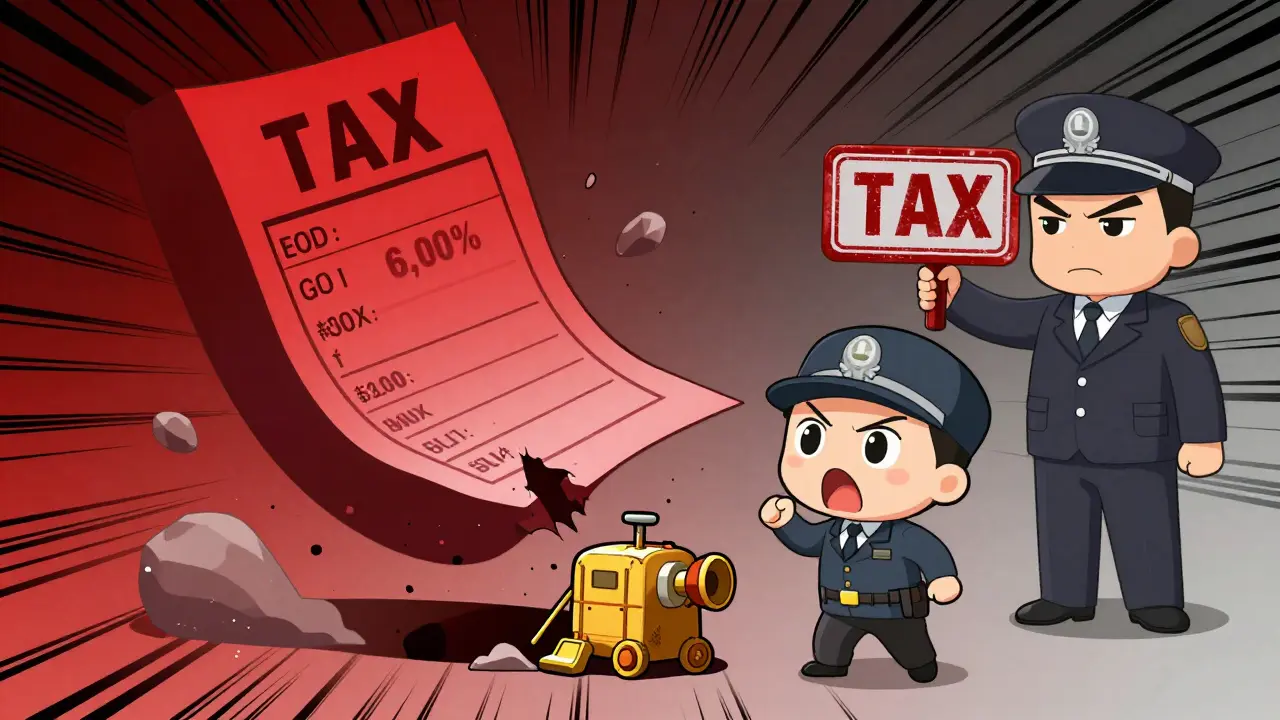
When the new taxes hit in July 2023, it wasn't just a "price hike"-it was an extinction event. The energy tax jumped from SEK 0.006 to SEK 0.36 per kilowatt hour. For a business where profit margins are often thin and depend entirely on the cost of electricity, a 6,000% increase is catastrophic.
To put this in perspective, most ASIC (Application-Specific Integrated Circuit) hardware-the specialized chips used for mining-cannot possibly generate enough revenue to cover a tax this high. Even if you have the most efficient gear on the planet, the energy tax alone exceeds the value of the coins you mine. For the business to be viable again, cryptocurrency prices would need to skyrocket by several hundred percent just to break even. It's not a regulatory hurdle; it's a mathematical wall.
The Great Exodus: Where Did the Miners Go?
The reaction from the community was swift and desperate. Operators described the move as "devastating." Because the timeline for implementation was so short, many companies faced a nightmare scenario: liquidate their expensive equipment at a loss or pay a fortune to ship tons of hardware across the globe. This created a massive "stranded asset" problem, where specialized buildings designed for mining became useless overnight.
Sweden's aggressive stance stands in stark contrast to other regions. While Sweden was shutting doors, other places were opening them wide:
- El Salvador: Integrated Bitcoin mining into its national strategy.
- Texas: Became a top destination due to flexible energy grids and friendly regulators.
- Kazakhstan: Previously a massive hub for relocated miners seeking low energy costs.
- Norway: While concerned about energy, they haven't implemented these punitive "death taxes."

Lessons from the Swedish Model
What does this mean for the rest of Europe? Sweden has essentially provided a blueprint for any government that wants to eliminate a specific industry without passing a formal "ban." By using cryptocurrency mining tax levers, they achieved a total exit of the industry without the political friction of a legal prohibition.
Industry analysts from The Bitcoin Manual suggest this was the "last nail in the coffin" for the region. By treating miners differently than traditional data centers, Sweden sent a clear message: if you aren't creating local jobs or providing significant economic value, you aren't welcome to use the national grid. The long-term result is a cleaner energy profile for Sweden, but a complete loss of a pioneering digital industry.
Did Sweden ban crypto mining entirely?
Technically, no. There is no law saying you cannot mine. However, by increasing the energy tax by 6,000% and removing all incentives, they made it financially impossible to do so profitably. It is a "de facto" ban through taxation.
Why was the tax increase so high?
The government felt that mining operations consumed massive amounts of energy while contributing very little to job creation or the local economy. They also wanted to prevent the kind of financial instability seen in 2018 when miners left behind unpaid energy bills.
Do these taxes apply to all data centers?
The punitive measures specifically target cryptocurrency mining. While the general 98% tax reduction for all data centers was eliminated, the extreme 6,000% hike was designed to make mining unviable while still allowing traditional cloud services (like AWS or Azure) to operate.
Where are Swedish miners moving their gear?
Most reports indicate a move toward jurisdictions with cheaper energy and more welcoming laws, specifically the United States (particularly Texas), Canada, and Kazakhstan.
When did these changes take effect?
The most severe tax changes were implemented in July 2023, following a budget announcement made in November 2022.
Next Steps for Operators
If you are still holding assets in high-tax jurisdictions, now is the time to conduct a cost-benefit analysis. Look for regions with "curtailment" programs where you can get paid to stabilize the grid. If your current energy cost exceeds 5-7 cents per kWh, you are likely operating at a loss in the current halving cycle. Consider relocating to areas with integrated renewable energy agreements to avoid the "Sweden scenario."





Kathleen Bergin
April 25, 2026 AT 18:38This is just common sense. If a business doesn't create jobs and just eats up all the power, it's not a real business. Sweden was just being too nice at first and then they fixed it. Simple as that.
Keith Garcia
April 27, 2026 AT 09:32The sheer audacity of these transient mining operations to treat a sovereign nation's energy grid as their personal playground is truly galling 🙄. It is an exquisite example of late-stage capitalist parasitic behavior, where the 'innovators' contribute nothing but heat and noise to the local environment. One must admire the Swedish government's surgical precision in excise this malignancy using the most elegant tool available: the tax code 💅. To suggest this is a 'death tax' is a pedestrian interpretation of fiscal responsibility. It's actually a masterclass in economic curation. The aesthetic of a warehouse full of buzzing ASICs is simply not the vision for a modern European state 🌸.
Mike Krasner
April 27, 2026 AT 21:41who actually cares about sweden
Eric Raines
April 28, 2026 AT 10:23Look, I've spent way more time analyzing energy markets than anyone here. The real issue isn't just the tax, it's the lack of diversification in their grid. These miners were basically gaming the system and Sweden finally woke up. I've seen this happen in three other countries, and it always ends the same way because people think they can get something for nothing. It's honestly exhausting watching people act surprised when a government actually enforces its laws.
Benjamin Forg
April 28, 2026 AT 12:39standard govt move keep the money flowing to the elites and crush the small players who actually find a loophole they just want total control over energy production so they can track every watt you use its all a setup to usher in a digital credit system and this crypto ban is just the trial run for the rest of us
Jennifer Taylor
April 29, 2026 AT 06:42The government knows exactly what they are doing. They dont want people having money they can actually move without permission. This isnt about jobs it is about control and keeping us all under their thumb using the energy excuse
Gary Lingrel
April 29, 2026 AT 16:07typical greed from the miners thinking they can just dump their trash and leave the bill for the locals lol... so sad they think they are victims here 🙄
Alex Hunter
May 1, 2026 AT 14:28It's a tough lesson for operators, but it highlights the importance of political risk assessment. When you build your entire business model on a government subsidy or tax break, you're essentially betting that the political wind won't shift. For those looking to start out, I'd suggest looking into jurisdictions with long-term legislative stability rather than just the lowest price point. It's better to pay a bit more for power if it means you won't be wiped out overnight.
Hannah Rubia
May 2, 2026 AT 16:12It is imperative to note that the distinction between general data centers and cryptocurrency mining is a critical point in this regulatory framework. By maintaining incentives for cloud services, Sweden ensures it remains competitive in the broader digital economy while specifically addressing the externalities associated with Proof-of-Work mining.
Lisa Camp
May 2, 2026 AT 17:21GET OUT OF SWEDEN NOW! If you're still there you're just throwing money into a fire! Move your gear to Texas or get rid of it before you go completely broke! STOP WAITING!
Charlie Queen
May 3, 2026 AT 00:11Wow, that's a wild ride! 🎢 Glad to see some people finding new homes for their rigs in Texas 🤠. It's all about adapting to the environment, right? Keep pushing forward everyone! 🚀✨
Paige Raulerson
May 4, 2026 AT 12:47I find it mildly amusing that anyone thought a 98% discount would last forever. It's almost quaint. Honestly, the effort to move these machines sounds tedious and the whole situation just feels like a waste of time for everyone involved. Why even bother with mining at this point when it's so fragile?
Jennifer L
May 5, 2026 AT 08:44Oh dear, it is truly heartbraking to see these business owners lose everything so suddenly!! The humanity of the situation is just... overwhelming. I hope they can find some peace and a new way to survive this tragedy 😭
Sarah Fisher
May 5, 2026 AT 13:23It makes you wonder if the concept of a 'haven' is even possible in a globalized world. Eventually, the equilibrium shifts and the advantage disappears. It's a natural cycle of digital migration.
Clair Geary
May 7, 2026 AT 00:35such a wild swing in prices! imagine the stress of waking up to a 6000 percent hike... total nightmare fuel for any biz owner out there
jill huyo-a
May 8, 2026 AT 09:51I wonder if there's a way to repurpose those specialized buildings for something else that the Swedish government would actually like. Maybe they could be turned into sustainable urban farms or something similar to keep the local economy buzzing?
Jagdish Sutar
May 9, 2026 AT 09:59It is always better to build a business on value creation rather than just cost optimization. If we can help the new operators in Texas or Canada find ways to integrate with local communities, we can avoid the mistakes made in Sweden.
debashish sahu
May 9, 2026 AT 22:09This situation shows the importance of understanding the local political climate before investing. In many parts of the world, energy is seen as a national resource and not just a commodity to be bought and sold.
Sara Ellis
May 11, 2026 AT 07:41just move to a place that likes money lol
Tara Aman
May 13, 2026 AT 03:25Let's look at this as a chance to find even better locations! This is just a pivot for the industry to move toward more sustainable and friendly partnerships. We can do this!
Mike Word
May 13, 2026 AT 09:46I'm curious about the actual data on those unpaid bills from 2018. Was it a systemic failure of the companies or just a few bad actors that ruined it for everyone else? It seems like a harsh penalty for the whole group.