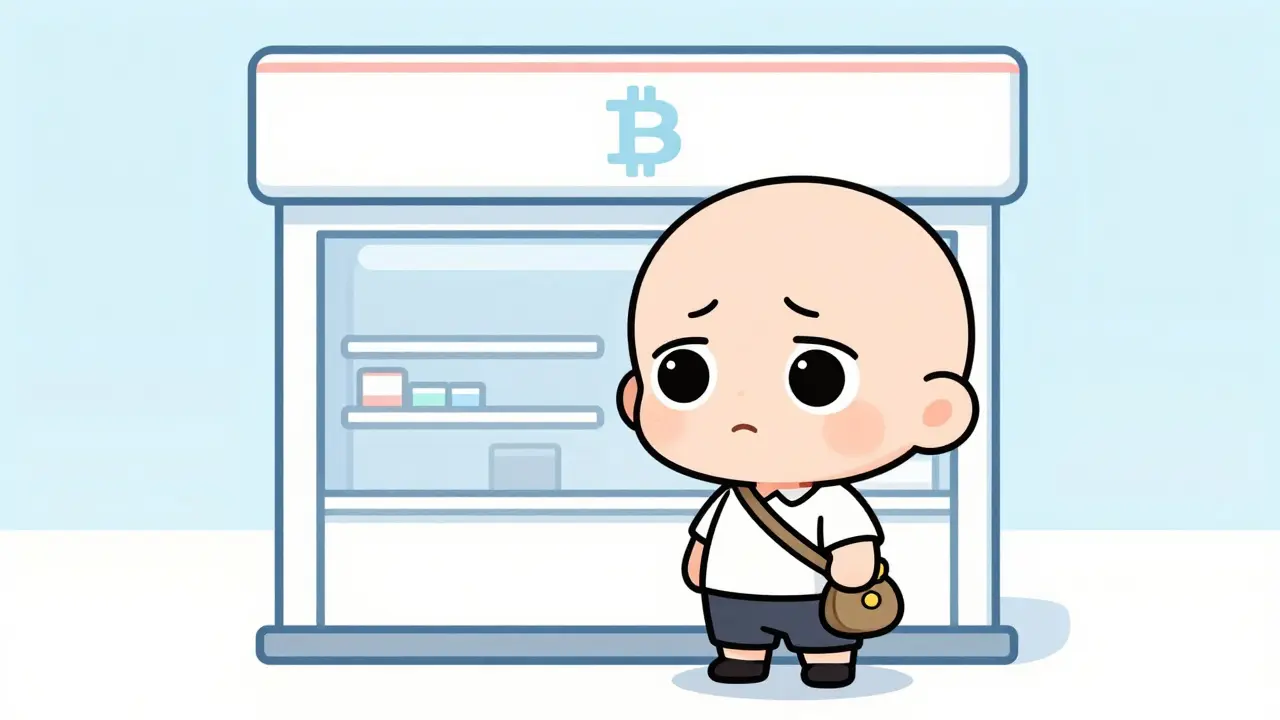
Imagine finding a brand-new store that promises rock-bottom prices, only to walk inside and realize they have exactly one item on the shelf. That is the reality of Uniswap v2 on the Blast network right now. If you clicked this title hoping for a robust trading platform with deep liquidity and dozens of token options, you might be disappointed. But if you are curious about how decentralized exchanges work on emerging Layer 2 chains, or if you hold assets exclusively on Blast and need to swap them, this review breaks down what you can actually expect.
As of early 2026, Uniswap v2 on Blast remains a niche tool. It is not your go-to for day trading or moving large amounts of capital. It is a lightweight, low-fee option for very specific use cases within the Blast ecosystem. Let’s look at why it exists, where it falls short, and whether it has any place in your crypto toolkit.
The Core Problem: Limited Liquidity
The biggest issue with Uniswap v2 on Blast is simple: there isn’t much money in it. When we talk about liquidity in decentralized finance (DeFi), we mean the total value locked in trading pairs. High liquidity means you can buy or sell tokens without causing the price to swing wildly. Low liquidity means even small trades can result in significant slippage-the difference between the expected price and the actual execution price.
Data from late 2024 showed that this specific deployment supported only one active trading pair. While new pairs may have been added since then, the fundamental challenge remains. Compared to Uniswap on Ethereum mainnet or Arbitrum, which support thousands of pairs and handle billions in daily volume, Blast’s version is barely scratching the surface. If you try to trade an obscure token here, you will likely face poor pricing or fail entirely because there simply isn’t enough depth in the pool.
| Feature | Uniswap v2 (Blast) | Uniswap v3 (Ethereum) | PancakeSwap (BNB Chain) |
|---|---|---|---|
| Trading Pairs Available | Very Limited (<10 estimated) | Thousands | Over 1,200 |
| Average Transaction Fee | $0.01 - $0.05 | $1.50 - $15.00+ | $0.10 - $0.50 |
| Liquidity Depth | Low | High | High |
| Capital Efficiency | Low (~20-30%) | High (~54%+) | Medium-High |
| Best For | Micro-swaps, testing | Professional trading | BSC ecosystem trading |
Why Use Uniswap v2 Instead of v3?
You might wonder why anyone would deploy the older Uniswap v2 protocol when v3 offers concentrated liquidity and multiple fee tiers. The answer lies in simplicity and compatibility. Uniswap v2 uses a constant product formula ($x * y = k$) that is easy to understand and secure. It requires liquidity providers to deposit equal values of two tokens across the entire price curve.
On a new chain like Blast, developers often start with v2 because it is battle-tested. The code has been audited by firms like Trail of Bits and OpenZeppelin. There is less risk of smart contract bugs compared to deploying complex new features immediately. However, this comes at a cost. V2 is capital inefficient. In a low-liquidity environment, this inefficiency hurts users more. You get worse prices because the available capital is spread too thin across price ranges that rarely get traded.
If you are a liquidity provider, think twice before putting money here. With only minimal trading volume, the fees you earn might not cover the impermanent loss risks, especially if the tokens you provide are volatile. The native yield benefits of the Blast network help somewhat, but they don’t fully offset the structural disadvantages of the v2 model in such a shallow market.
Transaction Costs and Speed
Where Uniswap v2 on Blast shines is in cost and speed. Because Blast is a Layer 2 solution built on Ethereum, it inherits Ethereum’s security while offering much faster block times and lower gas fees. On Ethereum mainnet, a simple swap can cost anywhere from $1.50 to over $15 during congested periods. On Blast, you are looking at fractions of a cent-typically between $0.01 and $0.05 per transaction.
This makes it attractive for micro-transactions. If you want to move $5 worth of tokens, doing so on Ethereum mainnet would eat up half your principal in fees. On Blast, the fee is negligible. Transactions also confirm quickly, usually within 2 to 3 seconds. This is a massive improvement over the 12 to 15 seconds average on Ethereum, making the user experience feel snappier and more responsive.

How to Set Up and Trade
Getting started is straightforward if you already use a Web3 wallet. Here is the step-by-step process:
- Install a Wallet: Use MetaMask, Trust Wallet, or Coinbase Wallet. These are compatible with the Blast network.
- Add the Blast Network: Go to your wallet settings and add Blast as a custom RPC. You can find the correct details on the official Blast documentation or trusted community guides. This takes about 2 minutes.
- Fund Your Wallet: Bridge ETH or USDC from Ethereum mainnet to Blast using a bridge like Stargate or the native Blast bridge. Ensure you have enough ETH on Blast to pay for gas fees.
- Connect to Uniswap: Visit the Uniswap interface and select "Blast" from the network dropdown menu. Connect your wallet.
- Select Tokens: Choose your input and output tokens. Remember, your options are limited. If your desired pair isn’t listed, you cannot trade it here.
- Execute Swap: Enter the amount, check the price impact (slippage), and confirm the transaction in your wallet.
A common pitfall for beginners is setting the slippage tolerance too low. Because liquidity is thin, prices can change slightly between when you quote the trade and when it executes. Setting slippage to 0.5% or 1% helps prevent failed transactions. If a transaction fails due to gas estimation errors, try increasing the gas multiplier in your wallet settings slightly.
Security and Trust
Security is a top priority in DeFi. The good news is that Uniswap v2 contracts are some of the most audited code in the industry. They have stood the test of time since their launch in 2020. The Blast deployment uses these same verified contracts, meaning you aren’t risking your funds on untested code.
However, always verify the URL you are visiting. Phishing sites are rampant in the crypto space. Only access Uniswap through the official domain or bookmarked links. Additionally, while the protocol itself is secure, the tokens you trade might not be. Always do your own research (DYOR) on any token before swapping, especially on newer chains where rug pulls are more common.

Who Should Use This?
Uniswap v2 on Blast is not for everyone. It serves a very specific audience:
- Blast Ecosystem Users: If you are participating in other Blast protocols like Radiant Capital or Squid and need to swap assets within that ecosystem, this is a convenient option.
- Micro-Traders: People moving small amounts of money who want to avoid high Ethereum gas fees.
- Developers: Those building on Blast who need a reliable, standard AMM for testing purposes.
It is not suitable for:
- Large Traders: Slippage will eat into your profits on significant orders.
- Token Diversifiers: You won’t find the wide range of altcoins available on larger DEXs.
- Yield Farmers: The returns are likely too low to justify the effort and risk compared to established pools on Ethereum or Arbitrum.
Future Outlook
The potential for growth exists. As the Blast ecosystem matures and Total Value Locked (TVL) increases, more liquidity providers may enter the market. Uniswap Labs has shown interest in expanding its footprint across Layer 2 networks. The recent launch of inter-chain bridges could also make it easier to move assets into and out of Blast, potentially boosting activity.
However, competition is fierce. Native Blast applications are gaining traction quickly. Unless Uniswap v2 expands its token listings significantly or upgrades to v3 functionality to offer better capital efficiency, it risks remaining a marginal player. Keep an eye on governance proposals and official announcements for updates on new pair launches or protocol upgrades.
Is Uniswap v2 on Blast safe to use?
Yes, the underlying smart contracts are highly audited and secure. However, always ensure you are connecting to the official website to avoid phishing scams. The safety of individual tokens traded on the platform is not guaranteed by Uniswap.
Why are there so few trading pairs on Uniswap v2 Blast?
The Blast network is relatively new, and liquidity provision is still in early stages. Without significant incentives, fewer liquidity providers have deposited funds, resulting in limited active pairs compared to established chains like Ethereum.
The Blast network is relatively new, and liquidity provision is still in early stages. Without significant incentives, fewer liquidity providers have deposited funds, resulting in limited active pairs compared to established chains like Ethereum.
Can I bridge my ETH directly from Ethereum Mainnet to Uniswap on Blast?
You must first bridge your ETH from Ethereum Mainnet to the Blast network using a compatible bridge service. Once your funds are on Blast, you can connect your wallet to Uniswap and swap.
You must first bridge your ETH from Ethereum Mainnet to the Blast network using a compatible bridge service. Once your funds are on Blast, you can connect your wallet to Uniswap and swap.
What is the difference between Uniswap v2 and v3 on Blast?
Currently, only v2 is widely deployed on Blast. V3 offers concentrated liquidity and higher capital efficiency but is more complex. V2 is simpler but less efficient, which is a disadvantage in low-liquidity environments.
Currently, only v2 is widely deployed on Blast. V3 offers concentrated liquidity and higher capital efficiency but is more complex. V2 is simpler but less efficient, which is a disadvantage in low-liquidity environments.
Are transaction fees really that low on Blast?
Yes, typical swap costs range from $0.01 to $0.05, which is significantly cheaper than Ethereum mainnet fees that can exceed $10 during peak times.
Yes, typical swap costs range from $0.01 to $0.05, which is significantly cheaper than Ethereum mainnet fees that can exceed $10 during peak times.