
You probably didn't choose to give your data away for free. Every time you scroll through social media, listen to music, or search for a product, companies are harvesting that information to train their artificial intelligence models. They get rich off your attention and habits, while you get... nothing. That imbalance is exactly what Itheum aims to fix.
Itheum is a blockchain-powered data marketplace built specifically for the AI era. Instead of letting tech giants hoard your digital footprint, this platform lets you tokenize your personal data into assets you own. You can then share, trade, or sell that data to businesses and AI agents in exchange for cryptocurrency rewards. It’s a shift from being the product to becoming the owner.
How Itheum Works: The Core Concept
To understand Itheum, you need to look at how it handles value. Traditional data brokers buy data in bulk, often without clear consent or fair compensation. Itheum flips this by creating an "AI Data Workforce." Here is the basic flow:
- Data Generation: You use apps connected to the Itheum ecosystem, like listening to music or browsing specific content.
- Tokenization: Your activity is converted into a "Data NFT" (Non-Fungible Token). This isn't just a picture; it's a unique cryptographic record of your data asset.
- Ownership & Control: Because it lives on the blockchain, you hold the private keys. You decide who accesses it and for how long.
- Monetization: AI companies or autonomous agents pay you in ITHEUM tokens to access these high-quality datasets for training their models.
The platform runs on the Solana blockchain. This choice is critical. Solana offers high-speed transactions with fees that are fractions of a cent. If Itheum ran on Ethereum, the gas fees alone would make earning $0.50 worth of data unprofitable. Solana makes microtransactions viable, allowing users to earn small amounts frequently rather than waiting for large payouts.
Sigma Music: The First Real-World Use Case
Concepts are great, but execution matters. Itheum’s flagship application is called Sigma Music. This app allows music fans to earn rewards simply by listening to songs.
Here is why this matters to the industry. AI music recommendation engines and streaming services desperately need clean, verified data on user preferences to improve their algorithms. Currently, they scrape this data. With Sigma Music, listeners opt-in. When you listen, the app records your engagement metrics-how long you listened, whether you skipped, if you replayed-and tokenizes that behavior. Record labels and AI firms can then purchase access to this aggregated, anonymized data stream.
For the average user, it means getting paid for something you already do. Early testers reported earning roughly $2.50 per week by sharing anonymized listening habits. While that might not replace a salary, it validates the model: data has monetary value, and you should be able to capture some of it.
The Liveliness Metric: Reputation on Chain
In any marketplace, trust is currency. How does Itheum know if your data is valuable or if you’re just spamming the system? Enter the "Liveliness" metric.
Liveliness is an on-chain reputation score unique to each user. It tracks the quality, consistency, and relevance of the data you provide. High Liveliness scores signal to buyers that your data is reliable and human-generated. This directly impacts your reward distribution. Users with higher Liveliness rates tend to earn more because their data is considered premium for AI training. It creates a meritocratic system where active, genuine participation is rewarded over passive or bot-like behavior.
ITHEUM Tokenomics and Supply
The ITHEUM token is the fuel of this ecosystem. It serves three main purposes:
- Rewards: Paid to users for contributing data.
- Purchases: Used by businesses to buy data access.
- Governance: Allows holders to vote on future protocol upgrades.
The total supply is capped at 1 billion ITHEUM tokens. During its Initial DEX Offering (IDO) in March 2022, the project raised $2 million. The allocation was split between private investors, public sales, and team/ecosystem reserves. Understanding the supply helps gauge potential inflation. Since the supply is fixed, the value depends entirely on demand from AI companies needing data and users wanting to monetize their digital lives.

Itheum vs. Competitors: Where Does It Fit?
You might wonder how Itheum compares to other decentralized data projects. Let’s break down the differences.
| Platform | Primary Focus | Blockchain | Key Differentiator |
|---|---|---|---|
| Itheum | AI Training Data | Solana | User-owned Data NFTs & Liveliness Score |
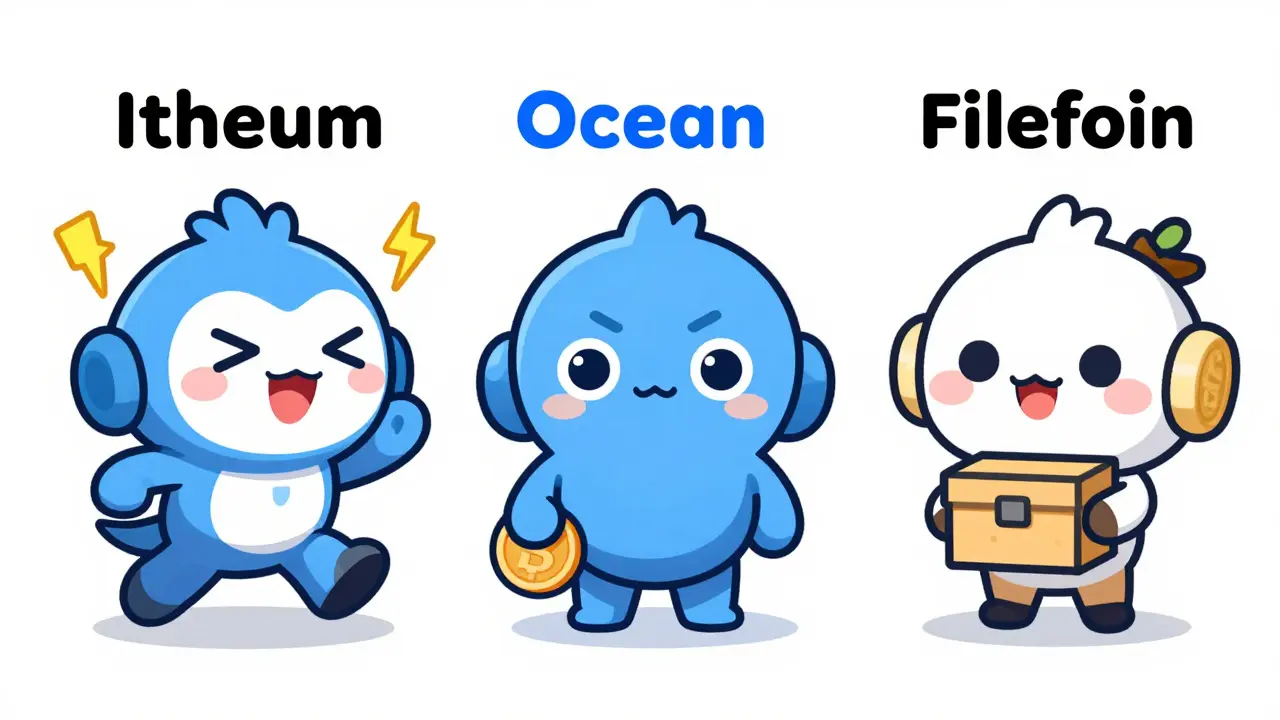
| Ocean Protocol | General Data Exchange | Ethereum | Broader enterprise data market, higher fees |
| Filecoin | Decentralized Storage | Filecoin Network | Storing files, not necessarily trading usage rights |
Ocean Protocol is the closest competitor, but it operates on Ethereum, which historically meant higher transaction costs and slower speeds. Filecoin focuses on storing data securely, whereas Itheum focuses on the *value* of that data for AI consumption. Itheum’s niche is specifically targeting the booming AI sector, which requires massive, real-time, human-verified datasets.
Risks and Challenges
No investment or technology is without risk. Before diving in, consider these factors:
- Market Volatility: Like most altcoins, ITHEUM has seen significant price fluctuations. After its launch, the token experienced a sharp decline in value, which is common in the volatile crypto market. Always check current prices before investing.
- Adoption Hurdles: For Itheum to succeed, it needs both sides of the marketplace: enough users providing data and enough AI companies buying it. Currently, adoption is growing but still niche compared to traditional data brokers.
- Privacy Concerns: Even though data is anonymized and tokenized, sharing personal habits always carries some privacy risk. You must trust the platform’s encryption and permissioning systems.
- Regulatory Uncertainty: Data privacy laws like GDPR in Europe and CCPA in California are evolving. Itheum attempts to comply by giving users granular control, but regulatory landscapes change quickly.
How to Get Started with Itheum
If you want to try earning from your data, here is the practical path:
- Get a Solana Wallet: Download a compatible wallet like Phantom or Solflare. Secure your seed phrase offline.
- Acquire SOL: You’ll need some Solana (SOL) for transaction fees. Buy it on a major exchange and transfer it to your wallet.
- Download Sigma Music: Install the app and connect your wallet.
- Verify Identity: To receive payouts, you may need to complete identity verification. This prevents bots from gaming the system.
- Start Listening: Use the app normally. Your data contributions will accumulate, and rewards will be distributed based on your Liveliness score.
The learning curve is moderate. If you’ve used DeFi apps before, it feels familiar. If you’re new to crypto, take your time understanding wallet security first. Never share your private keys with anyone.
Future Outlook: Is Itheum Worth Watching?
The intersection of AI and Web3 is one of the hottest trends in tech right now. As AI models become more sophisticated, their hunger for high-quality, human-generated data will only increase. Itheum positions itself as the infrastructure layer for this demand.
The project has backing from venture firms like Mechanism Capital and Ascensive Assets, signaling institutional interest. However, success depends on execution. Can they scale beyond music? Will major AI labs adopt their data standard? The roadmap includes "Data Farming 2.0," which promises dynamic pricing for data assets based on real-time demand. If executed well, Itheum could redefine how we view digital ownership.
It’s not a get-rich-quick scheme. It’s a long-term play on the idea that your data is yours, and it should pay you. Whether that vision becomes mainstream remains to be seen, but the experiment is underway.
Is Itheum (ITHEUM) a good investment?
Investing in ITHEUM carries high risk due to its volatility and niche market position. While the concept of monetizing AI data is promising, the token has seen significant price drops since its launch. Only invest what you can afford to lose, and conduct thorough research on current market conditions before buying.
How do I earn ITHEUM tokens?
You earn ITHEUM by participating in the "AI Data Workforce." Currently, the primary method is using the Sigma Music app. By listening to music and allowing the app to collect anonymized engagement data, you contribute to AI training sets and receive token rewards based on your Liveliness score.
What blockchain does Itheum use?
Itheum operates on the Solana blockchain. Solana was chosen for its high transaction speed and low fees, which are essential for processing the microtransactions involved in data trading and rewarding users frequently.
Is my data safe on Itheum?
Itheum uses blockchain technology to give users control over their data. Data is tokenized into NFTs, and you retain ownership permissions. However, as with any online service, there are inherent privacy risks. The platform anonymizes data, but you should always review privacy policies and understand what information you are sharing.
What is the Liveliness metric?
Liveliness is an on-chain reputation score that measures the quality and consistency of your data contributions. A higher Liveliness score indicates that your data is valuable and human-generated, leading to higher rewards when AI companies purchase access to your data streams.