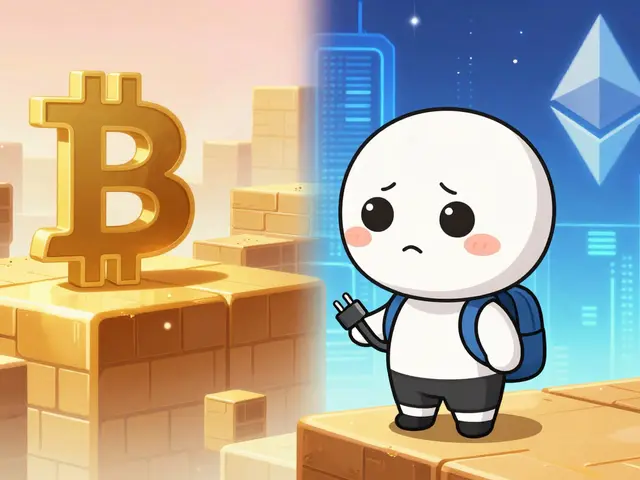
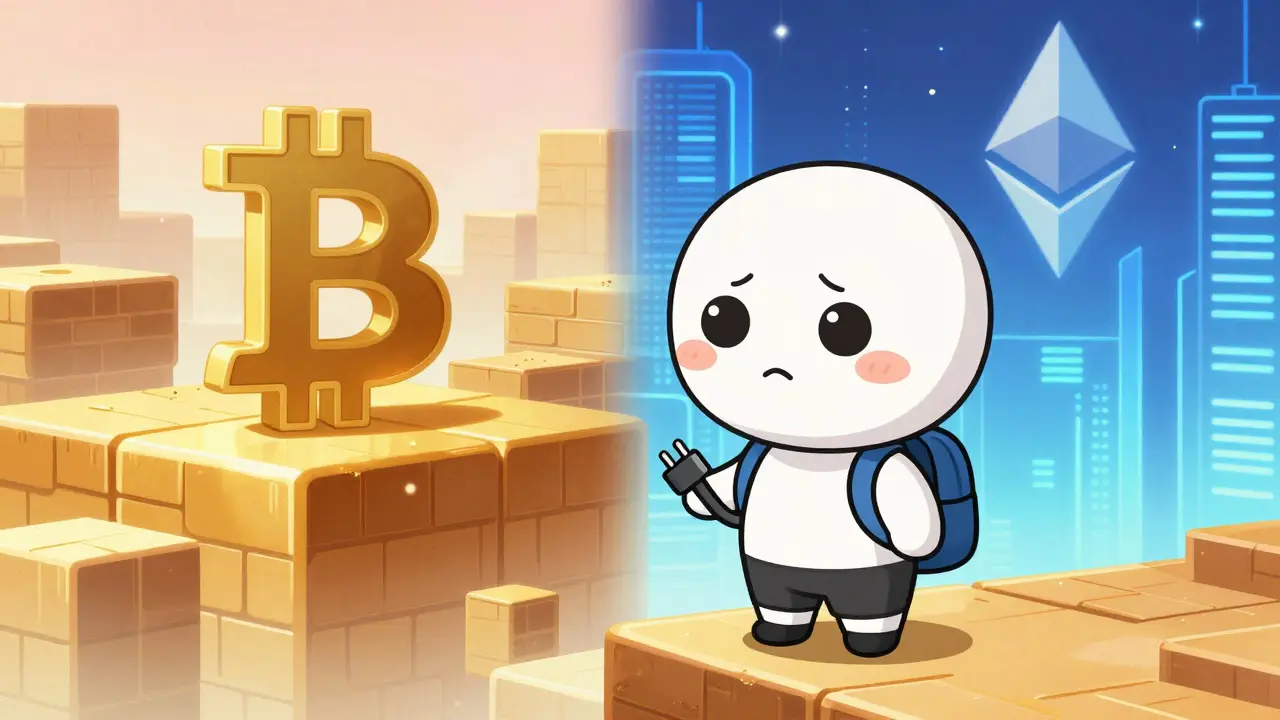
You hold Bitcoin. You want to earn yield on Ethereum. But Bitcoin doesn't speak Ethereum's language. This is the fundamental friction that slows down Decentralized Finance (DeFi). Without a bridge, your assets sit idle, locked in silos that don't talk to each other. That’s where wrapped assets come in.
Wrapped assets are tokenized versions of original cryptocurrencies, backed one-to-one by the underlying asset, designed specifically to bridge interoperability gaps between incompatible blockchain protocols. Think of them as universal adapters for your crypto portfolio. They allow you to take an asset native to one chain-like Bitcoin-and use it seamlessly on another chain, like Ethereum or Solana, without selling it.
How Wrapped Assets Actually Work
To understand the benefits, you first need to grasp the mechanism. It’s not magic; it’s a process involving custody, minting, and burning. Here is the step-by-step flow:
- Locking: You send your native asset (e.g., BTC) to a trusted custodian or a smart contract vault. The original asset is now frozen.
- Minting: For every unit of the native asset locked, an equivalent amount of the wrapped version (e.g., WBTC) is created on the target blockchain (e.g., Ethereum).
- Usage: You can now use this wrapped token in DeFi applications on the new chain-lending, borrowing, trading, or staking.
- Burning: When you’re done, you send the wrapped token back to the protocol. The protocol burns (destroys) the wrapped token and releases the original asset from the vault back to you.
This process ensures that the circulating supply of the native asset remains unaffected while creating a functional replica on a different network. The key here is the one-to-one backing mechanism, which guarantees price parity. If Bitcoin moves up or down, Wrapped Bitcoin moves with it, almost instantly.
The Core Benefit: Unlocking Liquidity and Yield
Why bother wrapping? Because liquidity lives where the activity is. In the early days of crypto, Bitcoin was king, but Ethereum became the hub for innovation. Developers built lending protocols, automated market makers, and derivatives platforms on Ethereum. Bitcoin holders were excluded from this ecosystem unless they sold their BTC.
By wrapping Bitcoin into WBTC (Wrapped Bitcoin), users gained access to these opportunities. You can deposit WBTC into a lending protocol like Aave or Compound to borrow stablecoins against it. You keep your long-term Bitcoin exposure while accessing immediate liquidity. This is collateral utility at its finest.
Furthermore, wrapped tokens solve liquidity fragmentation. Instead of having thin order books for BTC/ETH pairs on multiple chains, liquidity pools on decentralized exchanges (DEXs) like Uniswap or Curve aggregate demand around wrapped versions. This creates deeper markets, tighter spreads, and better prices for everyone involved.
Speed and Cost Efficiency
Native blockchains have different performance characteristics. Bitcoin is secure but slow; transactions can take ten minutes or more to confirm, and fees can spike during network congestion. Ethereum, while also facing fee issues, offers faster finality and a richer environment for complex financial contracts.
When you wrap Bitcoin to Ethereum, you inherit Ethereum’s transaction speed for subsequent interactions. Moving WBTC between wallets or swapping it on a DEX is significantly faster than moving native BTC. While gas fees on Ethereum can be high, the ability to execute complex multi-step financial operations (like flash loans or leveraged trades) in a single atomic transaction is something Bitcoin cannot do natively. Wrapped assets give you the security reputation of Bitcoin with the programmability of Ethereum.

Interoperability Across Ecosystems
The DeFi landscape is no longer just about Ethereum. Networks like Solana, Polygon, and Arbitrum have their own vibrant ecosystems. Each has unique advantages: Solana for speed, Polygon for low costs, Arbitrum for scalability.
Wrapped assets act as the universal currency across these borders. A user can wrap USDC on Ethereum to use it on Polygon, or wrap ETH to use it on Solana via bridge protocols. This cross-chain functionality enables:
- Cross-Chain Trading: Trade assets from multiple networks on a single interface.
- NFT Interoperability: Wrap NFTs to move them between marketplaces on different chains.
- Gaming Integration: Use wrapped tokens for in-game purchases across different blockchain gaming environments.
Without wrapped assets, you would need to sell your asset, convert it to fiat or a stablecoin, transfer it to a centralized exchange, and then buy the asset on the new chain. That process is slow, taxable, and exposes you to counterparty risk with exchanges. Wrapping keeps everything on-chain and self-custodied (mostly).
| Feature | Native Asset (e.g., BTC) | Wrapped Asset (e.g., WBTC) |
|---|---|---|
| Network Compatibility | Limited to home chain | Works on host chain (e.g., Ethereum) |
| DeFi Access | None directly | Full access to lending, DEXs, yield farming |
| Transaction Speed | Dependent on native block time | Dependent on host chain speed |
| Smart Contract Functionality | Limited or none | Full compatibility with ERC-20 standards |
| Counterparty Risk | None (self-custody) | Present (custodian/bridge risk) |
The Hidden Cost: Trust and Security Risks
If wrapped assets are so great, why isn’t everything wrapped? Because there is a catch: trust. Most current wrapped assets rely on centralized custodians. When you wrap BTC to get WBTC, you are trusting a group of companies (the custodians) to actually hold your Bitcoin. You are trusting their code to mint WBTC correctly. You are trusting their governance to release your funds when you ask.
This introduces several risks:
- Custodial Failure: If the custodian goes bankrupt, gets hacked, or acts maliciously, your wrapped tokens could become worthless. The underlying asset might be gone.
- Smart Contract Vulnerabilities: The contracts governing the minting and burning processes can have bugs. Exploits in these contracts have led to significant losses in the past.
- Centralization Point: Wrapped assets often require multi-signature wallets controlled by a few entities. This contradicts the decentralized ethos of crypto.
In 2025 and 2026, we’ve seen increased scrutiny on these models. Regulatory bodies are looking closely at who controls the keys. Users must understand that holding WBTC is not the same as holding BTC. It is a claim on BTC, mediated by a third party.
Future Trends: Moving Toward Trustless Bridges
The industry is aware of these risks. The next evolution of wrapped assets focuses on reducing reliance on centralized custodians. We are seeing the rise of:
- Trustless Bridging: Protocols that use cryptographic proofs (like zero-knowledge proofs) to verify the existence of assets on the source chain without needing a custodian.
- Decentralized Governance: Communities voting on custody parameters and emergency shutdown procedures.
- Real-World Asset (RWA) Wrapping: Beyond crypto, we are seeing tokens representing gold, treasury bonds, and real estate being wrapped to enter DeFi. This expands the utility far beyond Bitcoin and Ethereum.
As interoperability becomes critical, the standard for wrapped assets will shift from "who holds the keys" to "how is the proof verified." Until then, users must weigh the convenience of yield against the risk of centralization.
Practical Steps for Using Wrapped Assets
If you decide to use wrapped assets, follow these steps to minimize risk:
- Choose Established Tokens: Stick to widely adopted wrapped assets like WBTC or wETH. They have higher liquidity and more audited code.
- Verify the Custodian: Check who backs the wrapped asset. Are they reputable firms? Is the reserve publicly auditable?
- Use Reputable Platforms: Perform wraps through well-known bridges or platforms. Avoid obscure links sent via DMs.
- Monitor Gas Fees: Wrapping involves transactions on two chains. Ensure the potential yield outweighs the cost of bridging.
- Diversify Exposure: Don’t put all your capital into wrapped assets if you are uncomfortable with custodial risk. Keep a portion in native assets.
What happens if the wrapped token loses its peg?
If the wrapped token loses its 1:1 peg with the underlying asset, it usually indicates a loss of confidence in the custodian or a technical failure. In extreme cases, arbitrageurs may buy the discounted wrapped token and redeem it for the underlying asset, restoring the peg. However, if redemption is blocked, the value may drop permanently. Always check the redemption mechanism before investing.
Is Wrapped Bitcoin (WBTC) the same as Bitcoin?
No. WBTC is an ERC-20 token on the Ethereum blockchain that represents Bitcoin. It tracks Bitcoin's price but relies on a custodian to hold the actual BTC. Native Bitcoin resides on the Bitcoin blockchain and requires no third-party trust for ownership.
Can I unwrap my tokens anytime?
Generally, yes, but it depends on the specific protocol. Some wrapped assets have instant unwrapping, while others may have a delay period for security checks. Always read the documentation of the specific wrapped asset to understand the withdrawal timeline and any associated fees.
Are wrapped assets taxable events?
Tax laws vary by jurisdiction. In many countries, wrapping an asset is considered a taxable disposition because you are disposing of the native asset to receive a new one. Consult a local tax professional to understand how wrapping, unwrapping, and using wrapped assets in DeFi affects your tax liability.
Which wrapped assets are the safest?
Safety depends on the transparency and reputation of the custodian. WBTC and wETH are among the most widely used and audited. Newer projects may offer innovative features but carry higher risk. Always research the team behind the wrapper and check for recent security audits.