
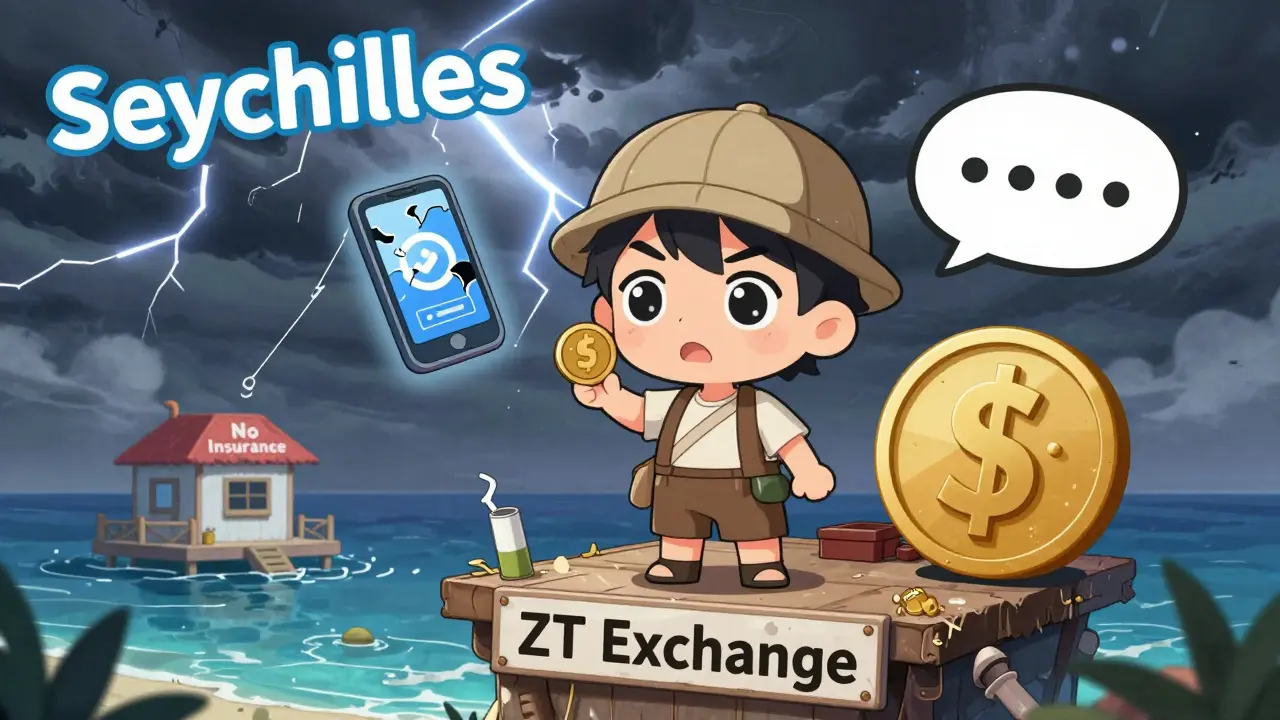
If you're thinking about using ZT Exchange to trade crypto, you’ve probably seen conflicting reviews. One site calls it a scam. Another says it’s legit - but with big warnings. So what’s the real story? Let’s cut through the noise and break down ZT Exchange based on what users actually experience, what the platform offers, and whether it’s safe to use in 2026.
What Is ZT Exchange?
ZT Exchange, operating as ZT.com, launched in 2018 and is registered in Seychelles. It’s not a household name like Binance or Coinbase, but it has a presence in over 158 countries. It doesn’t serve users in the U.S. because of SEC restrictions - a red flag for some, but normal for many offshore exchanges. ZT focuses purely on crypto-to-crypto trading. That means no direct bank deposits, no credit card buys, and no fiat on-ramps. If you want to fund your account, you need to buy stablecoins like USDT elsewhere and transfer them over.
The platform has a native token called ZTB. Holding it gives you a small discount on trading fees - nothing huge, but it’s there. ZT also offers margin trading with up to 1:100 leverage on select pairs. That’s aggressive. For comparison, most major exchanges cap leverage at 1:125 for BTC, but ZT’s interface and risk controls make this feel riskier than it looks.
The Good: What ZT Gets Right
- Low minimum deposit: You can start trading with just $1. That’s rare. Most exchanges require $10 or more just to open an account.
- Global access: If you’re outside the U.S., Canada, or strict EU countries, ZT works. It’s one of the few exchanges that still operates in parts of Africa, Southeast Asia, and Latin America where other platforms have pulled out.
- Mobile interface: The website adapts well to phones. You can place trades, check charts, and manage your wallet without a dedicated app - though some users claim there’s no official mobile app at all.
- ZT Savings: You can lock up tokens like EOS, DOT, and TRX to earn passive income. Rates vary, but they’re often higher than what you’d get on Coinbase or Kraken.
For beginners who just want to dip their toes into altcoins without a big upfront investment, ZT’s low barrier to entry makes sense. It’s not flashy, but it’s functional.
The Bad: What Goes Wrong
Here’s where things get messy.
- Verification hell: Users report never receiving SMS or email verification codes. One person wrote: “I’ve waited 72 hours. No code. No reply from support.” If you can’t verify, you can’t trade, withdraw, or even access your own funds properly.
- Customer service is invisible: ZT claims 24/7 support. Real users say otherwise. Emails go unanswered. Live chat disappears. Ticket systems break. There are dozens of forum posts from people locked out of accounts with no way to recover them.
- Hidden fees: ZT markets itself as having “low commissions.” But users say the opposite. Trading fees are okay - around 0.1% - but withdrawal fees can spike unexpectedly. Some altcoin withdrawals cost $5-$10 when other exchanges charge $0.10. And don’t get started on the OTC desk markup. If you’re buying USDT there, you’re paying 3-5% over market price.
- Chart glitches: The trading interface looks outdated. Charts overlap. Indicators don’t load. Price ticks freeze. It’s not just ugly - it’s dangerous. If you’re swing trading or scalping, you could miss signals or trigger bad orders because the data is wrong.
One user summed it up: “It’s the worst exchange I’ve ever used. High fees, no support, and I can’t even sell my tokens.” That’s not an outlier. It’s a pattern.
Is ZT Exchange a Scam?
TradersUnion.com outright calls ZT a scam. CaptainAltcoin.com says it’s legit - but “pay attention to this.” Which one’s right?
There’s no proof ZT stole funds or ran a rug pull. It’s still operating. It has real trading volume. It hasn’t vanished like a dozen other exchanges from 2022-2023. So calling it a scam might be too strong.
But calling it safe? That’s dangerous.
ZT operates in a legal gray zone. Seychelles has no investor protection laws. If they freeze your account, disappear, or get hacked, you have zero recourse. No insurance. No regulatory body. No refund policy. And if you’re in a country where crypto is borderline legal - like Nigeria or Argentina - you’re already on shaky ground.
The real issue isn’t fraud. It’s neglect. ZT doesn’t seem to care about user experience. No updates. No app. No support. No transparency. That’s not a scam - it’s a slow burn.
Who Should Use ZT Exchange?
ZT isn’t for everyone. Here’s who it might work for:
- You’re in a country where no major exchange operates.
- You’re trading small amounts of altcoins and don’t need fiat access.
- You’re comfortable with high risk and zero support.
- You’re using ZT as a temporary bridge to move crypto between wallets.
If you’re looking for:
- Reliable customer service - skip it.
- Secure, regulated trading - go to Kraken or Bitstamp.
- Low fees and clean charts - use Bybit or KuCoin.
- US access - forget it. ZT blocks you.
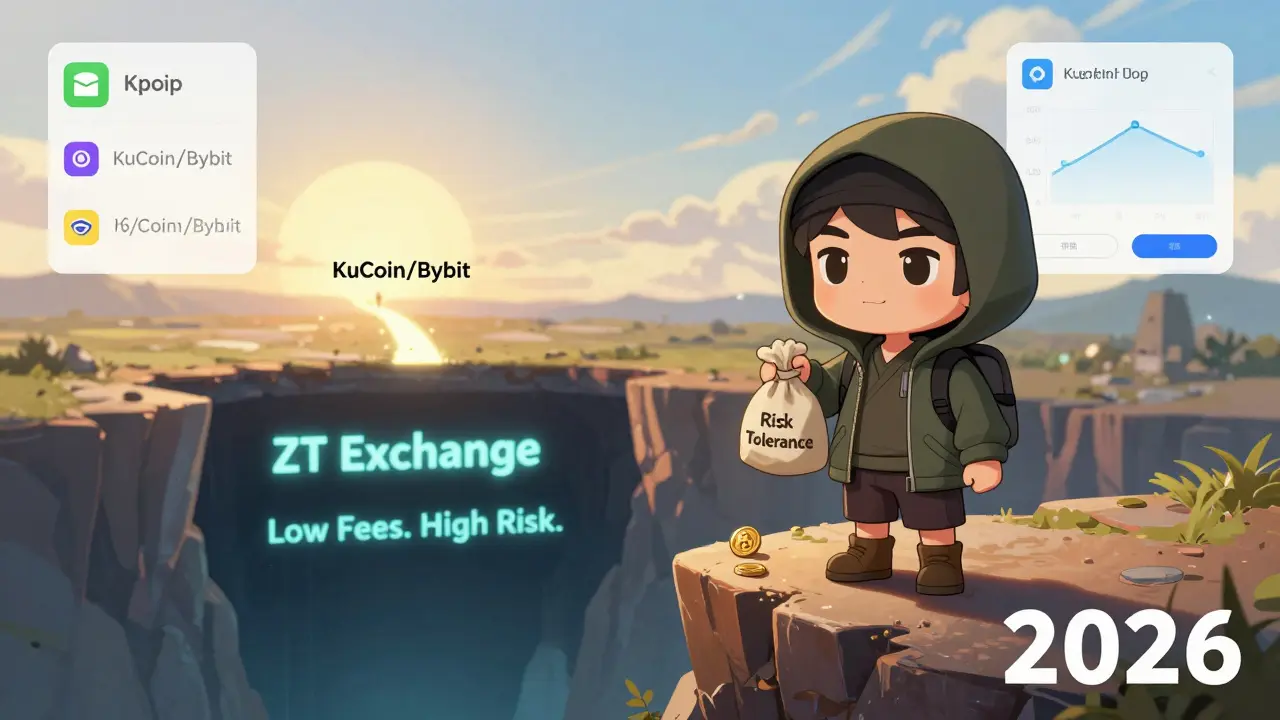
How ZT Compares to Other Exchanges
| Feature | ZT Exchange | KuCoin | Bybit | Bitfinex |
|---|---|---|---|---|
| Minimum Deposit | $1 | $10 | $10 | $50 |
| Fiat On-Ramp | No | Yes | Yes | Yes (limited) |
| Margin Leverage | 1:100 | 1:125 | 1:100 | 1:100 |
| Mobile App | Unconfirmed | Yes | Yes | Yes |
| Customer Support | Unreliable | Good | Very Good | Good |
| Regulation | Seychelles (none) | Mauritius | BVI | British Virgin Islands |
| US Access | No | No | No | Yes (limited) |
Look at the table. ZT wins on minimum deposit and leverage. But it loses on everything else: app, support, transparency, reliability. KuCoin and Bybit offer more features, better security, and still let you trade altcoins without needing a bank account.
Final Verdict: Should You Use ZT Exchange?
ZT Exchange isn’t a scam - but it’s not a safe choice either. It’s a high-risk, low-support platform that works only if you’re okay with being on your own.
If you’re in a region with no other options, and you’re trading small amounts of crypto you can afford to lose - then maybe give it a try. Use only what you’re willing to disappear. Don’t store large balances. Don’t rely on customer service. And never, ever use it as your main exchange.
For everyone else - there are better alternatives. KuCoin, Bybit, and MEXC all offer similar features with real apps, better support, and cleaner interfaces. You don’t need to risk your coins on a platform where the support team might not reply.
The crypto world is full of risky exchanges. ZT isn’t the worst - but it’s one of the most careless. And in crypto, carelessness is the fastest path to losing money.
Is ZT Exchange safe to use in 2026?
ZT Exchange is not regulated, has no legal recourse for users, and has no insurance on funds. While it hasn’t been shut down or hacked yet, its lack of transparency, poor customer service, and offshore registration make it unsafe for anything beyond small, temporary trades. Treat it like a risky side hustle - not a serious trading platform.
Does ZT Exchange have a mobile app?
There is no official ZT mobile app. The website works on mobile browsers, but it’s clunky and often freezes. Some third-party sites claim to offer an app, but those are fake and could steal your login details. Always use the official website - never download an app from Google Play or the App Store.
Can I deposit USD or EUR on ZT?
No. ZT doesn’t support direct fiat deposits. You must buy USDT or another stablecoin on another exchange (like Binance or Kraken), then send it to your ZT wallet. The OTC desk lets you buy USDT, but it charges 3-5% above market price - which is expensive.
Why can’t I get my verification code on ZT?
This is one of the most common complaints. Users report never receiving SMS or email codes, even after waiting days. ZT’s support system doesn’t respond to these issues. If you’re stuck, your only option is to wait - or abandon the account. There’s no workaround.
Are ZT’s trading fees really low?
Trading fees are around 0.1%, which is average. But withdrawal fees can be 10x higher than other exchanges. Some altcoin withdrawals cost $5-$10. Also, using the OTC desk to buy USDT adds hidden costs of 3-5%. So while spot trading fees seem low, the total cost to get started and move funds is often higher than on regulated platforms.
What happens if ZT Exchange shuts down?
If ZT shuts down, you lose access to your funds. There’s no recovery process. No customer service. No legal protection. Since it’s registered in Seychelles - a jurisdiction with no crypto investor protections - you have zero rights. That’s why experts warn: never store more than you can afford to lose.
Next Steps
If you’re still considering ZT, start with $5. Test the deposit, withdrawal, and verification process. If you can’t get your code in 24 hours, walk away. Don’t risk more. And if you’re serious about trading crypto long-term, move your funds to a platform with real support - even if it has higher fees. Safety matters more than cheap trades.




bella gonzales
February 27, 2026 AT 14:42Jessica Carvajal montiel
February 27, 2026 AT 16:35Samantha Stultz
February 27, 2026 AT 17:26precious Ncube
March 1, 2026 AT 00:49Lilly Markou
March 1, 2026 AT 19:29Tracy Peterson
March 3, 2026 AT 15:45Curtis Dunnett-Jones
March 5, 2026 AT 14:33Nicki Casey
March 6, 2026 AT 08:28KingDesigners &Co
March 8, 2026 AT 05:15Dianna Bethea
March 9, 2026 AT 06:03Paul Reinhart
March 9, 2026 AT 22:55McKenna Becker
March 11, 2026 AT 22:39George Suggs
March 13, 2026 AT 14:50Sean Logue
March 14, 2026 AT 02:24Tracy Whetsel
March 15, 2026 AT 12:38Carl Gaard
March 17, 2026 AT 03:47Jan Czuchaj
March 17, 2026 AT 14:33Robert Conmy
March 19, 2026 AT 03:50KingDesigners &Co
March 20, 2026 AT 04:11