
Imagine trying to send money to a family member abroad, only to have your bank account frozen for two weeks because you used a popular app like Binance. For many people living in Cambodia, this isn't a hypothetical nightmare-it’s their daily reality. If you are looking to move cryptocurrency through the traditional banking system here, you are navigating one of the strictest regulatory environments in Southeast Asia.
The landscape changed dramatically in early 2025. The National Bank of Cambodia (NBC) didn’t just tweak the rules; they rewrote them. With the introduction of Prakas B7-024-735, the country established a rigid two-tier system that separates 'safe' digital assets from everything else. This means if you are holding Bitcoin or Ethereum, you are largely locked out of the formal banking sector. But if you are dealing with approved stablecoins, there is a narrow path forward-provided you can jump through significant hoops.
The Two-Tier System: What Banks Can and Cannot Touch
To understand why your transaction might be blocked, you need to look at how the NBC classifies digital assets. Under the new framework effective January 2025, all cryptoassets are split into two distinct groups. This classification dictates whether a commercial bank can touch your funds or must stay completely hands-off.
Group 1: Tokenized Securities and Approved Stablecoins
This group includes assets that are fully backed by traditional financial instruments or fiat currency. Think of these as the 'respectable' cousins of crypto. Commercial banks in Cambodia are allowed to invest in or hold Group 1 assets, but only under strict conditions. They must get prior approval from the NBC, and their exposure is capped. Specifically, a bank cannot hold more than 15% of its Tier 1 capital in these assets. This limit is designed to prevent a crash in crypto markets from dragging down the entire banking sector.
Group 2: Unbacked Cryptocurrencies
This is where Bitcoin, Ethereum, Solana, and most other major coins live. Here, the rules are harsh. Banks are expressly prohibited from directly holding Group 2 assets on their balance sheets. You cannot walk into a branch and ask to deposit Bitcoin. However, the regulation allows banks to provide services related to these assets-like exchange on-ramping, custody, or remittance conversions-but only for clients who have specific NBC approval. In practice, this approval is rare and difficult to obtain for retail users.
| Feature | Group 1 (Tokenized/Stablecoins) | Group 2 (Bitcoin/Ethereum) |
|---|---|---|
| Bank Holding Allowed? | Yes, with NBC approval | No, strictly prohibited |
| Exposure Limit | Max 15% of Tier 1 Capital | N/A (Cannot hold) |
| Service Provision | Permitted under supervision | Restricted to licensed CASPs only |
| Risk Profile | Low (Backed by assets) | High (Volatile/Unbacked) |
Why the Crackdown? Scams, Sanctions, and Safety
You might wonder why the government took such a hard line. The answer lies in a mix of domestic stability concerns and intense international pressure. For years, Cambodia struggled with online scam centers that lured victims with promises of high returns on cryptocurrency investments. These operations were often linked to human trafficking and forced labor.
In September 2024, the U.S. Department of the Treasury's Office of Foreign Assets Control (OFAC) sanctioned several Cambodian entities, including Ly Yong Phat and his L.Y.P. Group, for their involvement in these scams. This put a massive spotlight on Cambodia’s financial system. To avoid further sanctions and to clean up its reputation, the NBC moved quickly. They wanted to prove to the global community, particularly the Financial Action Task Force (FATF), that they were serious about Anti-Money Laundering (AML) and Counter-Financing of Terrorism (CFT).
The result was a crackdown that went beyond just stopping scams. It created a blanket restriction that affects legitimate users too. By blocking access to offshore exchanges like Binance and Coinbase in December 2024, the Telecommunication Regulator of Cambodia (TRC) aimed to force all transactions into regulated channels. The goal was transparency, but the side effect has been a significant reduction in financial freedom for everyday citizens.
The Rise of Project Bakong: The Government’s Alternative
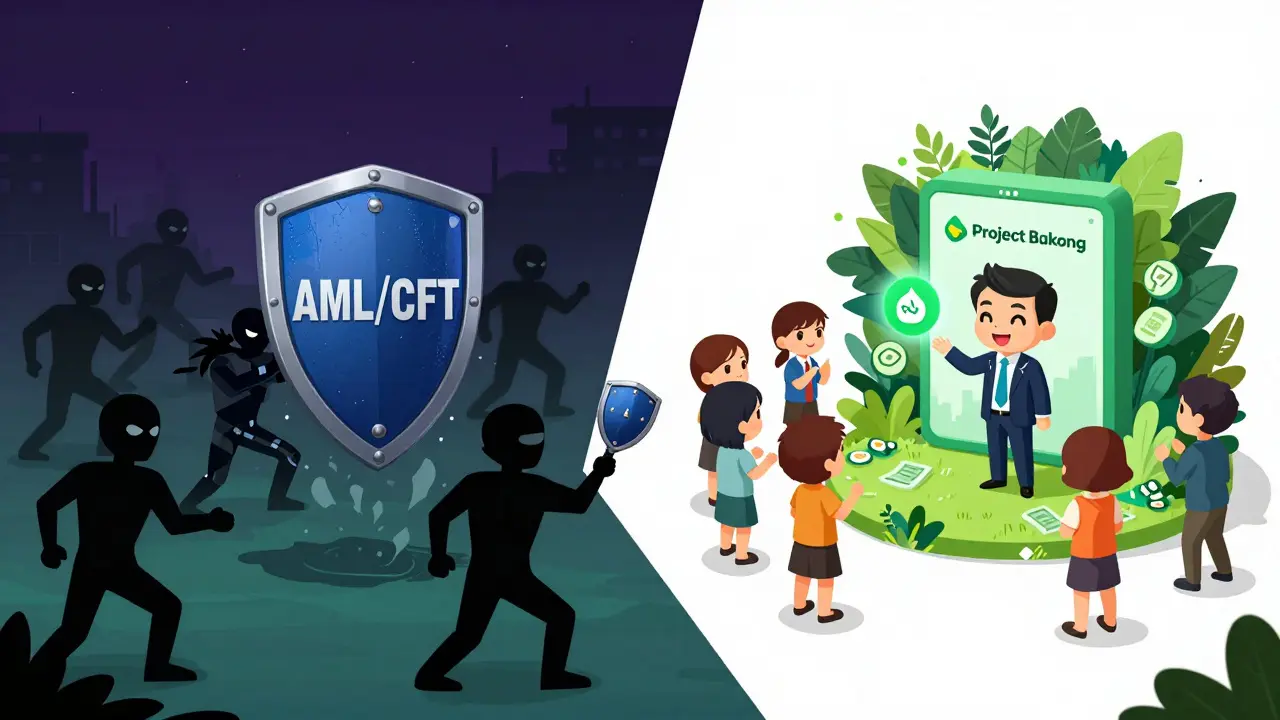
If you can’t use Bitcoin, what do you use? The answer is Project Bakong. Launched in October 2020 with support from Japan, Bakong is Cambodia’s own blockchain-based payment system. It is not a cryptocurrency in the traditional sense; it is a Central Bank Digital Currency (CBDC) infrastructure that connects banks, mobile wallets, and merchants.
As of late 2024, Bakong had reached 65% population penetration, with over 12 million users. It processes millions of transactions daily, moving hundreds of millions of dollars. The NBC sees Bakong as the safe, stable alternative to volatile crypto. It offers instant transfers, low fees, and full regulatory oversight. For the government, promoting Bakong solves two problems: it increases financial inclusion without the risks of unregulated crypto, and it keeps money within the national banking system.
However, Bakong has limitations. It does not integrate with open blockchain networks. You cannot easily swap Bakong riel for USDT on a decentralized exchange. For tech-savvy users who want to participate in the global DeFi ecosystem, Bakong feels like a walled garden. It’s convenient for paying bills and sending money to relatives, but it doesn’t offer the investment opportunities or borderless nature of Bitcoin.
Real-World Impact: Frozen Accounts and Frustrated Users
The theoretical rules sound clear, but the real-world experience is messy. Many users report that the NBC’s auto-flagging systems are overly aggressive. If you try to use Peer-to-Peer (P2P) platforms to buy crypto, your bank account might get flagged for suspicious activity.
Consider the case of a user on Reddit who tried to use Binance P2P in early 2025. After making three small transactions of $50 each, their Wing Money account was frozen for 14 days. The bank couldn’t distinguish between a legitimate purchase and potential money laundering. This is a common complaint. Trustpilot reviews for local payment providers show low ratings specifically for crypto-related services, with users citing excessive documentation requirements and long processing times.
For businesses, the situation is even more complex. Companies seeking funding in stablecoins face a 90-120 day approval timeline to become authorized Crypto Asset Service Providers (CASPs). They must submit dozens of documents, including stress tests simulating an 80% crash in crypto prices. This barrier to entry stifles innovation. Startups that could benefit from fast, cheap cross-border payments are forced to wait months for permission, driving some to operate in the shadows or leave the country entirely.

How to Navigate the Restrictions Safely
If you are living in Cambodia and want to engage with cryptocurrency, you need to be smart and cautious. Ignoring the rules can lead to frozen assets or legal trouble. Here is how to navigate the current landscape:
- Stick to Licensed Platforms: Only use exchanges that are authorized under the SERC FinTech Regulatory Sandbox. As of early 2025, very few entities, such as Royal Group Exchange, have received this authorization. Using unlicensed offshore apps via VPN is risky and may violate local laws.
- Avoid Large P2P Transactions: The NBC’s monitoring systems flag unusual patterns. Avoid making multiple small deposits followed by large withdrawals. Keep your crypto activities separate from your primary banking accounts if possible.
- Understand the Documentation Requirements: If you are a business, expect a rigorous vetting process. Prepare for multi-factor authentication, cold storage audits, and real-time transaction monitoring setups. Budget for high compliance costs.
- Use Bakong for Daily Needs: For everyday payments, remittances, and merchant transactions, Bakong is efficient and safe. Use it to keep your main finances compliant while exploring crypto through approved channels.
- Monitor Regulatory Updates: The rules are still evolving. The NBC plans to introduce mandatory real-time monitoring for all crypto-fiat conversions in 2025-2026. Stay informed through official NBC announcements rather than rumors on social media.
The Future: Stability vs. Innovation
Cambodia stands at a crossroads. On one hand, the restrictive approach has improved the country’s AML/CFT rating, helping it avoid further international sanctions. On the other hand, it has driven illicit crypto activity underground. Reports suggest that illicit flows have increased, with sanctioned entities finding ways to move money through complex chains of transactions.
Experts are divided. Some argue that the restrictions protect vulnerable populations from volatility and scams. Others contend that they stifle financial inclusion and push users toward riskier, unregulated alternatives. The IMF has warned that the restrictive stance could cost the economy billions in missed fintech investment by 2027.
For now, the message from Phnom Penh is clear: stability comes first. If you want to play in the crypto space, you must do so within the tight confines set by the NBC. Whether this model will adapt to allow more innovation, or remain a fortress against digital disruption, remains to be seen. Until then, proceed with caution, respect the rules, and keep your eyes on the evolving regulatory horizon.
Is cryptocurrency illegal in Cambodia?
Cryptocurrency itself is not strictly illegal, but its use as a legal payment method is banned. Unlicensed trading and operating exchanges without SERC approval are prohibited. The NBC regulates cryptoassets through a two-tier system, allowing limited interaction with approved stablecoins while banning banks from holding unbacked cryptocurrencies like Bitcoin.
Can I use Binance in Cambodia?
Access to Binance and other major offshore exchanges like Coinbase and OKX was blocked by the Telecommunication Regulator of Cambodia in December 2024. While you might technically access them via VPN, doing so violates local regulations and poses significant risks, including account freezes and legal scrutiny. It is safer to use licensed local platforms like Royal Group Exchange.
What is Project Bakong?
Project Bakong is Cambodia’s national blockchain-based payment system launched by the National Bank of Cambodia. It functions as a CBDC infrastructure, connecting banks and mobile wallets for instant, low-cost transactions. It is the government’s preferred alternative to private cryptocurrencies, offering regulatory compliance and stability.
Why did the NBC restrict crypto banking?
The restrictions were driven by concerns over money laundering, online scam centers linked to human trafficking, and international pressure from bodies like the FATF and U.S. Treasury. The NBC aims to protect financial stability, prevent consumer losses from volatility, and maintain Cambodia’s standing in the global financial system.
Can banks in Cambodia hold Bitcoin?
No. Under Prakas B7-024-735, commercial banks are explicitly prohibited from holding Group 2 cryptoassets, which include Bitcoin and Ethereum, on their balance sheets. They can only hold Group 1 assets (tokenized securities/stablecoins) up to 15% of their Tier 1 capital, subject to NBC approval.