
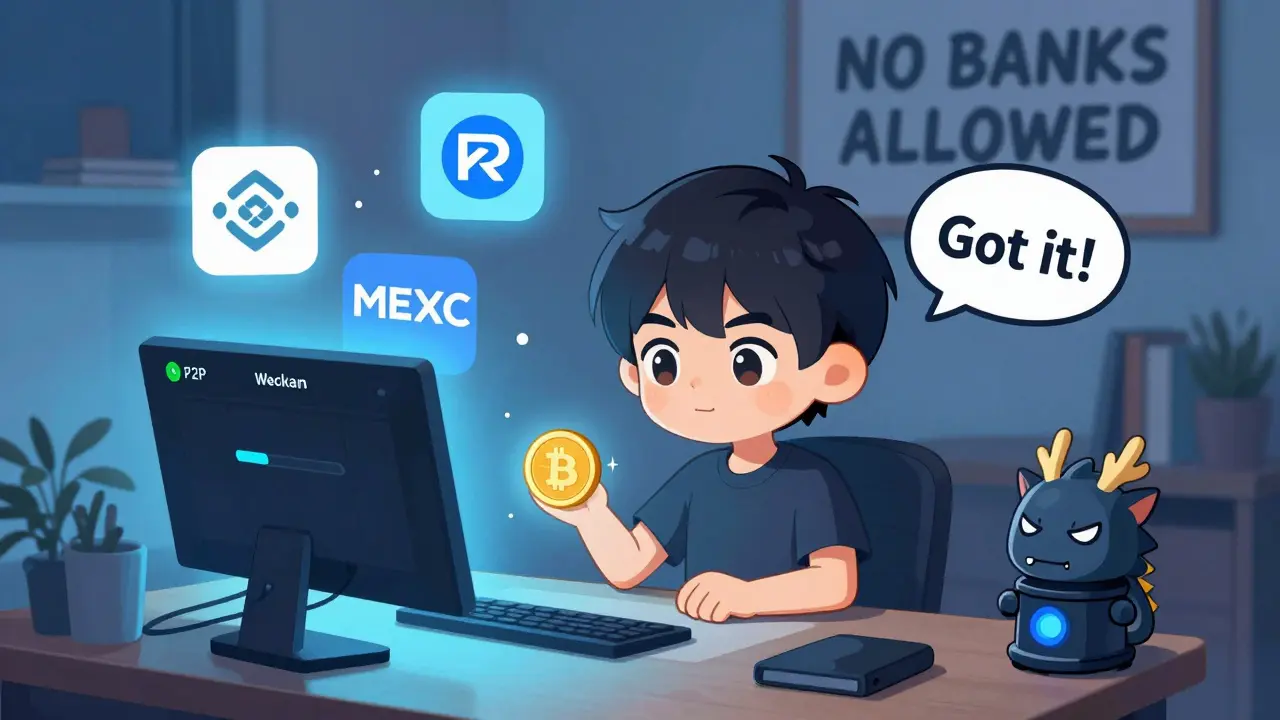
Buying cryptocurrency with real money in China isn’t as simple as it is in most other countries. If you’re in China and want to turn your yuan into Bitcoin, Ethereum, or USDT, you’re working inside a system that officially bans banks and payment apps from helping you do it. No domestic exchange can legally take your cash and give you crypto. But that doesn’t mean it’s impossible. Thousands of people in China still buy crypto every day - they just have to use different paths. The truth is, China hasn’t banned owning crypto. It’s banned the infrastructure that makes buying it easy. No banks. No Alipay. No WeChat Pay. No local exchanges. So if you want to buy crypto with fiat, you’re forced to go overseas - and that changes everything about how you do it. Here’s how real people in China are buying crypto with cash in 2026.
Use International Exchanges That Still Serve China
Even though China blocks most crypto platforms, a handful of international exchanges still let Chinese users sign up and trade. These platforms don’t have offices in China, so they aren’t breaking local laws. They operate from outside the country and accept users from anywhere. The most reliable ones right now are CEX.IO, Binance, Kraken, and MEXC. Each has its own strengths. CEX.IO is one of the easiest for beginners. You create an account, verify your identity (KYC), then deposit USD, EUR, or GBP using a bank transfer or card. Once the money arrives, you click "Convert" and swap it directly for Bitcoin or any other coin. No trading skills needed. The whole process works on mobile apps for iOS and Android. Binance is the most popular overall. It supports over 400 cryptocurrencies and lets you buy with fiat via bank transfer, credit card, or peer-to-peer (more on that later). Its fees are low - just 0.1% per trade - and it’s been around long enough that most users trust it. Kraken is known for strong security and customer support. It charges slightly more (0.4% for buys), but if you’re worried about losing access to your funds, it’s one of the safest choices. MEXC stands out because it doesn’t always require KYC. You can deposit fiat directly via SEPA bank transfer or Quick Buy (card payment) and start trading without submitting ID documents. That’s rare. It also has over 1,700 coins - more than almost any other exchange.Peer-to-Peer (P2P) Trading Is the Backbone
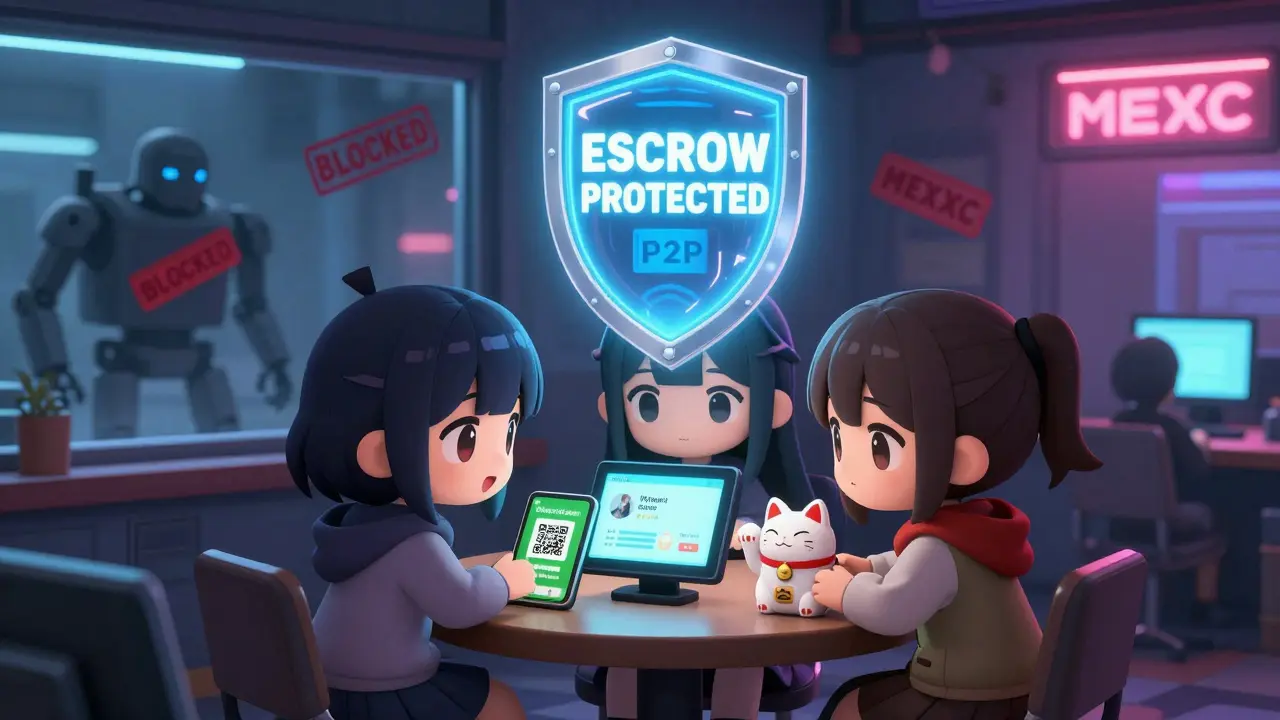
If you want to use yuan directly, P2P trading is your best bet. This is where people trade crypto directly with each other, using local payment methods like WeChat Pay, Alipay, or bank transfers. Platforms like Binance, Huobi, and Paxful run P2P marketplaces. You pick a seller, agree on a price, send them yuan, and they send you crypto. The platform holds the crypto in escrow until you confirm payment. This method works because it doesn’t involve the exchange handling your money. The exchange just connects you. That’s why it’s still legal - technically, you’re doing a private deal. But there’s risk. You’re dealing with strangers. Always:- Only use trades marked "Verified" or "Trusted"
- Check the seller’s history - 500+ completed trades with 98%+ rating is ideal
- Never release crypto before you see the yuan in your account
- Use the platform’s chat system - never move conversation to WeChat or WhatsApp
Payment Methods That Actually Work
Forget credit cards from Chinese banks. They’ll block crypto purchases instantly. But there are workarounds.- International bank transfers - Use a foreign bank account (or a friend’s) to send USD/EUR to exchanges like Kraken or CEX.IO. This is slow but reliable.
- Card payments via foreign processors - Some platforms let you use Visa or Mastercard issued outside China. If you have a card from Hong Kong, Singapore, or the U.S., it often works.
- Third-party payment apps - Skrill, Neteller, and PayPal can be used as intermediaries. You load them with yuan via P2P, then transfer to the exchange. It adds steps but avoids direct bank flags.
- Gift cards and vouchers - A few services let you buy Bitcoin gift cards with yuan, then redeem them on exchanges. This is risky and often overpriced, but some still use it.
Fees Are Higher Than You Think
You’ll pay more than you would in the U.S. or Europe. Here’s what you’re likely to pay:- Trading fees: 0.1% on Binance, 0.01% on MEXC, 0.4% on Kraken
- Deposit fees: Often 0% for bank transfers, but 3-5% for card payments
- Conversion fees: If you deposit USD and want to buy Bitcoin, the exchange may charge 0.5-1% to convert currencies
- P2P premium: 1-3% extra over market price
Security Is Non-Negotiable
If you’re doing this in China, you’re already taking a risk. Don’t add more by being careless.- Always enable two-factor authentication (2FA) - use an app like Authy, not SMS
- Withdraw your crypto to a personal wallet after buying - don’t leave it on an exchange
- Use cold storage (hardware wallet) for anything over $1,000
- Never share your recovery phrase with anyone - not even "support"
- Check if the platform is regulated in the EU, U.S., or Singapore - not China
What Doesn’t Work Anymore
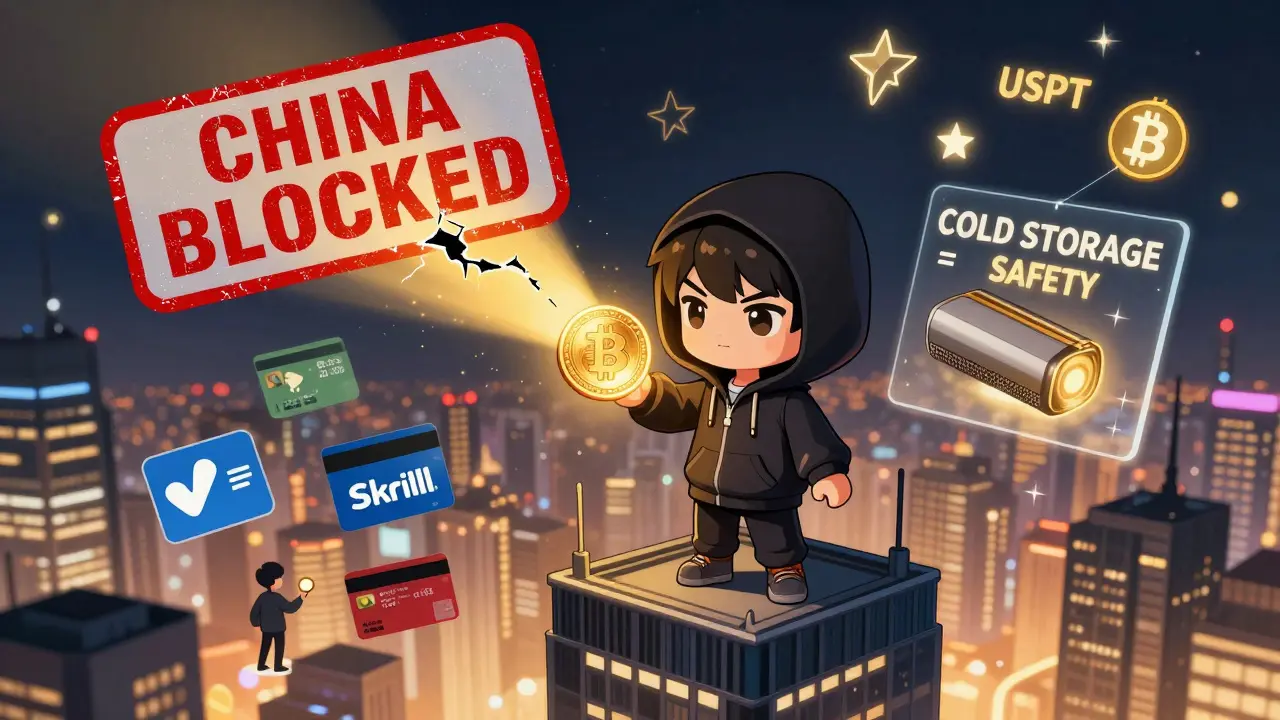
Don’t waste time on these:- Domestic Chinese exchanges - OKX, Huobi, and others have shut down fiat onramps for mainland users
- Chinese bank transfers to crypto platforms - Blocked by law. Banks flag and freeze accounts Local Bitcoin ATMs - Almost all were shut down by 2021
- Apps like CashApp or Venmo - They don’t serve China. Even if you install them, they won’t let you sign in
What’s Next?
China’s stance on crypto won’t change soon. The digital yuan is their answer - a state-controlled version of digital money. They’re not trying to stop innovation. They’re trying to own it. For now, the only way to buy crypto with fiat in China is to go around the system. Use international platforms. Use P2P. Use foreign payment methods. Stay quiet. Stay secure. It’s not easy. But it’s still possible - if you know where to look.Can I use WeChat Pay to buy crypto in China?
No. WeChat Pay and Alipay are legally blocked from processing crypto purchases. You can use them only in peer-to-peer trades, where you send money directly to a seller after they’ve sent you crypto. The exchange never touches the WeChat Pay account.
Is it illegal to own Bitcoin in China?
No. Owning Bitcoin or any cryptocurrency is not illegal in China. The ban targets financial institutions and exchanges that facilitate fiat-to-crypto conversions. Individuals can still hold crypto, trade it privately, or buy it through overseas platforms.
Which exchange has the lowest fees for Chinese users?
MEXC has the lowest fees at 0.01% for taker trades and 0% for maker trades. It also supports over 1,700 cryptocurrencies and accepts fiat deposits via bank transfer without mandatory KYC. However, customer support is limited compared to Binance or Kraken.
Can I use a VPN to access Chinese crypto exchanges?
Using a VPN won’t help. Chinese exchanges like Huobi and OKX have blocked access from mainland IP addresses regardless of VPN use. Even if you bypass the block, they don’t allow fiat deposits from Chinese residents anymore. Focus on international platforms instead.
Do I need to report crypto purchases to the Chinese government?
There is no legal requirement to report personal crypto holdings or purchases in China. However, if you use a Chinese bank account to fund crypto trades - even indirectly - you risk account freezes or investigation. The safest approach is to avoid linking any Chinese financial accounts to crypto activity.




nalini jeyapalan
March 5, 2026 AT 08:54Y’all act like buying crypto in China is some underground heist movie. It’s not. It’s just… inconvenient. I use MEXC with a SEPA transfer from my friend’s EU account. Took 3 days. Paid 0.01% fee. Got my BTC. No drama. No VPN. No panic. Just do the thing. Stop overcomplicating it.
Christina Young
March 7, 2026 AT 05:24You’re delusional if you think this is sustainable. Every time someone uses P2P, they’re gambling with their bank account. Chinese banks are AI-monitored. One transaction out of pattern and your entire financial life gets flagged. You think you’re clever? You’re just a data point in a surveillance ledger.
Drago Fila
March 8, 2026 AT 01:45Hey, I get it - it’s messy. But seriously, if you’re trying to buy crypto in China, you’re already ahead of 99% of the population who don’t even know where to start. You’re learning. You’re adapting. That’s huge. Don’t let the naysayers scare you. Use Binance P2P, check seller ratings, and keep your funds in a Ledger. You got this.
Steven Lefebvre
March 8, 2026 AT 06:24Wait, so if I use a friend’s Canadian credit card to buy USDT on Binance, and then send it to my personal wallet - is that technically legal? Or am I just one step away from a visit from the cyber police? Asking for a friend. (Not a friend. It’s me.)
Basil Bacor
March 9, 2026 AT 15:56frankly i dont get why people bother. china has the digital yuan. its tracked. its controlled. its the future. why risk your freedom for some decentralized coin that could drop 80% tomorrow? just use the gov app. easy. safe. boring. like life should be.
Emily Pegg
March 11, 2026 AT 03:20OMG I literally just bought ETH using my Hong Kong card on Kraken. I’m so proud of myself. I feel like a rebel. Like I’m living in a cyberpunk novel. Also, I cried when the transaction went through. I didn’t know crypto could be this emotional. 🥹
Ethan Grace
March 12, 2026 AT 14:16Isn’t it ironic? We’re all trying to escape state control… by using the very infrastructure that the state built - international banking, global exchanges, foreign payment rails. We’re not breaking the system. We’re just… outsourcing our rebellion. The real revolution isn’t crypto. It’s globalization. And it’s already here.
Jamie Hoyle
March 14, 2026 AT 08:24Everyone’s acting like this is some groundbreaking guide. Bro. This is just 2021 all over again. MEXC doesn’t require KYC? Really? The same MEXC that got frozen by the EU last month? The same one that disappeared for 72 hours in December? You’re trusting your life savings to a platform that can vanish like a TikTok trend. Wake up.
Jeffrey Dean
March 16, 2026 AT 04:10You think you’re free because you bought Bitcoin? You’re not free. You’re just… more anxious. You’re constantly checking prices. You’re afraid of your bank. You’re afraid of the government. You’re afraid of getting scammed. You’re not owning crypto. You’re owning fear. And fear doesn’t appreciate compounding.
Brian T
March 16, 2026 AT 05:15This whole post reads like a Reddit FAQ from 2022. Did anyone update this for 2026? Because I checked Binance P2P this morning - half the sellers are flagged as "suspicious" now. And MEXC’s app crashes if you try to deposit from a Chinese IP. This guide is outdated. Just saying.
Nash Tree Service
March 17, 2026 AT 14:11It is imperative to underscore, with the utmost gravity, that the systemic dismantling of fiat-to-crypto infrastructure within the People’s Republic of China constitutes not merely regulatory enforcement - but a profound epistemological reorientation toward centralized monetary sovereignty. To circumvent this architecture is not an act of financial innovation; it is, in fact, a metaphysical assertion of individual autonomy against the ontological hegemony of algorithmic governance. One must ask: Is liberty, in this context, a right… or a vulnerability?
Jane Darrah
March 18, 2026 AT 16:17I’ve been doing this since 2021 and I’ve lost three accounts, two friends, and my entire savings to one P2P scammer who ghosted me after I sent 80,000 RMB. I cried for a week. Then I bought more crypto. I don’t know why I do this. I’m not smart. I’m not rich. I just… believe in it. Like it’s some kind of religion. And I know everyone here thinks I’m crazy. But if you’re reading this, you probably feel the same way. We’re not investors. We’re pilgrims.
jack carr
March 19, 2026 AT 07:27Just use a prepaid Visa from Canada. Load it with cash at a convenience store. Buy USDT on Kraken. Withdraw to Ledger. Done. No KYC. No drama. No one even knows you exist. It’s stupidly simple. Seriously, stop overthinking it.
Eva Gupta
March 20, 2026 AT 16:15I’m from India, and honestly, I’m amazed how similar this is to what we went through in 2018 when RBI banned banks from dealing with crypto. We used P2P too. We used friends’ foreign accounts. We used gift cards. We were scared. We were smart. We survived. China’s just on a delayed timeline. The spirit is the same. Stay calm. Stay safe. And keep trading.
Ken Kemp
March 21, 2026 AT 20:42One thing everyone’s missing: use Authy for 2FA, not Google Authenticator. Google can get hacked. Authy syncs across devices. Also, if you’re using a foreign bank transfer, always use a SWIFT code - not IBAN. I messed up once and lost 48 hours on a transfer. Don’t be like me.
James Burke
March 22, 2026 AT 19:36Just want to say - if you’re reading this and you’re new to this, you’re not alone. It’s scary. It’s confusing. But you’re doing the right thing by learning. Take it slow. Don’t rush. Use small amounts. Learn from mistakes. You’re building something real here. And that matters.