

Imagine waking up to find a few thousand dollars in your wallet just for clicking a few buttons. That's the dream behind every PNDR airdrop, and the buzz around a potential Pandora Protocol and CoinMarketCap collaboration has many people hunting for details. But in the fast-moving world of crypto, the line between a legitimate reward and a clever marketing trap is thin. If you're looking to secure free tokens, you need to know exactly what Pandora Finance is and how these community events actually work.
Quick Takeaways for PNDR Hunters
- Token Identity: Pandora Finance is a BSC-based ecosystem using the PNDR token, not to be confused with the high-priced PANDORA token.
- Network: PNDR operates on the Binance Smart Chain (BSC), meaning you'll need a compatible wallet like MetaMask or Trust Wallet.
- Risk Factor: PNDR has seen a massive price drop (over 85% in a year), so manage your expectations regarding the value of any free tokens.
- Verification: Always verify airdrops through the official CoinMarketCap Community page to avoid phishing scams.
Understanding Pandora Finance and the PNDR Token
Before you hunt for freebies, you should know what you're actually collecting. Pandora Finance is a customer-centric cryptocurrency ecosystem launched in early 2021 by Pushkar Vohra. It's built to be a comprehensive hub for users, moving toward a Decentralized Autonomous Organization (DAO) structure. In simple terms, this means the PNDR token isn't just a coin you hold for profit; it's a governance tool that lets holders vote on how the project grows.
The project has a maximum supply of 100 million PNDR tokens. However, the market reality is a bit sobering. As of 2026, the token has struggled significantly, trading at a tiny fraction of its all-time high of $0.74. When you see an airdrop for a token that has lost nearly 99% of its peak value, it's a signal to be cautious. You aren't necessarily losing money by participating in a free airdrop, but don't expect it to be a "get rich quick" ticket.
How the CoinMarketCap Community Airdrop Works
CoinMarketCap (CMC) often partners with emerging projects to boost visibility. These events usually aren't "random" gifts but are designed to grow a project's social footprint. If Pandora Protocol is running a campaign here, it typically follows a specific pattern of "Jobs-to-be-Done" for the user.
First, you'll usually need to follow the project on X (Twitter) and join their Telegram. Second, you'll often have to perform a few small tasks, like retweeting an announcement or referring friends. This creates a surge in social metrics, which projects use to attract new investors. The "reward" is a set number of PNDR tokens distributed to a lucky pool of participants who completed all steps.
| Attribute | Pandora Finance (PNDR) | PANDORA (Separate Project) |
|---|---|---|
| Primary Network | Binance Smart Chain (BSC) | Various / Different Chain |
| Price Point | Fractional (approx. $0.0031) | High Value (often $500+) |
| Purpose | Ecosystem Governance/DAO | Different Utility/Asset |
| Market Cap | Minimal/Low | Higher/Variable |

Step-by-Step: How to Participate Safely
If you've spotted a PNDR airdrop announcement, don't just rush in. Follow these steps to ensure your funds stay safe while you try to grab some free tokens.
- Verify the Source: Go directly to the CoinMarketCap website. Navigate to the "Community's Airdrops" section. If the PNDR event isn't listed there, the link you found on social media might be a scam.
- Prepare a Burner Wallet: Never use your main hardware wallet or the account where you keep your life savings for airdrops. Create a fresh MetaMask or Trust Wallet address. This limits your risk if the airdrop site asks for a contract permission that turns out to be malicious.
- Complete Social Tasks: Follow the project's official handles. Be careful not to give away your private keys or seed phrases-no legitimate airdrop will ever ask for them.
- Submit Your Address: Provide your BSC wallet address. Double-check that you are providing a BEP-20 compatible address so the tokens actually reach you.
- Wait for the Snapshot: Most airdrops take a "snapshot" of eligible users and distribute tokens in batches. Don't panic if the coins don't appear in your wallet instantly.
Common Pitfalls and Red Flags
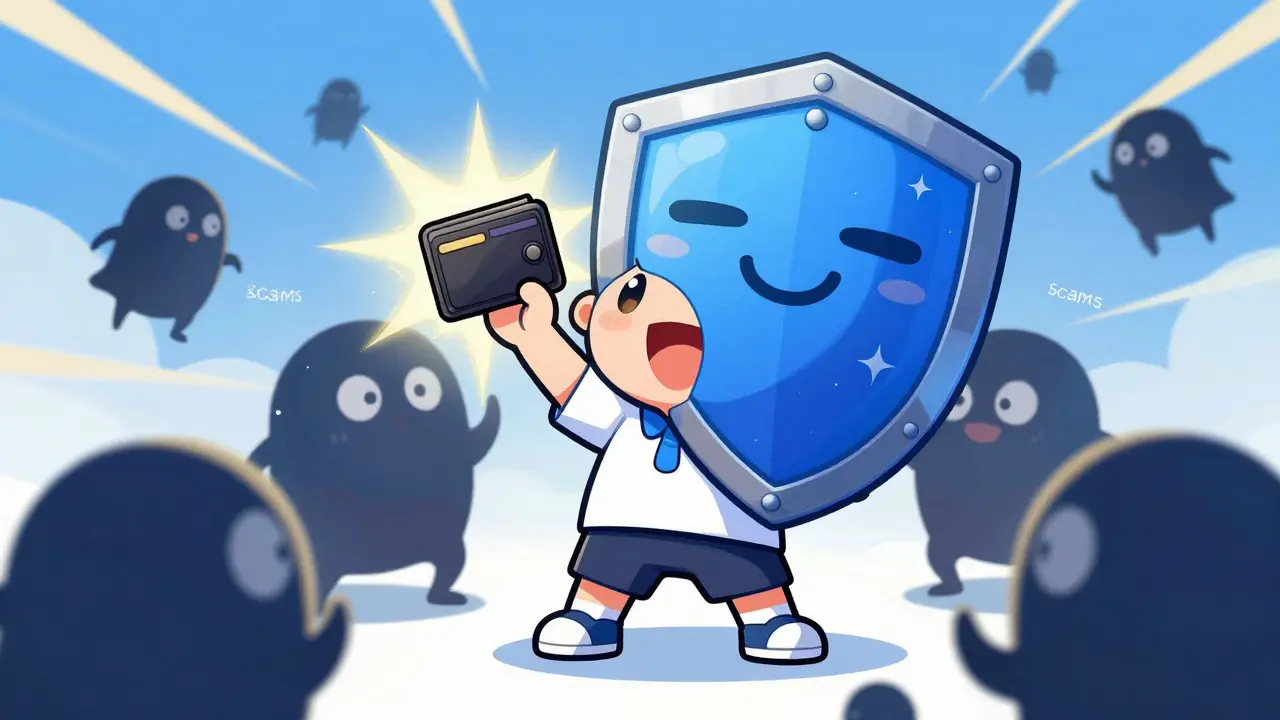
The airdrop world is unfortunately filled with "dusting attacks" and phishing sites. A common trick is for scammers to create a fake token with a similar name-like "PANDORA" instead of "PNDR"-and send it to your wallet. They then lure you to a website to "unlock" or "swap" the tokens, which actually drains your wallet.
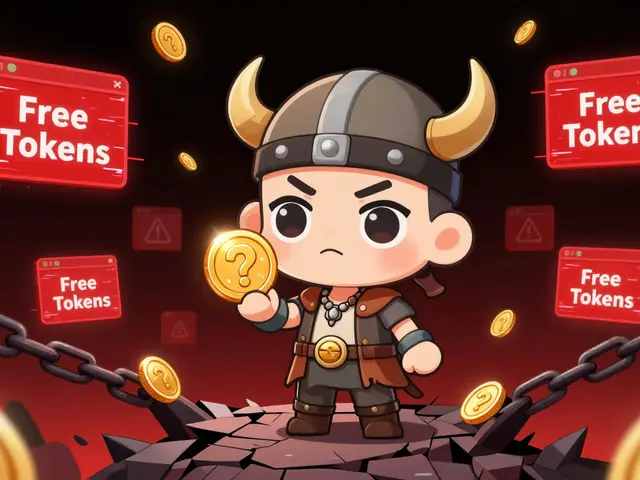
Another red flag is the "Gas Fee Scam." If a site tells you that you've won 10,000 PNDR but you need to send 0.1 BNB to "verify your wallet" or pay for shipping/processing, close the tab immediately. Real airdrops are free. The only cost you should ever encounter is the network gas fee you pay yourself when moving the tokens *after* you've received them.
The Broader Airdrop Strategy for 2026
While PNDR is a specific target, savvy crypto users look at the bigger picture. The trend has shifted from simple social media tasks to "retroactive airdrops." This is where protocols reward people who actually used their product before a token existed. For example, early users of platforms like Uniswap received huge sums of UNI tokens just for providing liquidity.
If you want more consistent results, focus on these three areas:
- Testnet Interaction: Use the beta versions of new apps. Developers often reward those who help find bugs.
- Layer 2 Adoption: Interact with scaling solutions. These projects usually have massive marketing budgets for their initial token launches.
- Volume Farming: Some projects reward traders based on how much they've swapped. Just be careful not to spend more on trading fees than the potential airdrop is worth.
Is the PNDR airdrop a scam?
Not necessarily, but you must verify it. If the airdrop is officially listed on the CoinMarketCap Community page, it's generally safe. However, if you found it via a random DM or a suspicious-looking ad, it's likely a scam. Never provide your seed phrase to any "verification" site.
What is the difference between PNDR and PANDORA?
They are completely different projects. PNDR is the token for Pandora Finance, a BSC-based project with a low unit price. PANDORA is a separate asset that has historically traded at a much higher price point. Mixing them up can lead to significant financial errors.
Do I need to pay money to get the PNDR airdrop?
No. A legitimate airdrop is a gift of tokens. You should never send crypto to an address to "activate" an airdrop. The only cost involved is the standard blockchain gas fee if you decide to move or sell the tokens once they are in your wallet.
Which wallet should I use for PNDR?
Since Pandora Finance runs on the Binance Smart Chain (BSC), you need a BEP-20 compatible wallet. MetaMask, Trust Wallet, and the Binance Wallet are the most common choices.
Why is the PNDR price so low compared to its all-time high?
Like many projects from the 2021 era, PNDR suffered from a massive market correction. A drop of over 85% usually indicates low trading volume and a loss of investor momentum, though the project continues to work toward its DAO governance goals.
What to do next
If you've already signed up for the airdrop, the best move is to set a calendar reminder for the distribution date. Once the tokens hit your wallet, decide if you want to hold them for the DAO transition or swap them for a more stable asset like BNB or USDT. If you're new to this, start by exploring other established airdrop hubs on CoinMarketCap to get a feel for how legitimate campaigns are structured. Just remember: if it feels too good to be true, it probably is.



Shantal Sanjur
April 16, 2026 AT 21:32Oh, honey, please. Imagine actually believing that these "community events" are anything other than a blatant data-harvesting operation by a project that's basically a digital corpse at this point. It's so adorable that people still think they're getting a "free gift" when the real product is your email and your social media handle, which will then be sold to every scammer from here to Mars. I'm sure the DAO transition is just a wonderful fairy tale to keep the bagholders from realizing they're holding a handful of nothing. Just follow the money, or rather, follow the lack of it, because this whole setup reeks of a coordinated pump-and-dump scheme orchestrated by people who wouldn't know ethics if they hit them in the face. Honestly, the level of naivety required to treat this as a legitimate financial opportunity is just breathtaking. Good luck with your "free" tokens, I'll be over here watching the inevitable collapse with a very large glass of wine.
John and Lauren Busch
April 17, 2026 AT 23:00Burner wallets for the win.
Abhinav Chaubey
April 19, 2026 AT 02:25You people are so blind to how the global markets actually operate. I've seen these BSC patterns a thousand times and only a total amateur would ignore the volume metrics here. If you aren't tracking the liquidity pools on PancakeSwap, you're just gambling, not investing. It is honestly pathetic how many people just follow a guide without doing the actual hard work of analyzing the contract address themselves. Most of you are just waiting for a miracle while the real players are already moving their capital into assets with actual utility. This project is basically a ghost town, and if you think a CoinMarketCap partnership is going to save it, you're dreaming. Get a grip on the reality of the market before you lose your shirt.
Sean Douglas
April 19, 2026 AT 07:42The sheer, unadulterated audacity of this project to present itself as a
Sean Douglas
April 19, 2026 AT 21:45The sheer, unadulterated audacity of this project to present itself as a viable ecosystem while its value is plummeting into the abyss is truly a cinematic tragedy. It's an absolute rollercoaster of despair! I can almost feel the desperation radiating from the whitepaper, a symphony of broken promises and hollow buzzwords. Who could possibly find the fortitude to click those buttons knowing the crushing weight of an 85% drop? It's a visceral nightmare disguised as a digital windfall, and the psychological toll of hoping for a moonshot only to find a crater is simply too much to bear. My soul weeps for the hopeful souls lured in by the siren song of "free tokens" only to be met with the cold, hard reality of a fractional price point. It's a masquerade of wealth where the masks are made of cheap pixels and the gold is nothing but pyrite. Truly, a catastrophic farce of the highest order!
Luke George
April 20, 2026 AT 11:29The link between these "partnerships" and the larger centralized control systems is obvious to anyone who isn't a sheep. They want us using these specific wallets so they can track every single micro-transaction and tie it back to our real-world identities through KYC leaks. It's just another layer of the surveillance state using crypto as bait. I've noticed that every time one of these "community airdrops" peaks, there's a corresponding shift in regulatory pressure. They're just mapping the network of retail investors to see who's still gullible enough to fall for this stuff before the final crackdown. Don't even get me started on the "DAO" nonsense; it's just a way to shift liability from the founders to the users. We're just lab rats in a giant financial experiment.
Chintu Parikh
April 22, 2026 AT 03:10I believe this is an excellent reminder for everyone to stay vigilant! We can all achieve great things by supporting each other and following these safety protocols together. Let us move forward with enthusiasm and caution!
siddharth narula
April 22, 2026 AT 18:33One must ponder if the pursuit of "free" digital assets is not merely a reflection of our inner void and the spiritual bankruptcy of the modern age. 🧘♂️ We chase ghosts in the machine while neglecting the sanctuary of the soul. Is a token truly a reward if it costs us our peace of mind? 🌌
Michelle Stanish
April 24, 2026 AT 06:49I don't see the point in using a burner wallet. It's too much work for tokens that are basically worthless anyway.
Yuhan Mo
April 25, 2026 AT 22:06The risk mitigation strategy mentioned regarding the burner wallet is standard operating procedure for anyone dealing with unverified smart contracts. From a technical perspective, the risk of a malicious approval function draining the wallet's balance is non-trivial. I appreciate the emphasis on BEP-20 compatibility to ensure the transaction doesn't fail at the protocol level. Very clean guide.
Sean Mitchell
April 26, 2026 AT 01:36This guide is an absolute slog to read. I can't believe I wasted five minutes of my life on something that essentially boils down to "don't get scammed." Truly a monumental waste of digital ink!
Thomas Jewett
April 27, 2026 AT 01:45Its a shame we see so much of this nonsense coming from foreign developers who just want to bleed the American taxpayer dry while they hide behind some fancy DAO structure that dont even mean nothing in a real court of law. We need to stop letting these overseas projects pump their garbage tokens into our markets and start protecting our own financial borders before every single hard working man is left with nothing but useless strings of code and broken dreams because we were too lazy to check a website!!
Anna Grealis
April 27, 2026 AT 23:09wait.. you guys actually trust CoinMarketCap? lol theyre probably in on it with the devs to inflate the numbers for a later exit scam... i bet the snapshots are fake too
Karen Mogollon Gutierrez
April 28, 2026 AT 16:01I find it utterly reprehensible that such a volatile asset is being marketed to the general public without more stringent warnings. The juxtaposition of "dreaming of thousands of dollars" and an "85% price drop" is quite frankly an insult to the intelligence of the reader. I am simply aghast at the lack of professional rigor in this sector!
Ankit Sindhu
April 28, 2026 AT 21:14For those who are new to this, just take it one step at a time. If you're feeling overwhelmed, just start with the burner wallet part-that's the most important bit for your safety. We're all learning together!
nathan jones
April 30, 2026 AT 13:52just another bsc coin
Gillian Kent
April 30, 2026 AT 22:57i tried to do this but the site was acting weird and i think i might have typed my adress wrong.. hope its not too late to fix it