
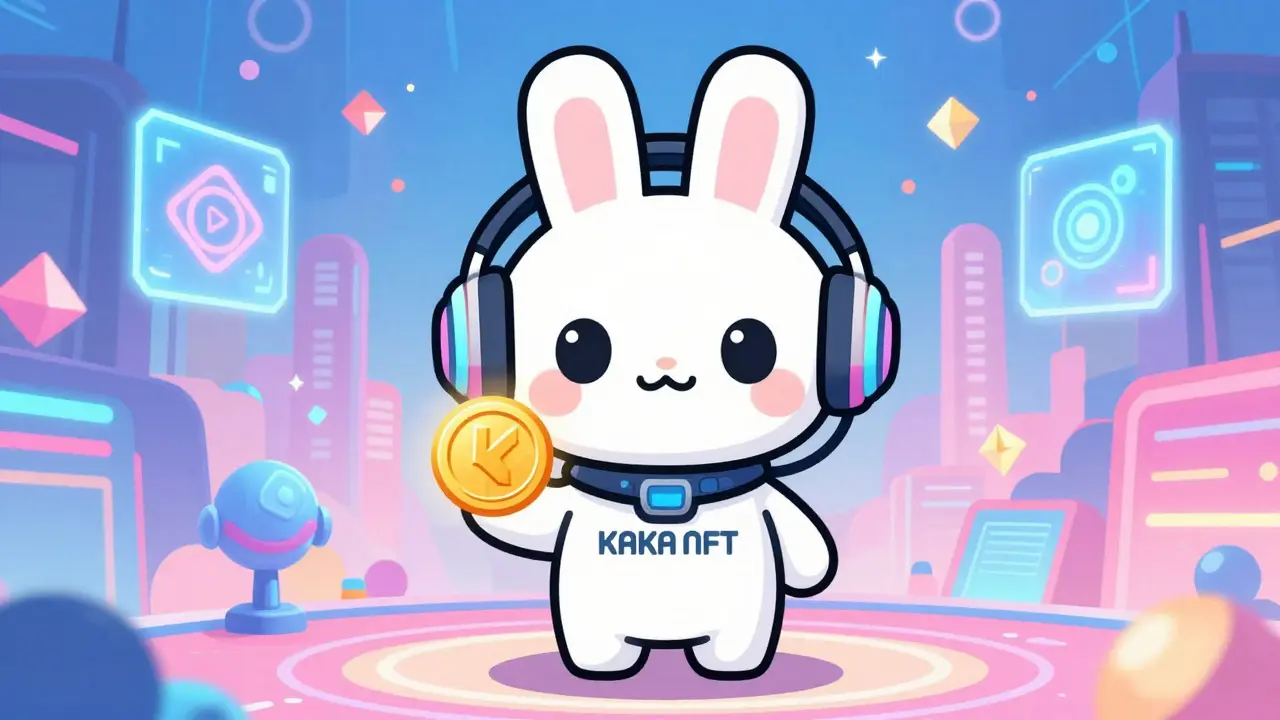
Understanding the KAKA NFT World Opportunity
If you are tracking emerging blockchain gaming projects, you have likely encountered buzz around the KAKA NFT World, a metaverse platform integrating NFTs and DeFi applications. With reports circulating about an airdrop program, many users are asking whether this distribution is active, safe, and worth pursuing. Given the current market landscape in 2026, navigating these claims requires more than just clicking through promotional links.
The confusion often stems from conflicting technical reports found across various crypto aggregators. Some data points suggest the project operates within the BNB Chaina high-performance blockchain supporting decentralized applications ecosystem, while others indicate deployment on the Solanaa high-speed blockchain platform known for fast transactions network. This discrepancy is critical because holding the wrong wallet type or connecting to the wrong chain can lead to lost assets or failed participation. Before attempting to claim any tokens, understanding the fundamental mechanics and potential risks of the project is essential.
What Drives the KAKA Ecosystem?
At its core, KAKA NFT World positions itself as a competitive gaming ecosystem rather than a simple token launch. The platform combines elements of non-fungible digital art (NFTs) with prediction markets focused on esports scenarios. Unlike many meme coins that rely solely on hype, this project claims to build infrastructure for cross-chain bridges and Decentralized Autonomous Organization (DAO) management structures.
The vision includes two main pillars: first, providing R&D and sales services for game art NFTs, and second, operating a prediction marketplace for electronic sports. For users, participation often hinges on holding specific digital assets. One notable component is the KAKA-rabbit NFTlimited edition profile picture assets representing community status. These are profile picture (PFP) assets intended for platforms like Twitter. There is a hard cap of 10,000 pieces globally, each designed by hand-drawn CG artists rather than computer-generated algorithms, giving them unique artistic value. While these NFTs serve as symbols of community participation, holding them has historically granted priority access to card games and enhanced rights within the ecosystem.
Navigating the Airdrop Mechanism
The primary driver for interest in this project is the KAKA airdrop system. According to available documentation, the distribution strategy involves multiple channels designed to reward early engagement. The mechanism isn't a simple 'one-click' claim; instead, it relies on ongoing challenges and direct promotions hosted through official communication channels.
A significant part of the distribution model involves Mystery Box drops. Users participating in the official website activities receive these boxes periodically. The logic behind this system is to create recurring value recovery. If participants track the utility carefully, they might recover initial investments-specifically referring to transaction fees or entry costs-through three to four Mystery Box acquisitions. However, it is vital to verify the authenticity of these boxes directly through the contract verification before depositing funds or connecting wallets. Many scam attempts mimic this terminology to harvest credentials.
Rewards aren't limited to just the native token. The mining rewards distributed through the official site occasionally contain various popular cryptocurrency tokens. This multi-currency approach attempts to broaden the appeal beyond just KAKA holders, attracting those who might prefer stablecoins or established cryptocurrencies over newer speculative assets. Yet, the conversion rate remains tied to the project's liquidity health, which currently appears fragile.
Analyzing the Tokenomics Structure
To evaluate the long-term viability of the airdrop, you must look at the supply mechanics. Conflicting data exists regarding the total supply, which creates uncertainty for potential investors. Some sources cite a total supply of 100 million KAKA tokens with a circulating supply of 5.5 million. Other sources point to a much larger figure of 1 billion tokens.
| Total Supply Model | Circulating Supply | Blockchain Network | Distribution Method |
|---|---|---|---|
| 100 Million Tokens | 5.5 Million | BNB Chain | Mystery Boxes |
| 1 Billion Tokens | Variable | Solana | Staking & Mining |
The larger supply model suggests a massive allocation to community incentives. Specifically, 59% of the tokens (potentially reaching 590 million units in the 1 billion scenario) are designated for mining and airdrop programs. Another 25% goes to investment institutions, 15% to the development team, and 1% for Initial DEX Offering (IDO). This heavy weighting towards airdrops signals a strong intention to bootstrap a community base quickly, similar to the strategies used by major Layer-1 protocols in previous years.
However, the contract status provides additional context. Reports indicate that the liquidity pool has been burned and the contract renounced. In crypto terminology, this means the developers no longer hold control over the token contract or liquidity reserves. While this removes centralization risks (preventing rug pulls via liquidity withdrawal), it also locks in the current parameters forever, meaning no future adjustments can be made to fix bugs or improve tokenomics if issues arise.
Current Market Status and Trading Risks
As of late 2026, the market performance of the KAKA token presents a stark reality check. Both major tracking platforms and exchanges like Bitgeta cryptocurrency exchange platform offering trading services report a live price of $0.00 USD. More concerning is the 24-hour trading volume, which is also recorded at $0.00 USD.
This lack of activity indicates one of two scenarios: either the project is in a dormant developmental phase waiting for a new marketing cycle, or it has effectively stalled. Without active buy-sell orders, even if you successfully claim an airdrop, you may find it difficult to sell those tokens for real money. Price prediction services like CoinCodex require several hours of historical trading data to generate models; the absence of this data makes forecasting for 2025, 2026, or beyond impossible with statistical accuracy.
Despite the lack of financial traction, community sentiment on some aggregators remains surprisingly resilient. Community ratings on sites like CoinMarketCap show scores around 4.4 out of 5 based on user reviews. This dichotomy suggests a loyal niche group holding the assets despite the lack of liquid market value, potentially banking on future integration or utility improvements within the ecosystem.
Verifying Safety and Participation
Engaging with airdrop opportunities requires strict adherence to security protocols. First, always verify the smart contract address directly on a blockchain explorer. Publicly available data lists a partial contract hash starting with 0x26a1...d13a8a. Never trust a contract address sent via private message on social media.
Second, distinguish between supported regions. Exchanges like Bitget offer purchasing options in specific jurisdictions including Guyana and parts of Australia, but availability changes frequently due to regulations. Third, complete account verification processes on your chosen exchange platform to utilize conversion services safely.
If you decide to participate, start small. Do not invest capital you cannot afford to lose given the $0.00 market valuation. Treat the airdrop as a speculative experiment rather than income. Monitor official channels for updates regarding the "Mystery Box" cycles, as the value proposition relies heavily on periodic releases maintaining their integrity over time.
Is the KAKA NFT World airdrop free to join?
Most initial airdrop tasks are free, requiring social media follows or referrals. However, obtaining higher-value Mystery Boxes often requires holding NFTs or completing paid challenges, which carry investment risk.
Which blockchain does KAKA operate on?
There is conflicting data. Some sources list it on the BNB Chain ecosystem, while others report operation on the Solana blockchain. You should verify the contract address matches the chain of your wallet before connecting.
Why is the KAKA token price showing $0.00?
The reported price of $0.00 reflects extremely low liquidity or inactive trading pairs on major exchanges. This means even if you hold tokens, selling them may result in zero return until trading volume increases.
Are the KAKA-rabbit NFTs valuable?
Their value depends on the project's success. They grant priority access to games and prediction markets. Currently, they function mostly as status symbols for community participation rather than purely financial assets.
Can I sell my claimed tokens immediately?
Due to current trading volumes of $0.00, immediate liquidity is unavailable on most major platforms. You would need to check decentralized exchanges (DEX) specific to the token's blockchain for any private liquidity pools.
Is the liquidity pool safe?
Yes, reports suggest the liquidity pool was burned and the contract renounced. This prevents developers from withdrawing funds, indicating a level of decentralization, though it also means no fixes can be pushed by the team.
Does KAKA support global users?
Global access varies. Exchanges like Bitget support multiple regions including Guyana and parts of Oceania, but you must complete standard KYC verification to trade or convert assets.
What is the purpose of Mystery Boxes?
They serve as a reward mechanism where users accumulate value over time. Participants hope to recover initial investments after collecting 3-4 boxes, making it a staggered payout system rather than a one-time gift.

Colin Finch
March 31, 2026 AT 09:18The concept of digital ownership in a voided economy feels inherently contradictory yet strangely compelling in its execution. Many of us search for permanence amidst the volatility of blockchain infrastructure today. We see projects rising and falling like tides against the rocky shore of market speculation. There is a distinct melancholy in holding assets that possess theoretical utility but zero liquid value. This particular ecosystem attempts to bridge the gap between artistic expression and financial engineering. How many times have we witnessed such promises crumble under the weight of regulatory scrutiny or technical failure. Perhaps the true value lies not in the resale but in the communal bond formed during these exploratory phases. It forces the participant to reconsider what wealth truly represents in a digitized future. We risk becoming mere spectators to our own economic destiny while waiting for external validation. The distinction between BNB and Solana networks matters less than the underlying intent of the developers. Trust is the currency here and it is being spent liberally on contracts that may never execute fully. I find myself wondering if the renounced contract is a shield for us or a cage constructed by creators who walked away. Every mystery box dropped serves as a reminder of intermittent rewards designed to keep hope alive. We must navigate this terrain with eyes open to both the potential horizon and the immediate abyss below. And ultimately we choose whether to view this as a game or a livelihood with consequences beyond the screen.
Shubham Maurya
March 31, 2026 AT 10:02You guys really think this is a good idea 😂🤡. The tokenomics look like a trap from another lifetime. Why bother connecting your wallet to something that shows $0 on Bitget 📉. Just walk away before you lose your whole balance 🔥.
joshua kutcher
March 31, 2026 AT 19:38It sounds like a difficult path to navigate through the conflicting data points regarding the chain selection. I completely understand wanting to explore new opportunities in this space but caution is paramount. We need to remember that many of these systems rely heavily on community trust alone. There is a lot of pressure to join in quickly when the hype starts building up. Please take your time to verify every single address before moving any funds. Your security depends on being slow rather than fast right now.
Ronald Siggy
April 2, 2026 AT 01:53You need to move forward aggressively if you want to catch the floor here. Don't let fear stop you from claiming what you earned through those initial tasks. The strategy outlined above provides a clear roadmap for those ready to act. Most people wait too long and miss the initial distribution windows entirely. Take control of your investment decisions today. Bold moves lead to bold results in crypto markets.
Tiffany Selchow
April 2, 2026 AT 20:51American investors are always the first to get burned on these foreign chains anyway. Who cares about BNB versus Solana when the liquidity is effectively dead. It looks like another scheme built for offshore tax havens to drain wallets dry. Save your money for real American tech instead of gambling on rabbit NFTs. Honestly this feels like a joke played on desperate people.
Raymond K
April 2, 2026 AT 23:15I think the potental is huge if we ignore the red flags for a moment lol. The art designs look reallly nice and i can see myself collecting them eventually. Maybe wait til next yeer but dont giv up hope friends. Thre are always surprises in cryptoland that nobody sees coming. Let us stay positive even when prices drop hard.
Jamie Riddell
April 2, 2026 AT 23:49good overview of the risks involved here. many people forget the burn feature though. peace.
Chris R
April 4, 2026 AT 13:57Understanding the cultural significance of these limited profile pictures might be more important than the token price itself. These assets represent status within the niche community regardless of market fluctuations. We should respect the artists behind the hand-drawn graphics before questioning the utility too harshly. Participation requires patience and a deeper appreciation for digital culture. It creates a shared history among the holders worldwide.
Markus Church
April 5, 2026 AT 09:46The disparity in reported supply figures warrants further investigation prior to engagement. Investors must ascertain whether the liquidity pool is genuinely secure or merely marketed as such. Verification protocols on blockchain explorers are mandatory for prudent financial management. Proceed with extreme diligence regarding smart contract interactions. Safety remains the primary objective in high-risk environments.
Leah Lara
April 7, 2026 AT 01:22Looks like a scam to me honestly. Too much noise not enough substance. Skipping this one.
Lisa Walton
April 7, 2026 AT 05:14If you call that an analysis you need to try harder. Nothing substantial was actually presented except fear. People will buy anything if the FOMO is strong enough.
Katrina Tate
April 7, 2026 AT 18:25Data suggests the project is failing and yet people still hold bags tight. Psychological attachment drives the valuation more than fundamentals ever could. Smart money exits quietly while retail holds onto worthless tokens. The reality is far uglier than the marketing materials imply. Be careful with your private keys above all else.
Liam Robertson
April 7, 2026 AT 19:06Keep things simple and check the website links directly. Do not rush into signing transactions without reading terms. Safety comes first every time. Stay aware of phishing sites that look just like the real ones.
Justin Garcia
April 9, 2026 AT 11:54Your optimism is dangerous and naive. Reality checks hit hard soon. Prepare to lose everything.
athalia georgina
April 9, 2026 AT 23:22I thnk thie project has poential buut the site is confusing. Can someone help explain the staking part agian plz. Im scared to click the wrong thing lol.
Disha Patil
April 11, 2026 AT 17:15This is crazy how everyone is freaking out over nothing. If the price is zero why are we worried at all. Just sit tight and watch the show unfold. Drama is everywhere in crypto communities right now.
Elizabeth Akers
April 12, 2026 AT 14:31Relax and let the dust settle before making any rash decisions.