
You might remember when buying a plot of land meant signing papers at a county clerk’s office. Today, you can buy a digital parcel in Decentraland, a blockchain-based virtual world where ownership is recorded on the Ethereum network, trade it for cryptocurrency, and lease it out-all without leaving your browser. This isn’t science fiction anymore; it’s the current reality of metaverse cryptocurrencies, digital assets that power economies within virtual worlds. As we move through 2026, these tokens have evolved from speculative memes into functional currencies for gaming, social interaction, and even professional content creation.
The sector has matured significantly. With a market capitalization nearing $20 billion and over 100 distinct assets trading daily, the metaverse crypto space is no longer just about hype. It’s about utility. Whether you’re an artist needing rendering power, a gamer wanting true ownership of in-game items, or an investor looking for exposure to Web3 infrastructure, understanding how these tokens work is essential. Let’s break down what drives value in this ecosystem, which projects actually deliver utility, and how you can navigate these volatile markets safely.
How Metaverse Tokens Actually Work
To understand why these coins matter, you first need to grasp their underlying architecture. Most major metaverse tokens operate on the Ethereum blockchain, using the ERC-20 standard for seamless interoperability between wallets, exchanges, and decentralized applications. This technical foundation ensures that your assets aren’t locked inside a single game but can be moved, traded, or used across different platforms if they support cross-chain bridges.
There are generally two types of assets you’ll encounter:
- Fungible Tokens: These act as currency. You use them to pay for transactions, buy virtual goods, or vote on platform governance. Examples include MANA (Decentraland) and SAND (The Sandbox).
- Non-Fungible Tokens (NFTs): These represent unique items, like land parcels, avatars, or rare weapons. Each NFT has a distinct identity and cannot be exchanged one-for-one with another.
The magic happens when these two interact. You might use fungible tokens to bid on an NFT land plot, then earn more fungible tokens by hosting an event on that land. This closed-loop economy creates real demand for the native currency, driving its price based on actual usage rather than just speculation.
Top Projects Defining the Sector in 2026
Not all metaverse tokens are created equal. Some focus on social spaces, others on gaming, and some on infrastructure. Here’s how the leading players stack up against each other in terms of utility, market position, and user experience.
| Token | Primary Use Case | Market Cap (Approx.) | Key Feature |
|---|---|---|---|
| Render (RENDER) | Distributed GPU Rendering | $1.9 Billion | AI-enhanced 3D content creation |
| Decentraland (MANA) | Virtual Real Estate & Social | $550 Million | User-owned VR world |
| The Sandbox (SAND) | Gaming & Content Creation | $400 Million | No-code asset building tools |
| ApeCoin (APE) | Otherside Ecosystem | $800 Million | Bored Ape Yacht Club integration |
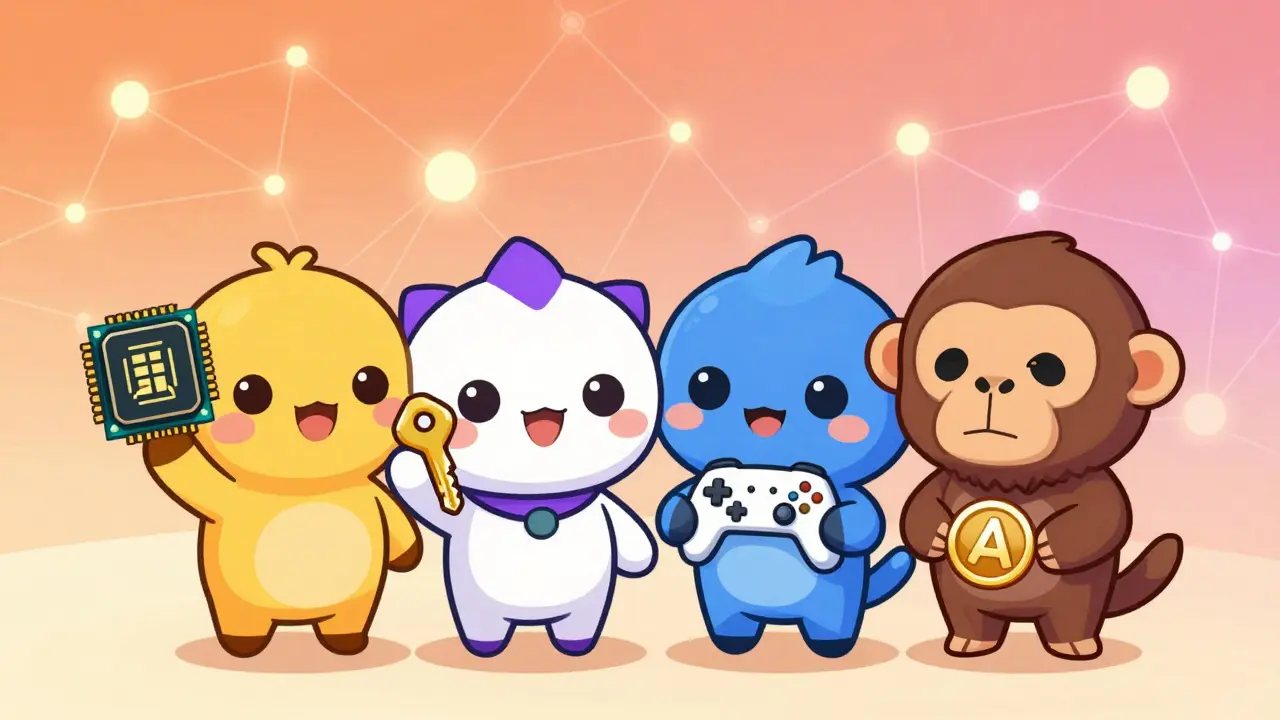
Render Network, unlike pure gaming tokens, provides critical infrastructure for the entire industry. By allowing 3D artists to contribute unused GPU power for rendering tasks, RENDER solves a massive bottleneck in digital content creation. Its integration with AI tools makes it indispensable for studios producing high-fidelity assets for the metaverse. Meanwhile, Decentraland, launched in 2017, remains the pioneer of virtual real estate. Users here don’t just play games; they build businesses, host concerts, and create art galleries, making MANA a utility token for a broader social economy.
The Sandbox distinguishes itself by empowering creators who aren’t coders. Its voxel-based environment allows users to design experiences using intuitive drag-and-drop tools, lowering the barrier to entry for new developers. ApeCoin leverages the massive cultural cachet of the Bored Ape Yacht Club, serving as the gateway currency for the Otherside project, which blends narrative-driven gameplay with speculative land investment.
Real Utility Beyond Speculation
The biggest risk in crypto is buying tokens that serve no purpose. In the metaverse, utility is king. Look for projects where the token is required to access core features. For instance, you can’t mint land in Decentraland without MANA, and you can’t pay for render jobs on the Render Network without RENDER. This creates a floor for demand.
Consider the workflow of a digital artist. They might use SAND to buy a domain in The Sandbox, create a game using the platform’s tools, and sell in-game items as NFTs. When players buy those items, the artist earns SAND. This cycle demonstrates sustainable tokenomics because the currency circulates back into the ecosystem rather than being hoarded indefinitely. Projects like Floki Inu and Virtuals Protocol are also gaining traction by offering specific utilities-such as decentralized AI agent interactions-that go beyond simple meme status.
Getting Started: A Step-by-Step Guide
If you want to participate, you don’t need a PhD in computer science, but you do need to follow a few security best practices. Here’s how to get set up safely:
- Choose a Reputable Exchange: Start with major platforms like Binance, Coinbase, or KuCoin. These exchanges offer deep liquidity for tokens like MANA, SAND, and RENDER, ensuring you can buy and sell quickly without significant slippage.
- Set Up a Self-Custody Wallet: For long-term holding or interacting with dApps, use a non-custodial wallet like MetaMask or Trust Wallet. This gives you control over your private keys. Never share your seed phrase with anyone.
- Buy Base Currency: Purchase Ethereum (ETH) or USDT on your exchange. You’ll need ETH to pay for gas fees when transferring tokens to your wallet or interacting with smart contracts.
- Transfer Assets: Send your purchased tokens from the exchange to your personal wallet address. Double-check the network (usually ERC-20) to avoid sending funds to the wrong chain.
- Connect to Platforms: Once your wallet is funded, connect it to the metaverse platform of your choice via their official website. Always verify URLs to avoid phishing sites.
Remember, learning curves vary. Simple trading takes days to master, but developing virtual experiences or participating in governance requires weeks of education. Take advantage of community resources like Discord servers and YouTube tutorials to accelerate your learning.
Risks and Challenges to Watch
Despite the excitement, the metaverse crypto landscape is fraught with risks. Volatility is the most obvious factor. Tokens like ISLAND Token have seen 26% weekly gains, but equally sharp drops are common. Don’t invest money you can’t afford to lose.
Technical friction remains a barrier. High gas fees on Ethereum during peak congestion can make small transactions uneconomical. While Layer-2 solutions like Arbitrum and Optimism are helping reduce costs, network upgrades are still ongoing. Additionally, regulatory uncertainty looms. As governments worldwide clarify their stance on digital assets, compliance requirements may change, affecting how these tokens are traded and taxed.
Scams are also prevalent. Fake websites, rug pulls, and malicious smart contracts target inexperienced users. Always audit contracts before interacting with new platforms and stick to well-established projects with transparent teams.
Future Outlook: Where Is This Heading?
Analysts predict the metaverse crypto sector could grow to $50-100 billion by 2028. This growth will be driven by better hardware, improved interoperability, and mainstream corporate adoption. We’re already seeing brands host virtual events and issue branded NFTs, signaling a shift from niche hobbyist activity to broader commercial application.
The integration of artificial intelligence will further enhance these worlds, creating dynamic NPCs and personalized experiences. However, only projects with genuine utility and strong communities will survive the inevitable market corrections. Focus on platforms that solve real problems-whether it’s rendering power, creative tools, or social connectivity-and you’ll be better positioned for long-term success.
What is the safest way to store metaverse tokens?
For maximum security, use a hardware wallet like Ledger or Trezor. These devices keep your private keys offline, protecting them from online hacks. If you prefer software wallets, MetaMask is widely compatible with Ethereum-based metaverse platforms, but ensure your computer is free of malware.
Can I earn passive income with metaverse cryptocurrencies?
Yes, through staking, lending, or leasing virtual real estate. For example, you can stake SAND tokens to earn rewards or lease your Decentraland land to event organizers for monthly payments in MANA. However, yields vary and carry market risk.
Are metaverse tokens regulated?
Regulation varies by jurisdiction. In many regions, they are treated as property or securities, subject to capital gains tax and anti-money laundering laws. Always consult local financial regulations and consider speaking with a tax professional before trading.
Why does Render Network not have its own metaverse?
Render focuses on infrastructure rather than consumer-facing worlds. It provides the computational power needed to create and render 3D assets for any metaverse platform. Think of it as the engine builder rather than the car manufacturer.
How do I avoid phishing scams in the metaverse?
Always bookmark official project websites and never click links from unsolicited messages. Verify contract addresses on trusted block explorers like Etherscan before connecting your wallet. Enable two-factor authentication on all associated accounts.