
Imagine walking into a bank where the teller won't tell you their name, the vault has no visible locks, and the manager refuses to show you the audit logs. That’s roughly what it feels like when you first investigate Ruby.Exchange, also known as Ruby-X. It markets itself as a comprehensive solution for buying, selling, and trading digital assets, claiming to be "world-class." But in the high-stakes world of cryptocurrency, claims mean nothing without proof.
If you are looking for a new place to park your Bitcoin or trade altcoins, you might have stumbled upon this platform. The promise is simple: straightforward, extensible, and unbreakable trading. The reality? It is surprisingly quiet. As of late 2026, there is very little noise from users, experts, or regulators about Ruby.Exchange. This article breaks down what we know, what we don’t, and whether you should trust this platform with your hard-earned crypto.
The Core Promise: Straightforward, Extensible, Unbreakable
Ruby.Exchange describes its architecture using three specific pillars: Straightforward, Extensible, and Unbreakable. Let's unpack what that actually means for a trader. "Straightforward" suggests a user interface that doesn't overwhelm beginners with complex charts and order books immediately. They claim to simplify the process of exchanging various digital currency types, resources, and development tools.
The term "Extensible" hints at developer-friendly features. In crypto, this usually means good API access, allowing bots and third-party apps to connect easily. However, unlike established players like Binance or Kraken, Ruby.Exchange hasn't published detailed technical specifications or API documentation that developers can scrutinize. You can't test what you can't see.
Then there is "Unbreakable." Every exchange wants to be unbreakable. For Ruby.Exchange, this likely refers to their claim of portable cold wallet functionality. Cold storage-keeping private keys offline-is the gold standard for security. If they truly offer seamless cold wallet integration, that’s a massive plus. But without public security audits from firms like CertiK or Hacken, "unbreakable" remains a marketing slogan rather than a verified fact.
Limited Operational Transparency
Here is the elephant in the room: information scarcity. When you look up major exchanges, you find pages of data. Founding dates, team backgrounds, regulatory licenses, and volume statistics. With Ruby.Exchange, you hit a wall. Public sources indicate it started as a crypto trade activity platform around early 2024 but evolved quickly into a broader marketplace. Who runs it? Where is it registered? Does it hold an Australian Securities and Investments Commission (ASIC) license or a similar regulatory badge?
We don't know. The absence of clear operational details raises red flags. Established platforms compete on transparency because trust is their primary product. If a platform hides its corporate structure or location, it becomes harder to resolve disputes if something goes wrong. Are you trading on a platform backed by a regulated entity in Singapore, Switzerland, or the Cayman Islands? Or is it operating in a gray zone? Until Ruby.Exchange clarifies its legal standing, caution is wise.
How It Compares to Industry Giants
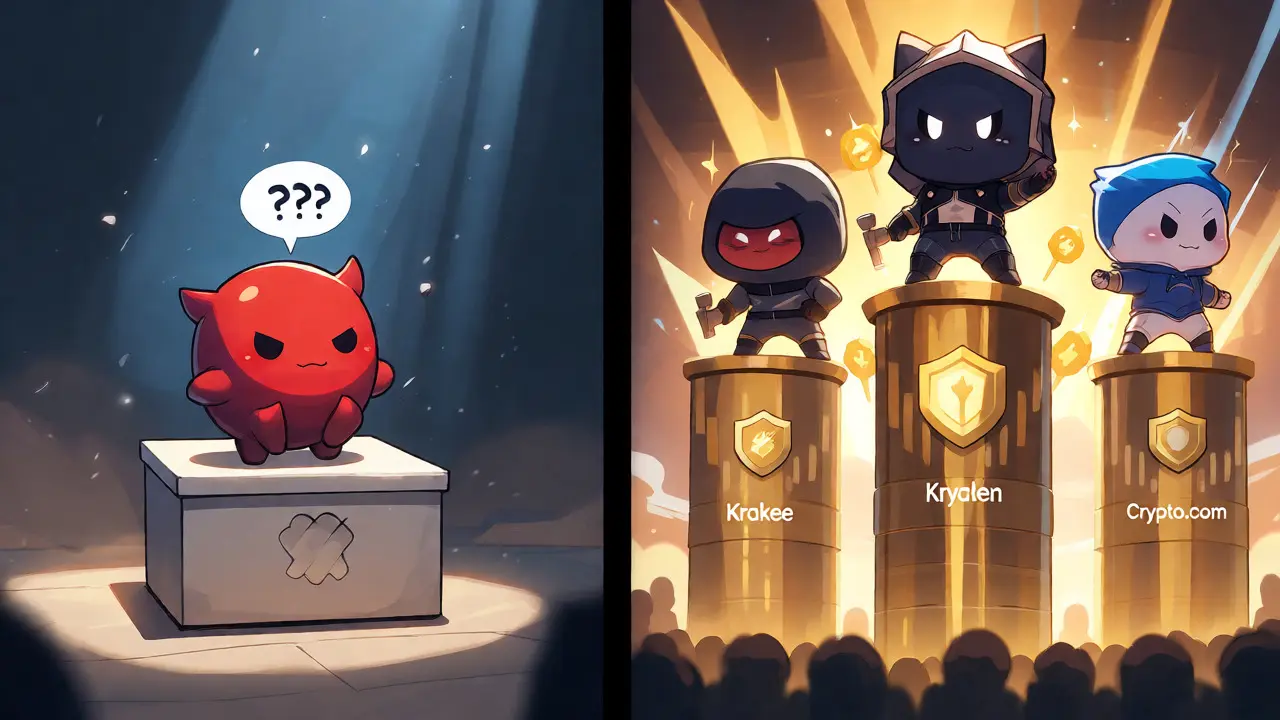
To understand where Ruby.Exchange fits, we need to look at the market leaders. The crypto exchange landscape in 2025 and 2026 is dominated by platforms that compete on fees, liquidity, and security. Let's see how Ruby stacks up against two heavyweights: Kraken and Crypto.com.
| Feature | Ruby.Exchange (Ruby-X) | Kraken | Crypto.com |
|---|---|---|---|
| Asset Selection | Unknown / Limited Data | 466+ Supported Coins | 250+ Supported Coins |
| Fee Structure | Not Publicly Verified | Maker: 0.00%-0.25% Taker: 0.01%-0.40% |
Varies by Tier (e.g., Ruby tier rewards) |
| Security Reputation | No Public Audits Found | Highly Regulated, Proven Track Record |
Strong Security, Card Integration |
| User Community | Minimal Online Presence | Large, Active Global Base | Massive User Base, Global Marketing |
Kraken offers deep liquidity, meaning you can buy or sell large amounts of Bitcoin without moving the price too much. Their fee structure is transparent and competitive. Crypto.com leverages its famous Visa card integration and tiered reward systems, such as the Ruby tier which requires locking up CRO tokens for higher rewards. Ruby.Exchange lacks comparable data. Without verified fee schedules or liquidity metrics, you cannot calculate your true cost of trading. Hidden spreads can eat into profits faster than explicit fees.
The Silence of the Users
One of the best ways to judge a crypto exchange is to listen to its users. Go to Reddit, Trustpilot, or Twitter. Search for "Ruby.Exchange reviews." What do you find? Almost nothing. There are no viral complaints about withdrawal delays, no glowing testimonials about customer support speed, and no community threads discussing bugs or feature requests.
This silence cuts both ways. On one hand, no news is good news-there are no horror stories of hacked accounts or frozen funds. On the other hand, it suggests extremely low adoption. A functioning exchange generates chatter. People complain when withdrawals take too long; people praise easy interfaces. The lack of user-generated content implies either a very recent launch with few active traders or a platform that isn't attracting enough traffic to generate organic discussion. For a beginner, this makes risk assessment difficult. You become a beta tester by default.

Practical Considerations for Traders
If you decide to try Ruby.Exchange despite the lack of information, here is what you should expect regarding the user experience. The platform claims to make RUBY trading accessible from both tangible and intangible perspectives. This phrasing is vague but likely refers to supporting both physical asset-backed tokens and purely digital derivatives.
- Onboarding: Expect a standard KYC (Know Your Customer) process. Most legitimate exchanges require ID verification to comply with anti-money laundering laws. Check if Ruby.Exchange uses reputable providers like Jumio or Onfido.
- Learning Curve: If the "straightforward" claim holds true, the interface should be clean. Look for clear buttons for Buy/Sell actions and minimal clutter. Avoid platforms that bury critical info under multiple menus.
- Support Quality: Since there are no public reviews, test their support before depositing significant funds. Send a query via live chat or email. How fast do they respond? Do they give generic answers or specific solutions? Poor support is a major risk factor for smaller exchanges.
Remember, in crypto, self-custody is king. Even if Ruby.Exchange offers "portable cold wallet functionality," consider keeping only your trading capital on the exchange. Move long-term holdings to a hardware wallet like Ledger or Trezor. Don't let the convenience of an exchange cloud your judgment on security.
Verdict: Should You Trade Here?
Ruby.Exchange presents a classic dilemma in the crypto space: innovation versus proven reliability. It promises a sleek, secure, and simple trading experience. However, the lack of verifiable data on fees, regulation, security audits, and user sentiment makes it a speculative choice.
For experienced traders who enjoy hunting for new opportunities and can tolerate high risk, Ruby.Exchange might offer unique pairs or lower hidden costs. But for the average investor looking for safety and stability, established platforms remain the better bet. The risk of losing funds due to operational failure or lack of regulatory protection outweighs the potential benefits of a potentially slick interface.
Wait for more data. Watch for official announcements regarding security audits or regulatory licenses. Keep an eye on community forums for emerging user feedback. Until then, treat Ruby.Exchange with cautious curiosity, not blind trust.
Is Ruby.Exchange regulated?
As of September 2026, there is limited public information confirming specific regulatory licenses for Ruby.Exchange. Unlike major exchanges that display ASIC, FCA, or FinCEN registrations prominently, Ruby.Exchange's regulatory status remains unclear. Always check the footer of their website for license numbers and verify them with the relevant financial authority before depositing funds.
What are the trading fees on Ruby.Exchange?
Public sources do not provide a verified fee schedule for Ruby.Exchange. Established competitors like Kraken publish clear maker/taker fees (e.g., 0.00%-0.25%). Without transparent pricing, you may face hidden spreads or unexpected withdrawal charges. Contact their support team directly for the most current fee structure before trading.
Does Ruby.Exchange support cold storage?
Yes, Ruby.Exchange claims to offer portable use of cold wallet functionality. This typically means they store a significant portion of user assets offline to protect against hacks. However, independent security audits verifying these protocols are not publicly available. Users should still practice good hygiene by enabling two-factor authentication and withdrawing large balances to personal hardware wallets.
Why are there so few reviews for Ruby.Exchange?
The scarcity of reviews suggests low user adoption or a very recent market entry. Major platforms like Coinbase or Binance have millions of users generating constant feedback. The lack of discussions on Reddit, Trustpilot, or YouTube indicates Ruby.Exchange has a small user base. This limits your ability to gauge real-world performance and customer service quality through peer experiences.
Is Ruby.Exchange safe to use?
Safety is relative in crypto. While Ruby.Exchange claims an "unbreakable" architecture, the absence of third-party security audits and regulatory clarity introduces risk. Compared to industry giants with decades of combined uptime and proven disaster recovery plans, Ruby.Exchange carries higher operational risk. Use it for small experiments until more trust signals emerge.