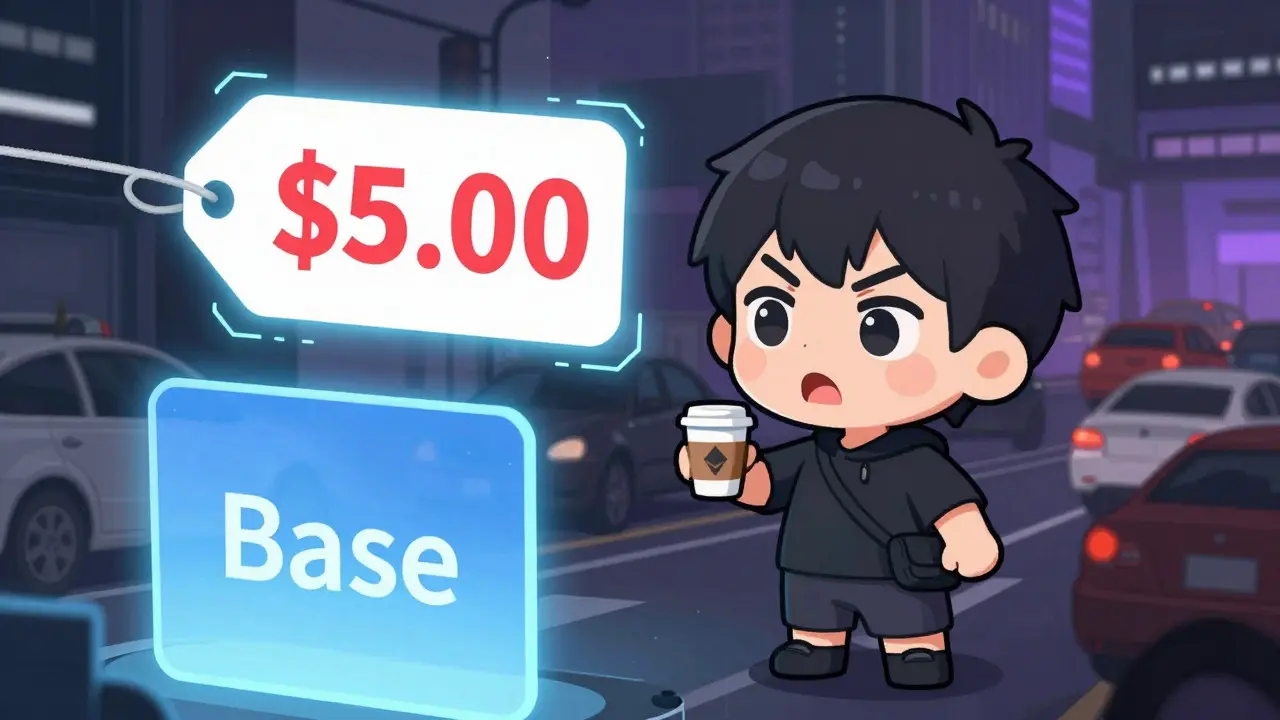
Imagine trying to buy a cup of coffee but having to pay five dollars just for the transaction fee. That was the reality for many Ethereum users back in 2021. Today, that pain point has largely vanished thanks to Layer 2 solutions like Base, a blockchain built by Coinbase that processes transactions at a fraction of the cost. But here is the twist: most people assume they need the newest technology to trade cheaply. They don't. In fact, Uniswap v2, a protocol launched years ago, remains a powerhouse when deployed on networks like Base.
You might be wondering why anyone would use an older version of a software interface in 2026. The answer lies in simplicity and reliability. While newer versions offer complex features, Uniswap v2 offers a straightforward path to swapping tokens without the headache of managing concentrated liquidity ranges. If you are looking to trade ERC-20 compatible tokens on Base efficiently, understanding how Uniswap v2 operates on this specific chain is crucial. This review breaks down the costs, the user experience, and whether it still holds up against modern competitors.
Why Uniswap v2 Still Matters on Base
To understand why Uniswap v2 persists, we first need to look at what it actually does. Uniswap is a decentralized exchange (DEX) that uses an automated market maker (AMM) model instead of a traditional order book. In a centralized exchange like Binance or Coinbase, buyers and sellers match orders. On Uniswap, you trade against a pool of funds provided by other users.
Uniswap v2 simplified this process significantly compared to its predecessor. It introduced flash swaps and price oracles, but more importantly, it standardized the code so that anyone could create a token pair easily. When you move this protocol to Base, which is an EVM-compatible Layer 2 network, you get the same trusted security model of Ethereum mainnet but with drastically lower fees.
The magic happens in the combination. Base handles the heavy lifting of transaction processing quickly and cheaply. Uniswap v2 provides the familiar, battle-tested interface for swapping. For many traders, especially those dealing with stablecoins or popular altcoins, the complexity of Uniswap v3’s concentrated liquidity isn't worth the extra mental load. V2 is "set and forget" for liquidity providers and "click and swap" for traders.
How Trading Works: A Step-by-Step Look
Let's walk through what it actually feels like to use Uniswap v2 on Base. First, you need a wallet. Since Base is EVM-compatible, almost any standard wallet works. MetaMask is the industry standard here. You will need to add the Base network to your MetaMask settings if it isn't there already. This involves inputting the Base RPC URL and Chain ID, which you can find on reliable community sites like Chainlist.
- Connect Your Wallet: Go to the Uniswap interface. Ensure you are connected to the Base network. If you are on Ethereum Mainnet, the gas fees will eat your profits alive for small trades.
- Select Tokens: Choose the token you want to sell (e.g., USDC) and the token you want to buy (e.g., ETH). Uniswap v2 supports thousands of tokens. However, stick to pairs with high volume to avoid slippage.
- Approve the Token: If it is your first time using a specific token on Uniswap, you must approve the contract to spend your tokens. This is a one-time fee per token type.
- Set Slippage Tolerance: Because prices change rapidly, you set a percentage range (usually 0.5% to 1%) within which you accept the trade. On volatile low-cap tokens, you might need higher slippage.
- Execute the Swap: Click swap. Confirm the transaction in your wallet. Within seconds, the new tokens appear in your balance.
The entire process takes less than a minute. The key difference on Base is the cost. Where an Ethereum mainnet swap might cost $5 to $50 depending on congestion, a Base swap often costs pennies. This makes micro-trading viable again.
Fees and Costs: What You Actually Pay
Cost transparency is vital in crypto. When using Uniswap v2 on Base, you encounter two types of fees: the protocol fee and the network gas fee.
| Fee Type | Uniswap v2 (Base) | Coinbase Advanced (Standard) | Ethereum Mainnet (V2) |
|---|---|---|---|
| Trading Fee | 0.30% | 0.60% (if volume <$10k) | 0.30% |
| Network Gas Fee | $0.01 - $0.10 | Included in spread | $5.00 - $50.00+ |
| Total Cost for $100 Trade | ~$0.40 | ~$0.60 | ~$5.30 - $50.30 |
As shown above, the 0.3% trading fee on Uniswap v2 is fixed for most standard pools. This fee goes to the liquidity providers who fund the pool. On Base, the gas fee is negligible. Compare this to a centralized exchange like Coinbase Advanced, which charges 0.6% for smaller volumes. Even if you factor in the slight inconvenience of connecting a wallet, Uniswap v2 on Base is mathematically cheaper for most retail traders.
However, beware of hidden costs. If you trade a token with very low liquidity, the price impact can be significant. This means you might swap $100 worth of USDC but only receive $98 worth of ETH because the pool didn't have enough depth. Always check the estimated output before confirming.
Liquidity and Token Availability
One common concern with older protocols is liquidity fragmentation. Does Uniswap v2 on Base have enough money in the pools? The short answer is yes, for major assets. Pairs like ETH-USDC, WETH-DAI, and various meme coins trending on Base have deep liquidity on v2.
Why? Because liquidity providers (LPs) appreciate the simplicity. In Uniswap v3, LPs must actively manage their positions, rebalancing as prices move. This requires constant attention. With v2, LPs deposit funds and earn fees continuously across the entire price range. For passive income seekers, v2 on Base is a low-maintenance option.
That said, if you are looking for exotic, newly launched tokens, you might find better initial liquidity on v3 or other specialized DEXs like Aerodrome, which is native to Base. Uniswap v2 is best suited for established tokens where stability and ease of access matter more than chasing the latest hype.
User Experience and Interface
The interface of Uniswap is famously minimalist. It looks like a search bar for money. You select your tokens, enter an amount, and see the result. There are no cluttered charts or confusing indicators on the main screen. This design choice reduces cognitive load.
For beginners, this is both a blessing and a curse. It is easy to use, but it doesn't hold your hand regarding risks. You won't see big red warning signs about rug pulls unless you check the token contract yourself. The platform assumes you know what you are doing.
On mobile, the experience is smooth via the browser or the Uniswap Wallet app. The Uniswap Wallet supports Base natively, allowing you to swap directly from the app without external extensions. However, some users report that the wallet lacks fiat on-ramps, meaning you cannot buy crypto with a credit card directly inside the Uniswap ecosystem. You usually need to bridge assets from another chain or transfer them from a centralized exchange.

Security and Trust
Security in DeFi rests on two pillars: code audits and decentralization. Uniswap v2 has been audited extensively over the years. Its code is open-source, meaning anyone can inspect it. No single company controls the funds; they sit in smart contracts on the blockchain.
When you use Uniswap on Base, you inherit the security of the Ethereum mainnet (since Base settles disputes on Ethereum) combined with the efficiency of Layer 2. The risk isn't usually the protocol being hacked; it's user error. Sending tokens to the wrong address or approving a malicious contract can lead to losses. Always verify URLs. Phishing sites mimicking Uniswap are common. Bookmark the official site.
Who Should Use Uniswap v2 on Base?
This setup isn't for everyone. Here is who benefits most:
- Passive Liquidity Providers: Users who want to earn fees without monitoring price ranges daily.
- Small-to-Medium Traders: Those moving amounts between $50 and $5,000 who want to avoid high centralized exchange fees.
- DeFi Beginners: Users learning how wallets and swaps work without the complexity of advanced derivatives.
Who should avoid it?
- High-Frequency Traders: They need the tight spreads and advanced tools of professional platforms.
- Fiat Holders: If you only have USD in a bank account, you'll need an intermediary step to get crypto onto Base first.
- Solana or Bitcoin Native Users: Uniswap v2 is strictly for EVM chains. It does not support BTC or SOL directly.
Final Thoughts on the Platform
Uniswap v2 on Base proves that old tech can still win when paired with new infrastructure. It strips away the unnecessary complexity of modern DeFi while leveraging the speed and low cost of Layer 2 scaling. For 2026, it remains a robust, secure, and cost-effective way to trade digital assets. You don't always need the shiny new feature set. Sometimes, you just need a tool that works reliably, every time.
Is Uniswap v2 safe to use on Base?
Yes, Uniswap v2 is considered highly secure due to its extensive audit history and open-source nature. Using it on Base adds the security layer of Ethereum mainnet settlement while reducing transaction costs. Always ensure you are on the official website to avoid phishing scams.
What are the fees for swapping on Uniswap v2 Base?
The standard trading fee is 0.3% per swap, which goes to liquidity providers. Network gas fees on Base are extremely low, typically ranging from $0.01 to $0.10 per transaction, making it much cheaper than Ethereum mainnet.
Do I need the UNI token to use Uniswap v2?
No, you do not need to hold UNI tokens to swap on Uniswap v2. The UNI token is primarily used for governance voting on the protocol. You only need the tokens you wish to trade and a small amount of ETH (or Base-native ETH) for gas fees.
Can I buy crypto with a credit card on Uniswap?
Directly, no. Uniswap is a decentralized exchange and does not handle fiat currency. You typically need to buy crypto on a centralized exchange (like Coinbase or Binance), withdraw it to your wallet, and then bridge it to Base if necessary before swapping on Uniswap.
Why choose Uniswap v2 over v3 on Base?
Uniswap v2 is simpler and requires less active management. V3 allows for concentrated liquidity, which is more capital efficient but complex to manage. For casual traders and passive liquidity providers, v2's "set and forget" approach is often preferred for its ease of use.
Which wallets work with Uniswap on Base?
Any EVM-compatible wallet works. Popular choices include MetaMask, Coinbase Wallet, Trust Wallet, and the native Uniswap Wallet. You must ensure your wallet is configured to connect to the Base network.
What is slippage tolerance?
Slippage tolerance is the percentage of price change you are willing to accept during a trade. If the price moves more than this percentage before your transaction confirms, the trade fails. For stable pairs, 0.5% is common; for volatile tokens, you may need 1-3%.