
Ever feel like you don't actually own your online identity? Think about it: your "identity" on the web is usually just a collection of accounts owned by Google, Meta, or Microsoft. If they decide to delete your account, you lose your digital existence in that ecosystem. This is exactly why Decentralized Identifiers is a new type of globally unique identifier that allows individuals to create and control their own digital identities without relying on a central authority. Also known as DIDs, this technology flips the script on who holds the power in the digital world.
How DIDs Actually Work
At its core, a DID is a simple string of characters-a URI-that looks something like a random jumble of letters and numbers. But unlike an email address, which belongs to a provider, a DID is generated and owned by you. The W3C (World Wide Web Consortium) published the DID Core v1.0 specification to make sure these identifiers work the same way across different platforms.
The magic happens through cryptographic proofs. Instead of typing a password into a server that checks if it's correct, you use a private key to sign a challenge. This proves you control the DID without ever revealing your secret key. This shift toward Self-Sovereign Identity (SSI) means you no longer need a "middleman" to vouch for who you are.
The Protocol Stack: More Than Just a String
A DID by itself is just a label. To make it useful, we need Communication Protocols, which are essentially the rules of the road for how two devices exchange identity data. Imagine these as the digital grammar that allows a browser and a blockchain to understand each other.
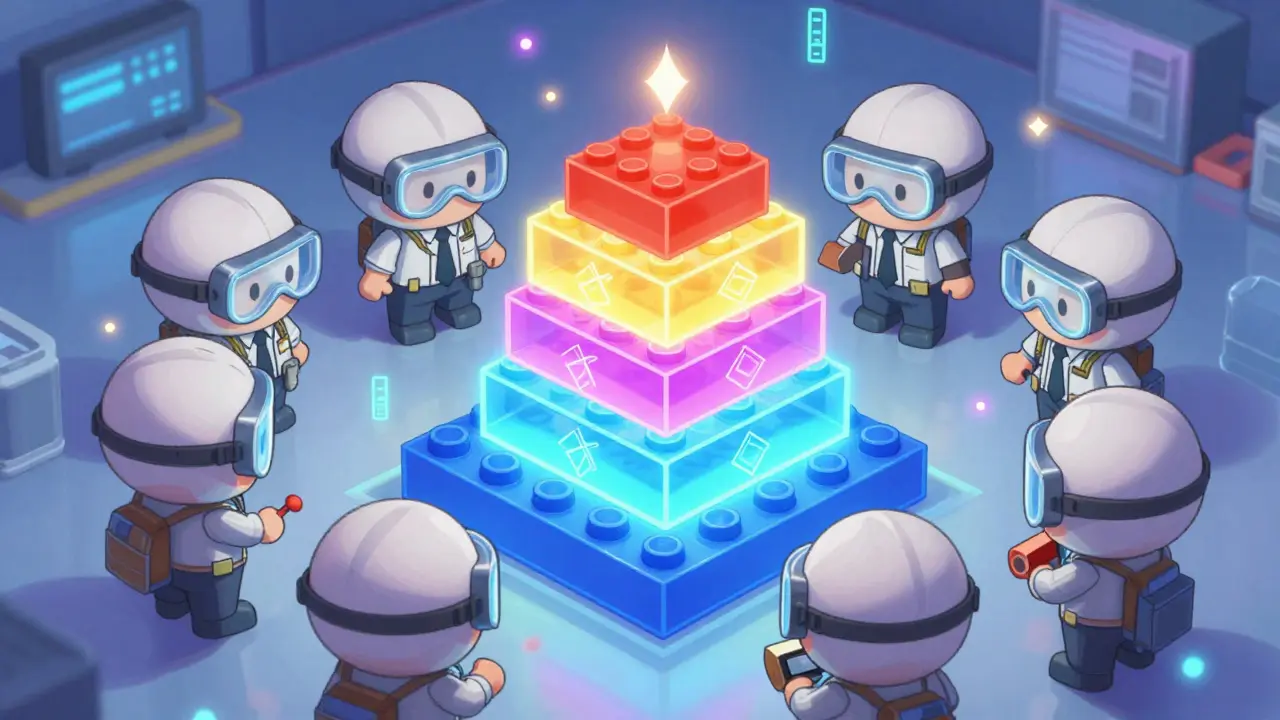
These protocols aren't one-size-fits-all; they operate in a "stack." Much like the OSI Model used in traditional networking, DID protocols are layered. Some layers handle the physical transmission of data, while others manage the logic of the identity exchange. This layering is crucial because it allows developers to swap out one piece of the puzzle-like changing the underlying database-without breaking the entire system.
| Feature | Traditional (Centralized) | Decentralized (DID) |
|---|---|---|
| Control | Owned by the Service Provider | Owned by the Individual |
| Point of Failure | Single central server/company | Distributed across networks |
| Privacy | Provider tracks all activity | User controls data disclosure |
| Portability | Tied to a specific platform | Works across any compatible system |
The Role of Cryptography and Secure Channels
If you're sending private data-like a digital passport or a medical record-you can't just send it in plain text. This is where specific protocol properties like keyAgreement come into play. This property allows two parties to agree on an encryption key without actually sending the key itself over the wire.
By using Public Key Infrastructure (PKI), a DID subject can ensure that only the intended recipient can decrypt the message. This is similar to how IPsec creates secure tunnels for VPNs, but instead of securing a network path, it's securing a relationship between two identities.
Infrastructure Agnosticism: Where DIDs Live
One of the smartest things about the W3C standard is that it doesn't care what technology you use to store the DIDs. This is called being "technology-agnostic." You aren't forced to use a specific blockchain if you don't want to. DIDs can be anchored in several different types of environments:
- Public Blockchains: Using a distributed ledger like Bitcoin or Ethereum for maximum decentralization.
- Distributed File Systems: Using systems like IPFS to store DID documents.
- Peer-to-Peer Networks: Creating identifiers that exist only between two people who have exchanged keys.
- Traditional Databases: Even a centralized database can host DIDs to bridge the gap between old and new systems.
This flexibility means a company can start by using a private database for their employees' DIDs and later migrate them to a public blockchain without changing the actual identifiers. It's a seamless transition that prevents "vendor lock-in."
Managing Personas and Privacy
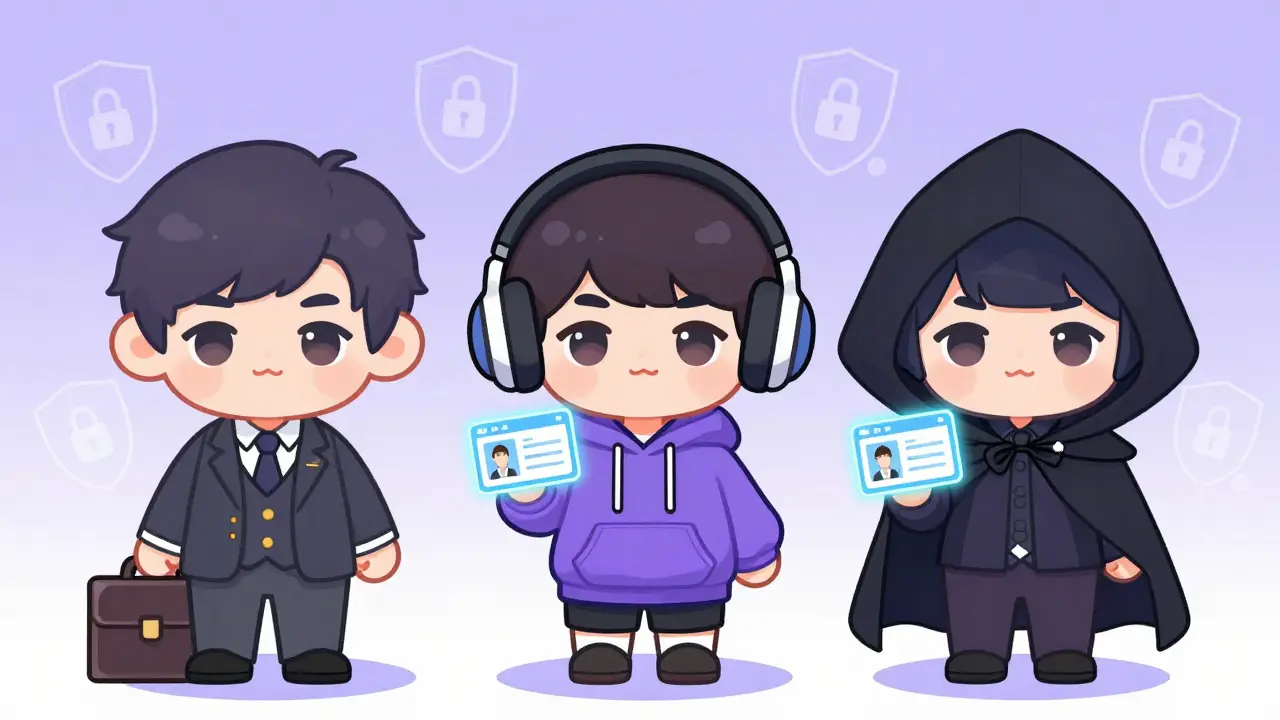
Have you ever wanted a separate professional identity and a completely anonymous social identity? In the current web, you'd just make two different Gmail accounts, but Google still knows both are you. With DID protocols, you can generate as many DIDs as you want.
You can use one DID for your bank, another for your health insurance, and a third for your gaming profile. Because you control the generation process, there is no central registry linking these identities unless you choose to link them. This allows for granular privacy, where you only reveal the specific piece of information required for a transaction-a concept known as selective disclosure.
Common Pitfalls and Implementation Hurdles
It sounds perfect, but moving from a centralized world to a decentralized one has its bumps. The biggest hurdle is "key management." In the old world, if you forgot your password, you clicked "Forgot Password" and the company reset it for you. In the DID world, there is no company. If you lose your private key, you effectively lose your identity.
To solve this, developers are implementing "recovery protocols." These are complex sets of rules that allow a user to regain access to their DID through a trusted group of friends (social recovery) or by splitting a key into multiple pieces (Shamir's Secret Sharing). Without these safety nets, the barrier to entry for regular people is too high.
Are DIDs the same as blockchain wallets?
Not exactly. A blockchain wallet manages assets (like tokens), while a DID manages identity. While many DID implementations use blockchain wallets to store the private keys used for authentication, the DID itself is a standard for identification, not a financial tool.
Do I need a blockchain to use a DID?
No. The W3C standard is technology-agnostic. You can implement DIDs using decentralized file systems, peer-to-peer networks, or even traditional databases, provided the protocol for resolving the DID is agreed upon by the parties involved.
Who manages the W3C DID standards?
The World Wide Web Consortium (W3C) maintains the core specifications. They ensure that different DID methods (how the DID is created and looked up) remain interoperable so that a DID created on one network can be verified by a system on another network.
How does a DID protect my privacy better than a username?
Usernames are stored in central databases and linked to your real-world identity by the provider. DIDs are generated by you. You can create multiple DIDs for different purposes, meaning no single entity can track your activity across different services unless you explicitly share that connection.
What happens if I lose my DID private key?
Unlike traditional accounts, there is no "password reset" button. However, advanced protocols allow for key rotation (changing the key associated with a DID) or social recovery, where trusted contacts help you prove your identity to regenerate access.
Moving Forward with Decentralized Identity
If you're a developer looking to implement this, start by reviewing the DID Core v1.0 spec. Don't try to build your own cryptography from scratch; instead, look for existing protocol suites that handle the heavy lifting of key agreement and transport. For those just curious, start looking for apps that support "Sign in with DID" or SSI wallets. The goal isn't to replace the internet, but to give us the keys to our own digital front doors.