
Imagine a crypto project that looks like a classic dog-themed memecoin but claims to operate like a corporate business. Most tokens in this space rely on hype and viral tweets to pump their price, but Kendu is a multi-chain, community-driven digital asset that blends Japanese cultural branding with a a focus on tangible product development. While the market often labels it a memecoin, the community behind it pushes a different narrative: "We don't gamble, we work."
The Concept Behind KENDU
Kendu isn't just a random dog picture. The project is conceptually built around the six native Japanese dog breeds, positioning itself as a symbol of peace, unity, and the preservation of life. This cultural layer gives the token a specific identity that separates it from the thousands of generic "Inu" clones that flood the market every day.
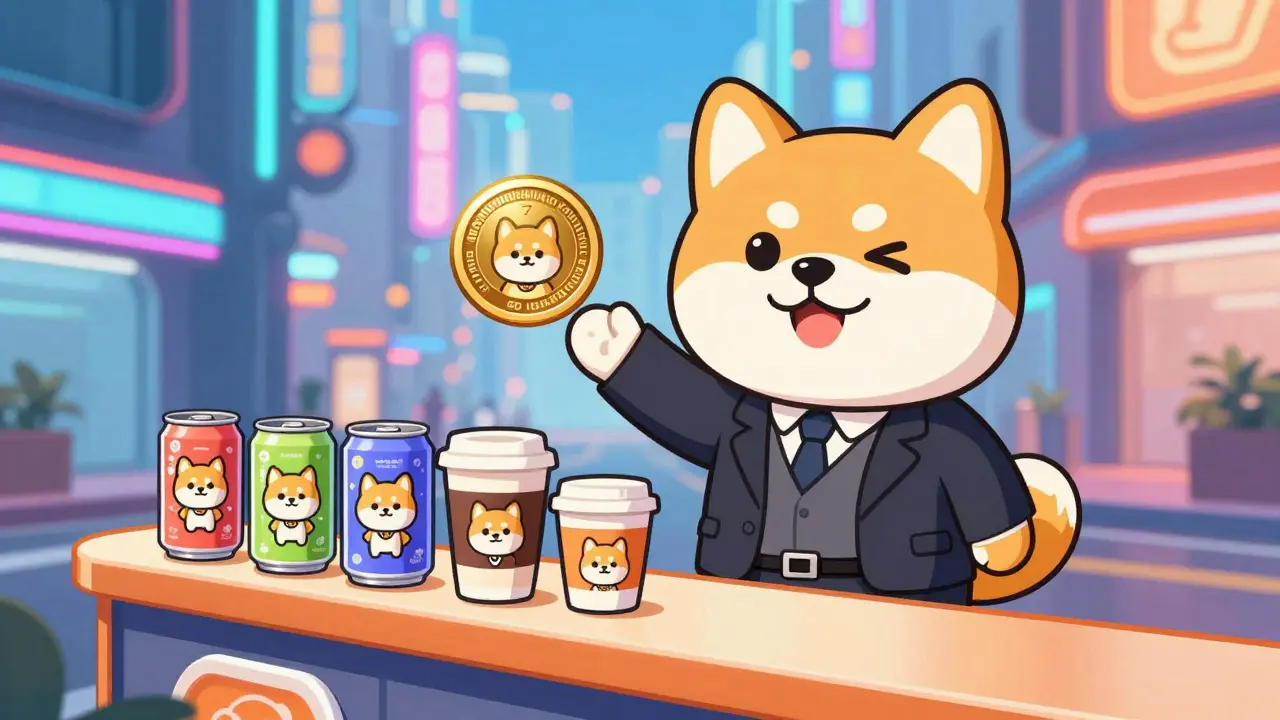
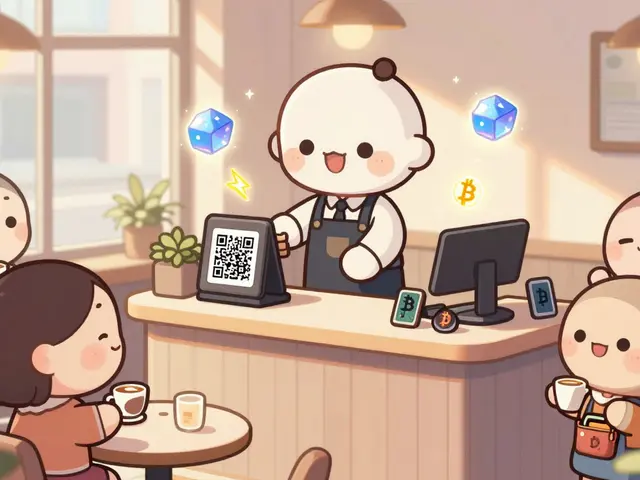
What really makes this project interesting is its attempt to move beyond speculation. Instead of just hoping for a price spike, the project is attempting to build a lifestyle brand. This means moving the KENDU token from a simple trading pair on an exchange to something you might actually see in a store. They've already branched out into initiatives like Kendu Energy Drink, Kendu Coffee, and Kendu Style.
Technical Infrastructure and Multi-Chain Strategy
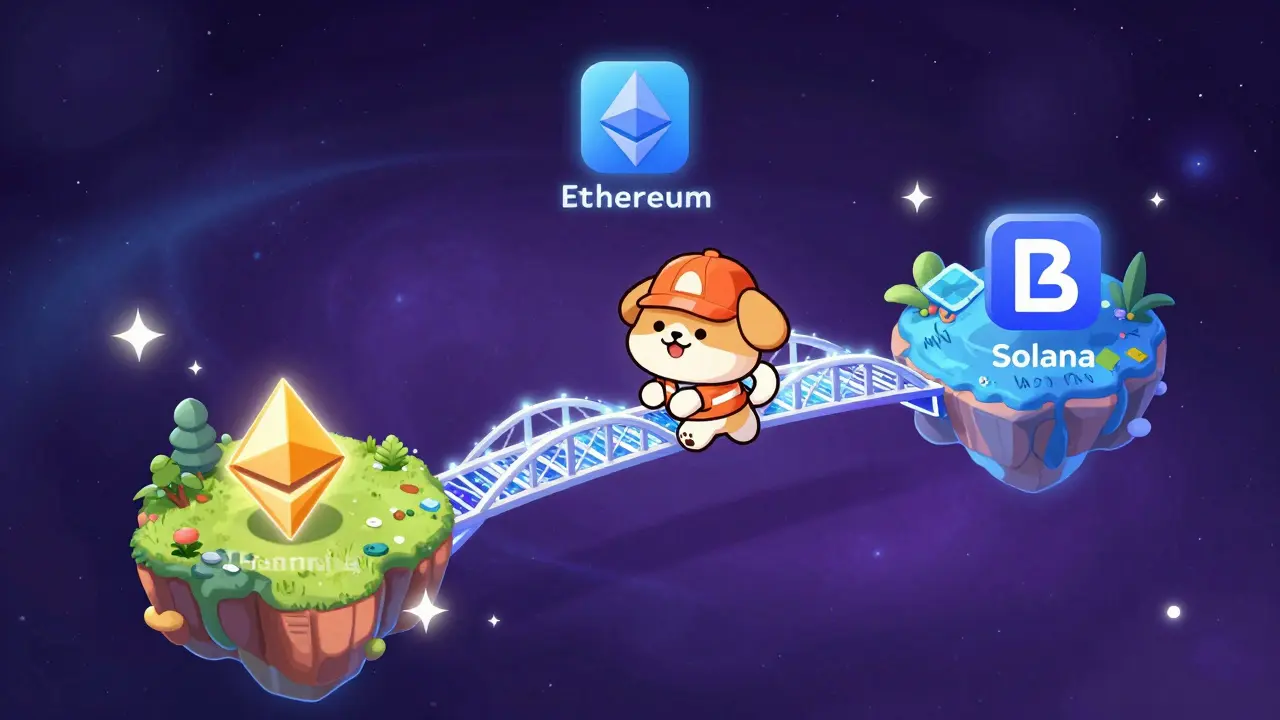
To avoid being locked into a single ecosystem, Kendu uses a multi-chain approach. It started as an ERC-20 token on the Ethereum blockchain, which is the industry standard for fungible tokens. However, staying only on Ethereum can be expensive due to gas fees.
To solve this, the project expanded to Solana and the Base network. This allows users to trade where it's cheapest and fastest. Specifically, the version on Base is designed to be high-efficiency, with some community-led versions offering zero trading fees to remove the friction for new buyers.
Connecting these different worlds is the Wormhole Connect protocol. This acts as a bridge, allowing assets to move between blockchains without the user needing to manually sell and buy the token on different networks.
| Feature | Ethereum (ERC-20) | Solana | Base Network |
|---|---|---|---|
| Primary Benefit | High Security/Liquidity | Extreme Speed | Low/Zero Trading Fees |
| Key Exchange | Uniswap | Raydium | Aerodrome |
| Interoperability | Facilitated by Wormhole Connect | ||
Tokenomics and Market Reality
If you're looking at the numbers, KENDU has a massive supply. The maximum supply is capped at 1 trillion tokens. As of April 2026, the circulating supply is around 948.42 billion tokens, meaning the vast majority of the coins are already in the hands of the public or locked in reserves.
The price history of KENDU is a rollercoaster. It hit an all-time high of $0.0002694 back in June 2024. Since then, it experienced a brutal drop of about 98.8%, which is typical for high-volatility assets. However, the token recently hit its all-time low in March 2026 ($0.0000002582) and has since bounced back by over 25%, showing that there is still a dedicated core of holders refusing to let the project die.
Currently, the market cap sits between $2.45 million and $3.07 million. This puts it in the "small-cap" category, which means while it's riskier, it also has more room for explosive growth if the brand extensions actually take off.
Is it Safe? Security and Audits
In the world of memecoins, "rug pulls" (where developers steal all the funds) are common. To combat this, the Kendu community pushed for a security audit. They used CertiK, one of the most respected blockchain security firms. The project received a security score of 4.2 out of 5, which is a strong signal that the smart contracts are reasonably secure and the risk of a technical exploit is lower than average for a community token.
What's more impressive is that the audit wasn't funded by a corporate treasury, but by the collective support of the community. This reinforces the "work culture" they brag about-instead of just waiting for the price to go up, the holders actively invested in the project's legitimacy.
Kendu vs. Typical Memecoins
You might be wondering if this is just another Dogecoin or Shiba Inu clone. There are some key differences in how they operate:
- Tangibility: While most memecoins only have a token, Kendu is attempting to launch physical goods like coffee and energy drinks.
- Philosophy: Most tokens are built on "HODL" and "To the Moon" mantras. Kendu focuses on a "work culture," implying that value is created through effort and utility, not just speculation.
- Accessibility: By spreading across three different blockchains (Ethereum, Solana, Base), they've lowered the barrier to entry for users who can't afford Ethereum's high transaction costs.
How to Get Involved
Because KENDU is decentralized, you won't typically find it on a big corporate brokerage. Instead, you use decentralized exchanges (DEXs). If you're on Ethereum, Uniswap is the go-to. If you prefer the speed of Solana, you'll head to Raydium. For those using the Base network, Aerodrome is the primary hub.
If you're moving between these, remember that you'll need the corresponding wallet for each chain (like MetaMask for Ethereum/Base or Phantom for Solana) and a small amount of the native gas token (ETH or SOL) to pay for the transaction.
What is the main purpose of the KENDU token?
KENDU serves as the utility and community token for a brand ecosystem centered on Japanese dog breeds. Unlike purely speculative coins, it aims to back its value through the development of real-world products like energy drinks and coffee, moving from a "memecoin" to a lifestyle brand.
Which blockchains support KENDU?
KENDU is a multi-chain asset. It is available on the Ethereum network (as an ERC-20 token), the Solana network, and the Base network. Users can bridge these assets using the Wormhole Connect protocol.
Is KENDU a safe investment?
All cryptocurrency investments carry risk, especially memecoins. However, KENDU has a CertiK security audit score of 4.2/5, which indicates a good technical security profile. That said, its price history shows extreme volatility, including a 98% drop from its all-time high.
What does the "work culture" motto mean?
The motto "We don't gamble, we work" reflects the community's desire to move away from speculative "pump and dump" schemes. It emphasizes building actual utility, creating products, and growing the brand through effort rather than relying on market luck.
Where can I buy KENDU tokens?
You can buy KENDU on decentralized exchanges depending on the chain you choose: Uniswap (Ethereum), Raydium (Solana), or Aerodrome (Base). You will need a compatible crypto wallet to execute these trades.

Charlie Queen
April 22, 2026 AT 06:26Love seeing the Japanese culture vibe integrated into a project like this! 🐕✨ It's such a cool way to build a community around something meaningful. 🇯🇵
Greg Reynolds
April 24, 2026 AT 02:12The claim that they "don't gamble" is a blatant contradiction when the token has plummeted nearly 99% from its peak. That is the definition of a speculative gamble, regardless of whether they're selling coffee or not.
Gloris Young
April 24, 2026 AT 13:48Actually really digging the multi-chain approach. It makes things way more accessible for everyone.
Yvette P
April 26, 2026 AT 04:15Oh sure, because bridging via Wormhole is just a seamless walk in the park for the average retail user, right?
I'm absolutely thrilled that we're adding more layers of abstraction like Base and Solana to a project that's basically a glorified pet shop with a caffeine addiction, because nothing says "stable corporate business" quite like a 98% drawdown and a CertiK score that's probably the only thing keeping the whole house of cards from collapsing into a singularity of pure chaos. It's just so utterly revolutionary to see a memecoin actually trying to pivot into a lifestyle brand by selling energy drinks, because clearly, the world was just dying for another caffeinated beverage tied to a volatile digital asset in a hyper-deflationary or inflationary nightmare scenario depending on how you slice the tokenomics. Truly, a masterclass in diversification if you ignore the actual price chart for five minutes.
Benjamin Forg
April 26, 2026 AT 08:09dont believe the audit the whales control the supply and the wormhole is just a way to move funds before the final rug pulls we all know how this ends
Candace Sherrard
April 26, 2026 AT 23:38It's interesting to think about the transition from a digital asset to a physical product, as it represents a desire for stability in a space that is fundamentally built on the ether of speculation and collective belief. I wonder if the "work culture" they mention is an attempt to ground the project in a more traditional human value system, perhaps recognizing that the void of purely digital wealth eventually demands a tangible anchor to feel real, even if that anchor is just a cup of coffee.
Tara Aman
April 28, 2026 AT 18:56This is such a great initiative! Let's all support the hard work being put in here!
Kathleen Bergin
April 30, 2026 AT 14:30It's just a coin with a dog on it.
Jason M
May 2, 2026 AT 03:58Wait, a community-funded audit?! That is absolutely incredible! 🌟 It shows such a powerful level of commitment from the holders to actually protect one another and build something lasting! This is exactly the kind of leadership we need in the crypto space to turn the tide toward genuine trust!
Guy Bianco
May 2, 2026 AT 17:29The utilization of the Base network is a prudent choice for reducing overhead costs. :)
Alex Wan
May 2, 2026 AT 21:04I concur totallyy! The vision heer is truly magnifcent and it is moving in the rite direction for all of us!!
Alex Hunter
May 4, 2026 AT 12:42For those new to this, remember to double-check your wallet compatibility before bridging. It saves a lot of headaches.
debashish sahu
May 6, 2026 AT 05:04The integration of Japanese breeds is a nice touch for global appeal.
Matthew Morse
May 7, 2026 AT 10:28coffee and energy drinks lol real original
Keith Garcia
May 7, 2026 AT 18:20Imagine thinking a CertiK score makes a memecoin "safe." 🙄 The sheer audacity of treating a 4.2 like a gold standard in a casino is simply breathtaking. 💅
Miranda Jamieson
May 8, 2026 AT 02:25Get real. This "work culture" is just a marketing buzzword to trick people into holding bags while the devs dump their tokens. Pure delusion.
Mike Krasner
May 9, 2026 AT 18:37who actually cares about dog breeds in crypto anyway just tell me if it goes up or not
Liz Ariza
May 10, 2026 AT 07:12Stay positive everyone! 🌈 Just take it one step at a time and be careful with your investments! ✨
Mike Word
May 12, 2026 AT 05:38The Wormhole Connect part is the most technically sound aspect of this whole setup.
Jagdish Sutar
May 13, 2026 AT 11:01It's always great to see a community coming together to build something beyond just trading. Very inspiring!
Paige Raulerson
May 15, 2026 AT 01:53I've seen a dozen of these "lifestyle brand" pivots and they all end the same way. It's a tedious pattern at this point.
Ali Tate
May 15, 2026 AT 06:31absolutely pathetic that we're still talking about dog coins in 2026 🤡 give me some real utility or shut up
praveen subbiah
May 16, 2026 AT 10:52This project shows the spirit of hard work that we value so much! Truly a dramatic shift in how these tokens operate!