

The crypto landscape in the Philippines has shifted dramatically since mid-2025. If you run a digital asset business, operating without permission is no longer an option. The Securities and Exchange Commission of the Philippines tightened the net significantly with new mandates that require full registration. These changes mean your business model, capital reserves, and marketing strategies must align with strict national standards.
Before July 2025, many international platforms operated freely within the country. Today, that freedom is gone. The regulator views unlicensed service providers as direct threats to investor safety. Whether you are a startup planning to launch an exchange or an established firm expanding operations, understanding the Crypto Asset Service Provider (CASP) framework is the first step to staying legal. Ignoring these rules invites heavy fines and operational bans.
Understanding the CASP Regulatory Framework
The core of this new environment comes from two specific documents: SEC Memorandum Circular No. 04 and No. 05, Series of 2025. Issued on May 30, 2025, these circulars created a mandatory licensing regime for all entities dealing with virtual currencies. The intent was to professionalize the sector. Under these rules, any person or entity acting as an intermediary, including exchanges, custodial wallets, and brokers, must register locally.
Crypto Asset Service Provider is defined here as any organization providing services for the exchange of crypto assets between fiat money and other digital assets. This definition covers a broad range of activities. It includes order matching systems, margin lending platforms, and even some custodial services where the provider holds private keys for clients. The regulation does not ban cryptocurrency trading itself; it bans the lack of oversight for those facilitating the trade.
This shift transformed the Philippines into one of the most strictly regulated markets in Southeast Asia regarding digital assets. Previous gaps allowed offshore giants to serve local users without any physical footprint. Now, the SEC demands a domestic presence. The logic is straightforward: regulators cannot protect investors they cannot reach physically. Consequently, the framework enforces tangible accountability through office locations and registered capital.
Capital Requirements and Physical Presence
Money talks in regulatory compliance, and the bar set for entry is high. All aspiring CASPs must incorporate as a domestic corporation within the Philippines. You cannot simply open a liaison office; you need a fully functional corporate entity. The financial hurdle is significant. Companies must maintain a minimum paid-up capital of PHP 100 million. To put this in perspective, this equals approximately $1.8 million USD at current exchange rates. This capital must be cash, excluding any crypto-assets held in inventory.
Why such a steep requirement? The SEC aims to filter out fly-by-night operators. With millions of Filipino citizens projected to hold digital assets by late 2026, the risk of mass losses from insolvent platforms is too great. The capital acts as a buffer. It ensures the company has resources to handle operational costs, technology maintenance, and potential liability claims without collapsing immediately upon a market downturn. Furthermore, you must maintain a physical office presence. Remote-only teams are not eligible for registration.

The Registration Process via PhiliFintech
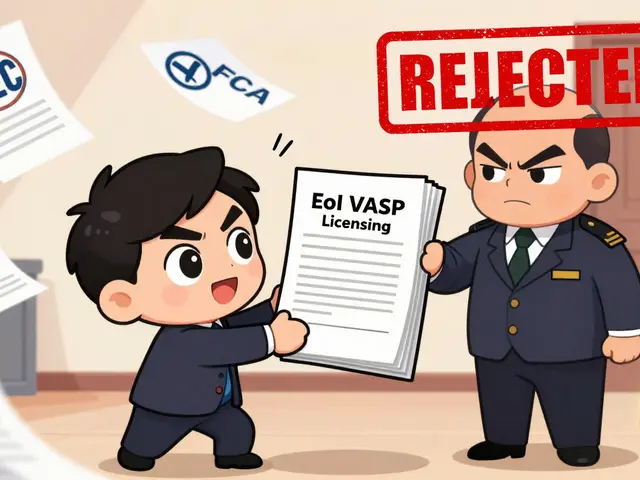
Submitting your application isn't a simple form fill-out. You deal directly with the PhiliFintech Innovation Office, a specialized body within the SEC designed to handle financial technology growth. Your submission must be complete thirty days before you plan to start operations. Partial applications get rejected, delaying your timeline further. Here is what you need to prepare:
- Detailed Business Rules: Clear documentation of how your platform functions, fee structures, and dispute resolution mechanisms.
- Risk Control Mechanisms: Proof of cybersecurity protocols to prevent hacks and unauthorized access.
- AML/CFT Systems: Comprehensive Anti-Money Laundering and Counter-Financing of Terrorism policies that integrate with national reporting standards.
- Disclosure Plans: Specific plans on how you will communicate risks to end-users during the onboarding process.
Once submitted, expect rigorous scrutiny. The regulator reviews your governance structure, technical architecture, and financial health. Approval takes time because mistakes can lead to systemic risk. Upon approval, you still face ongoing supervision. Monthly financial reports become mandatory. You must keep customer funds completely segregated from your operational funds. Mixing client money with company accounts remains a red-line violation that triggers immediate audits.
Enforcement Actions and Real-World Consequences
Compliance is not theoretical; the SEC has already taken action against major players. On August 1, 2025, the Commission issued public advisories targeting ten prominent exchanges for operating without licenses. This included global names like OKX, Bybit, KuCoin, and Kraken. The message was clear: size does not grant immunity. If you target Filipino users, you play by Filipino rules.
This follows a precedent set earlier with Binance. In 2024, authorities effectively blocked access to the world's largest exchange after it refused to comply with local licensing. Users were given 90 days to exit the platform before total restriction occurred. For smaller companies, the penalty for running unlicensed ranges from 50,000 pesos up to 10 million pesos per violation. Additionally, daily penalties of 10,000 pesos accumulate for every day you remain non-compliant. These fines can quickly bankrupt a startup attempting to cut corners.
| Platform | Status | Action Taken |
|---|---|---|
| Binance | Blocked | Removed from market 2024 |
| Bybit | Under Review | Served Notice 2025 |
| YouHolder | Compliant | Licensed Domestic Operator |
| KuCoin | Non-Compliant | Public Advisory Served |
While some giants resist, others have adapted. Exchanges like YouHolder, Cex.io, Bit Get, and Bigone moved quickly to meet the criteria. They implemented enhanced security protocols and formalized their relationships with the regulator. These platforms now position themselves as trusted alternatives. For investors, this distinction matters immensely. Using a licensed platform offers a layer of recourse if things go wrong. Unlicensed platforms offer none.

Marketing Restrictions and Disclosure Obligations
Making sales promises is harder now than it used to be. Under SEC Memorandum Circular No. 4, 2025, you cannot sell crypto-assets without proper regulatory clearance. Public offerings require strict adherence to disclosure timelines. Before you market a new token or service, you must file disclosure documents with the SEC. These documents must then appear on your website and social media channels at least 30 days before marketing begins.
The rules specifically prohibit hype. You cannot assert future value increases. Section 5.3 of the regulations allows only specific statements regarding asset performance, usually restricted to historical data rather than projections. Marketing materials must focus on transparency and risk warning. This prevents retail investors from being swept up in speculative frenzy based on misleading claims. The Anti-Money Laundering Council (AMLC) works alongside the SEC here. Regular reporting on suspicious transactions is part of this compliance web. Any failure to report illicit activity flows directly into your annual audit score.
Market Impact and Future Outlook
Despite these stricter rules, the Philippine crypto market continues to grow. Annual growth rates sit around 4.59%. The government's approach balances investor protection with market development. The expectation is that legitimate businesses will thrive while bad actors leave. The stringent capital requirements act as a natural filter, favoring established firms capable of bearing regulatory costs over smaller, riskier operators.
Experts view the Philippines' framework as potentially setting a standard for the region. Other Southeast Asian nations are watching closely to see if the balance between safety and innovation holds. The SEC indicates a willingness to refine rules based on feedback, but the baseline for safety remains non-negotiable. As we move through 2026, the trend suggests further tightening. Potential future updates might address stablecoins more deeply or cross-border transaction monitoring.
Is trading cryptocurrency illegal in the Philippines?
No, trading is not illegal. The regulations target service providers, not individual users. However, you must use platforms that are properly licensed to operate in the jurisdiction.
How much capital do I need to start a crypto exchange?
You need a minimum paid-up capital of PHP 100 million in cash. This capital excludes any crypto-assets held in your inventory and must be maintained throughout operations.
What happens if an unlicensed exchange operates in the country?
The SEC can impose fines ranging from 50,000 to 10 million pesos per violation. Ongoing violations incur daily penalties of 10,000 pesos. Authorities may also block access to the platform entirely.
Can I register my crypto business remotely from abroad?
No, the CASP rules mandate a physical office presence in the Philippines. You must register as a domestic corporation, which requires local incorporation and office infrastructure.
Who oversees the licensing application process?
The PhiliFintech Innovation Office within the Securities and Exchange Commission manages the registration, review, and ongoing supervision of Crypto Asset Service Providers.




Mike Yobra
March 28, 2026 AT 07:37The new rules are essentially saying innovation is dead unless you have millions to burn just to exist legally.
Pradip Solanki
March 29, 2026 AT 17:56regulatory capture is real casp framework is just another way to control liquidity flows and stifle organic market development through excessive capital barriers
Tony Phillips
March 31, 2026 AT 12:38I see your point about the cost but safety matters for the little guys too so having those checks in place feels necessary for peace of mind
Alice Clancy
April 2, 2026 AT 12:24Security is non negotiable we must protect our own markets :)
Dominic Taylor
April 3, 2026 AT 05:27Agreed on the security protocols its the only way to scale globally without systemic risk exposure
Leona Fowler
April 4, 2026 AT 14:30Capital reserves ensure solvency during market corrections and prevent immediate collapse under pressure
Anand Makawana
April 5, 2026 AT 05:23Furthermore the separation of funds prevents commingling liabilities which is critical for maintaining investor confidence in the long run.
Zion Banks
April 6, 2026 AT 20:14They want to track every satoshi movement this is total surveillance state implementation disguised as safety measures.
John Alde
April 8, 2026 AT 14:54The narrative regarding surveillance oversimplifies the actual mechanics of financial compliance. Historically major economies always require identification before allowing high volume transactions. We cannot ignore the fact that bad actors have exploited gray areas previously. The SEC mandate aims to close those loopholes effectively for consumer protection. While the capital barrier is steep it filters out predatory schemes. Many established firms welcomed this clarity after years of uncertainty. Local registration forces accountability which remote servers cannot provide. Customer fund segregation is a basic tenet of any trustworthy financial institution. Without physical presence regulators have no jurisdiction over disputes. This creates a legal framework for arbitration when things go wrong. Tax collection becomes streamlined when entities are incorporated domestically. The growth rate remains positive despite the stricter oversight. Innovation does not stop at the border of regulation it adapts. Market participants who survive this shift are better positioned long term. Trust is the most valuable asset in the digital economy right now. The future landscape depends on how well we navigate these new requirements together.
manoj kumar
April 10, 2026 AT 11:46Greed will never change regardless of the rules written down on paper.
JOHN NGEH
April 11, 2026 AT 13:46Sometimes rules help us avoid the pain we caused ourselves before acting recklessly in the early stages.
Dheeraj Singh
April 12, 2026 AT 23:52yiu ppl dont get the macro view licencing is easy for some rich guys who know the system
Sam Harajly
April 14, 2026 AT 15:08There is nuance to the macro environment that requires deeper study before making assumptions about access.
Brad Zenner
April 15, 2026 AT 11:15Compliance is simply doing business properly within the boundaries set by the law.
Abhishek Thakur
April 16, 2026 AT 00:20Timeline is thirty days prior to launch date for full application submission
Jackie Crusenberry
April 16, 2026 AT 16:18Nothing lasts forever.