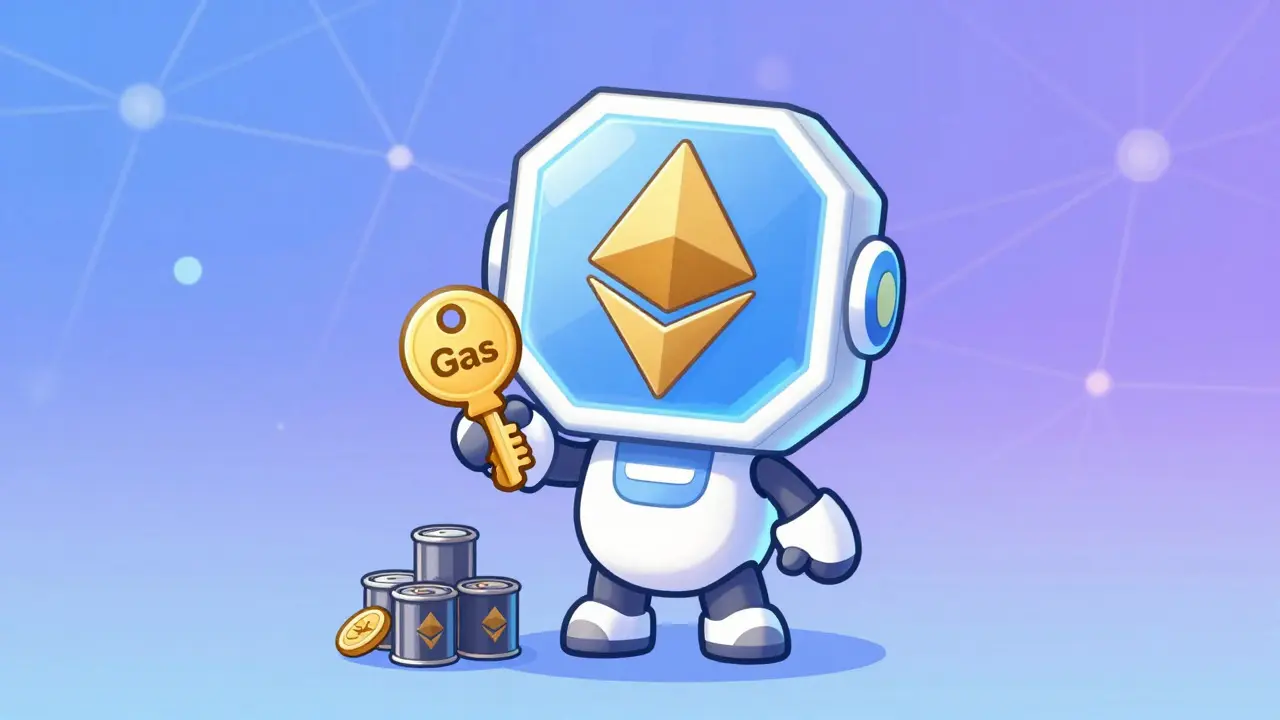
Most people think of crypto as a casino. You buy a coin because it went up yesterday, hoping it goes up tomorrow. But there is another side to the market that doesn't rely on hype or memes. It relies on work. These are utility tokens. They are not just numbers on a screen; they are keys, fuel, and voting rights for digital systems that actually do something.
If you have ever used a credit card, you know that the card itself has no value unless the bank accepts it. In the same way, a utility token has value only if the network it belongs to needs it. This article breaks down real-world examples of these tokens, showing exactly what they do, why they matter, and how they differ from speculative assets. We will look at the giants like Ethereum and the specialized tools like Chainlink to understand the backbone of the Web3 economy in 2026.
The Core Concept: Structural Necessity
Before looking at specific coins, we need to define what makes a utility token "successful." The test is simple: if you removed the token, would the platform break? If the answer is yes, you have a true utility token. If the answer is no, it is likely just a marketing gimmick or a speculative asset with a fancy name.
Successful utility tokens are hardwired into their ecosystems. They are required for three main things:
- Paying for services (like gas fees)
- Governance (voting on changes)
- Access (getting early entry or reduced costs)
This structural necessity creates a floor for value. Even if the price drops, the demand remains because users need the token to use the service. This is why industry analysts in 2025 and 2026 consistently rank utility tokens as more stable long-term investments than meme coins, which rely entirely on social sentiment.
Ethereum (ETH): The Digital Oil
Ethereum is the gold standard for utility tokens. Think of the Ethereum network as a global computer. To run any program on this computer-whether it is swapping tokens, minting an NFT, or launching a new app-you need to pay for the computing power. That payment is made in ETH.
This fee is called "gas." Without ETH, nothing moves on the network. It is not optional. This creates constant, organic demand. Every time someone uses a decentralized finance (DeFi) app built on Ethereum, they burn ETH. Additionally, since its transition to proof-of-stake, holders can stake their ETH to help secure the network and earn rewards. This dual role-as both fuel and collateral-makes ETH uniquely positioned. According to 2025 market analyses, ETH remains one of the top cryptocurrencies by volume and ecosystem size, precisely because so many other projects depend on its infrastructure.
Chainlink (LINK): The Bridge to Reality
Smart contracts are dumb. They cannot see the outside world. They don't know the price of Bitcoin, the weather in London, or whether a package was delivered. Chainlink fixes this. It acts as a bridge, bringing real-world data onto the blockchain securely.
How does LINK fit in? Users who want data must pay Chainlink node operators using LINK tokens. If a DeFi protocol wants accurate gold prices to back its loans, it pays in LINK. If a insurance company wants to automatically pay out when a flight is delayed, it pays in LINK. As of mid-2025, Chainlink's Cross-Chain Interoperability Protocol (CCIP) has expanded this utility further, allowing blockchains to talk to each other and to traditional banking systems. This makes LINK critical infrastructure for Real-World Asset (RWA) tokenization. The more complex the financial system becomes, the more LINK is needed to keep it honest and connected.
Solana (SOL): Speed and Scale
If Ethereum is a heavy-duty truck, Solana is a sports car. Solana is designed for speed. It can handle thousands of transactions per second with fractions of a cent in fees. This makes it ideal for high-frequency activities like gaming, micro-payments, and fast trading.
SOL serves two main purposes here. First, it pays for transaction fees. Because the fees are so low, users can afford to transact frequently without worrying about cost. Second, SOL is used for staking. Validators lock up SOL to process transactions and earn rewards. In 2025, Solana saw a resurgence in developer activity and user adoption, particularly in the NFT and consumer app space. The utility of SOL is tied directly to the network's usage. More apps mean more transactions, which means more demand for SOL to pay those fees.
Ripple (XRP): Institutional Payments
While most utility tokens focus on decentralized apps, XRP focuses on banks. Traditional international wire transfers are slow and expensive. RippleNet aims to fix this by using XRP as a bridge currency. Instead of pre-funding accounts in every country, a bank can convert dollars to XRP, send it instantly across the globe, and convert it to euros or yen on the other end.
The utility here is efficiency. XRP settles transactions in seconds, not days. After years of regulatory battles, XRP gained significant traction in 2025, with institutional interest growing and ETF discussions heating up. Its value proposition is clear: it solves a real-world problem in the trillion-dollar remittance and banking industry. Unlike ETH or SOL, XRP is not primarily for building dApps; it is for moving money between existing financial systems.
Governance Tokens: UNI and SUSHI
Not all utility is about paying for gas. Some tokens give you power. Uniswap (UNI) and SushiSwap (SUSHI) are leading examples of governance tokens. These platforms are decentralized exchanges (DEXs). Anyone can swap tokens on them, but who decides the rules? The community.
Holding UNI allows you to vote on proposals. Should the protocol take a higher fee? Should it support a new blockchain? UNI holders decide. Similarly, SUSHI offers governance rights plus access to advanced features like cross-chain swaps via SushiXSwap. In these cases, the token represents ownership influence. The more active the community, the more valuable that voice becomes. This model aligns the interests of developers and users, ensuring the platform evolves in a way that benefits everyone.
Niche Utilities: Ondo, Hedera, and Metaverse Tokens
Beyond the big names, specialized tokens serve specific niches. Ondo Finance (ONDO) focuses on tokenizing real-world assets like US Treasury bills. ONDO holders govern the protocol that manages these digital bonds. Hedera (HBAR) powers a hashgraph ledger used by enterprises like Google and IBM for supply chain tracking and carbon credits. Here, HBAR pays for enterprise-grade transactions.
In the metaverse, tokens like Decentraland (MANA) and The Sandbox (SAND) act as virtual currencies. You use MANA to buy land, wearables, and experiences in Decentraland. Without MANA, you cannot participate in that economy. EarthMeta (EMT) takes this further by making the token structurally irreplaceable for city governance and transactions within its ecosystem. Staking EMT even grants ownership rights to virtual cities, linking financial incentive directly to platform engagement.
| Token | Primary Utility | Key Use Case | Network Type |
|---|---|---|---|
| Ethereum (ETH) | Gas Fees & Staking | Smart Contracts & dApps | Layer 1 Blockchain |
| Chainlink (LINK) | Data Services Payment | Oracle Networks & RWA | Decentralized Oracle Network |
| Solana (SOL) | Transaction Fees & Staking | High-Speed Apps & Gaming | Layer 1 Blockchain |
| XRP | Cross-Border Settlement | Banking & Remittances | XRP Ledger |
| Uniswap (UNI) | Governance Voting | DEX Protocol Management | DeFi Protocol |
| Ondo (ONDO) | Protocol Governance | Tokenized Treasuries/Bonds | RWA Platform |
How to Evaluate a Utility Token
When you see a new token, ask yourself these questions before buying:
- Is it necessary? Can you use the platform without holding the token? If yes, the utility is weak.
- Who pays? Is there a clear group of users (developers, traders, gamers) who must spend the token regularly?
- What happens if the price crashes? Will people still use the service? If the service is useful regardless of price, the token has strong fundamentals.
- Is the supply capped? Infinite inflation dilutes value. Look for tokens with clear emission schedules or burning mechanisms.
For example, Best Wallet ($BEST) offers reduced fees for holders. This is a direct economic incentive. If the wallet gains millions of users, the demand for $BEST rises simply because users want to save money on transactions. This is a sustainable model compared to tokens that rely solely on marketing hype.
Conclusion: Value Through Function
Utility tokens are the gears of the blockchain machine. They may not always make headlines like meme coins, but they provide the stability and functionality that allow the ecosystem to grow. Whether it is ETH powering the internet of value, LINK securing data integrity, or SOL enabling fast payments, these tokens solve real problems. Understanding their specific roles helps you move beyond speculation and into informed participation in the digital economy.
What is the difference between a utility token and a security token?
A utility token provides access to a product or service, like using ETH to pay for gas. A security token represents ownership in an asset or equity, often promising profits from the efforts of others. Regulatory bodies like the SEC distinguish them based on the Howey Test, focusing on whether investors expect profit primarily from the work of others.
Why are utility tokens considered safer than meme coins?
Utility tokens have intrinsic value because they are required to use a network. Meme coins rely entirely on social sentiment and hype. If interest fades, meme coins can drop to zero. Utility tokens retain value as long as the underlying platform is used, providing a fundamental floor for their price.
Can I earn passive income with utility tokens?
Yes. Many utility tokens like ETH, SOL, and LINK offer staking rewards. By locking your tokens in a validator or staking pool, you help secure the network and earn additional tokens in return. Some tokens also share protocol fees with stakers, providing a yield based on network usage.
What is the role of governance tokens like UNI?
Governance tokens give holders the right to vote on protocol changes, such as fee structures, feature upgrades, or treasury management. This decentralizes decision-making, allowing the community to steer the project's direction rather than a central company.
How does Chainlink generate revenue?
Chainlink generates revenue by charging clients in LINK tokens for data services. When a smart contract requests external data (like a stock price), the client pays LINK to Chainlink node operators who retrieve and verify the data. This creates a direct link between network usage and token demand.